The US Supreme Court ruled on 20 February 2026 that the International Emergency Economic Powers Act (IEEPA) does not give the president the power to impose tariffs. The 6-3 decision in Learning Resources, Inc., et al. v. Trump, written by Chief Justice John Roberts, held that the power to levy tariffs rests with Congress. It invalidated the so-called reciprocal tariffs, the country-by-country rates introduced from April 2025, along with the separate fentanyl and trafficking tariffs.
The White House responded quickly. An executive order ended collection of IEEPA duties, and a proclamation imposed a temporary 10% import surcharge under Section 122 of the Trade Act of 1974, effective at 12:01 a.m. Eastern Standard Time on 24 February 2026. The surcharge can last up to 150 days, through 24 July 2026, unless Congress extends it. The president said the rate would rise to 15%, the legal maximum, although no revised proclamation had been issued when the advisory firms BDO and Plante Moran published their analyses on 23 February.
What changed and what did not
The ruling did not touch tariffs imposed under other laws. Section 232 duties on steel, aluminum and certain automotive products stayed in force, as did Section 301 tariffs, including those on goods from China. The president also directed the US Trade Representative to open new Section 301 investigations on an accelerated timetable, which advisers said made further tariffs likely.
The new surcharge came with exemptions listed in annexes to the proclamation, covering items such as certain critical minerals, energy products and pharmaceuticals, along with goods that qualify under the US-Mexico-Canada Agreement and certain textiles and apparel that qualify under the DR-CAFTA agreement with Central America and the Dominican Republic.
Refunds
The court did not decide whether importers are entitled to refunds of IEEPA duties already paid, and it set no process for repayment. BDO said more than $130 billion had been collected under IEEPA and advised importers to identify affected shipments and keep their records. Plante Moran said the decision appeared to apply retroactively but noted that US Customs and Border Protection had not yet issued guidance.
What it means for suits and fabric
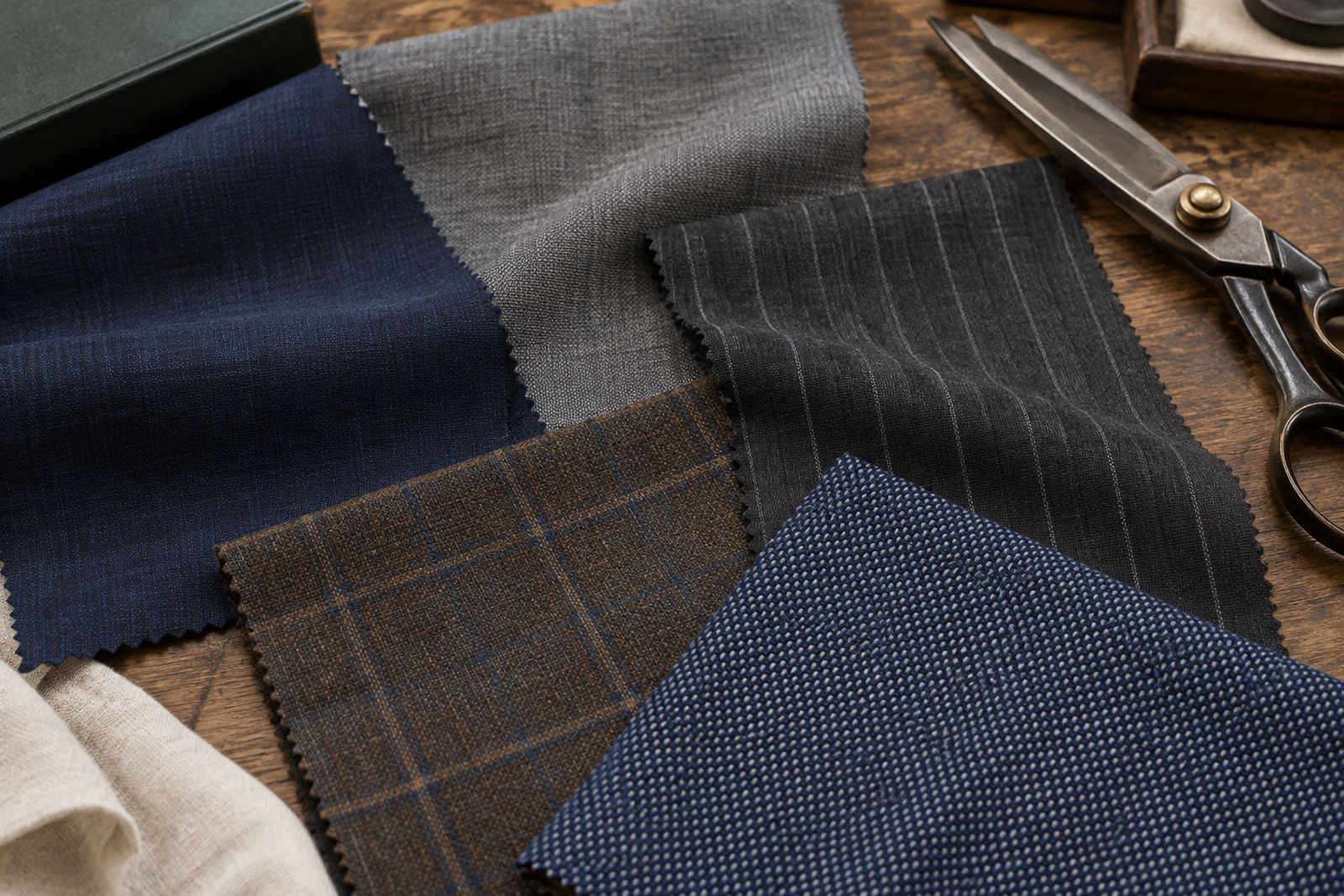
The IEEPA tariffs were the ones that hit tailored clothing and fabric hardest in 2025: the 10% baseline on British goods, the 15% all-in ceiling for most European goods under the EU-US framework, and the higher reciprocal rates on Asian suppliers such as Vietnam and Bangladesh. Their removal did not mean a return to 2024 prices. The 10% Section 122 surcharge applied broadly from 24 February, and importers who had already paid IEEPA duties on fabric or finished suits faced an uncertain wait for any refund.
What happened next
The temporary regime ran until its expiry on 24 July 2026. On that date, the British manufacturers' body Make UK reported that the US had replaced it with a new set of tariffs on a number of trading partners, following an investigation into forced labor in global supply chains. Make UK said the rate applied to British exports was unchanged at 10%, and that goods covered by preferential rates under the UK-US Economic Prosperity Deal were unaffected.
“need certainty, stability and the removal of unnecessary barriers to trade.”
Maxwell Green, senior trade and regulation policy manager at Make UK, on manufacturers' needs
For tailors in the US who rely on English and Italian suiting, the past 18 months have brought several changes to the duty on their main raw material. Our guide to why bespoke suits are expensive explains how fabric fits into the price of a suit.