Buyer’s guide
Tailor scams, and how to avoid them
Most tailors are honest. A few rely on pressure, switched fabric and suits that never fit. Here is how the common tricks work, the signs to watch for and what to do if it happens to you.
By TailorGuide · Updated October 2026
The short version
Five rules that stop almost every scam
- 1Choose the tailor yourself. Never follow a tout or a driver to a shop.
- 2See the fabric on the bolt and write its mill and reference on the order.
- 3Get the full price in writing before you pay anything.
- 4Pay a deposit, not the whole price, and pay by card if you can.
- 5Insist on fittings. A suit with no fitting is a guess.
The tricks
The ten most common tailor scams
- 01
The street tout
How it works Someone stops you in the street, at a hotel or outside a station, or a driver offers to take you to “the best tailor in town” or a special sale. The shop pays them a commission, and that commission is built into your price.
How to avoid it Choose a tailor before you go and walk in on your own. A good tailor does not need anyone to bring clients to the door.
- 02
The fabric switch
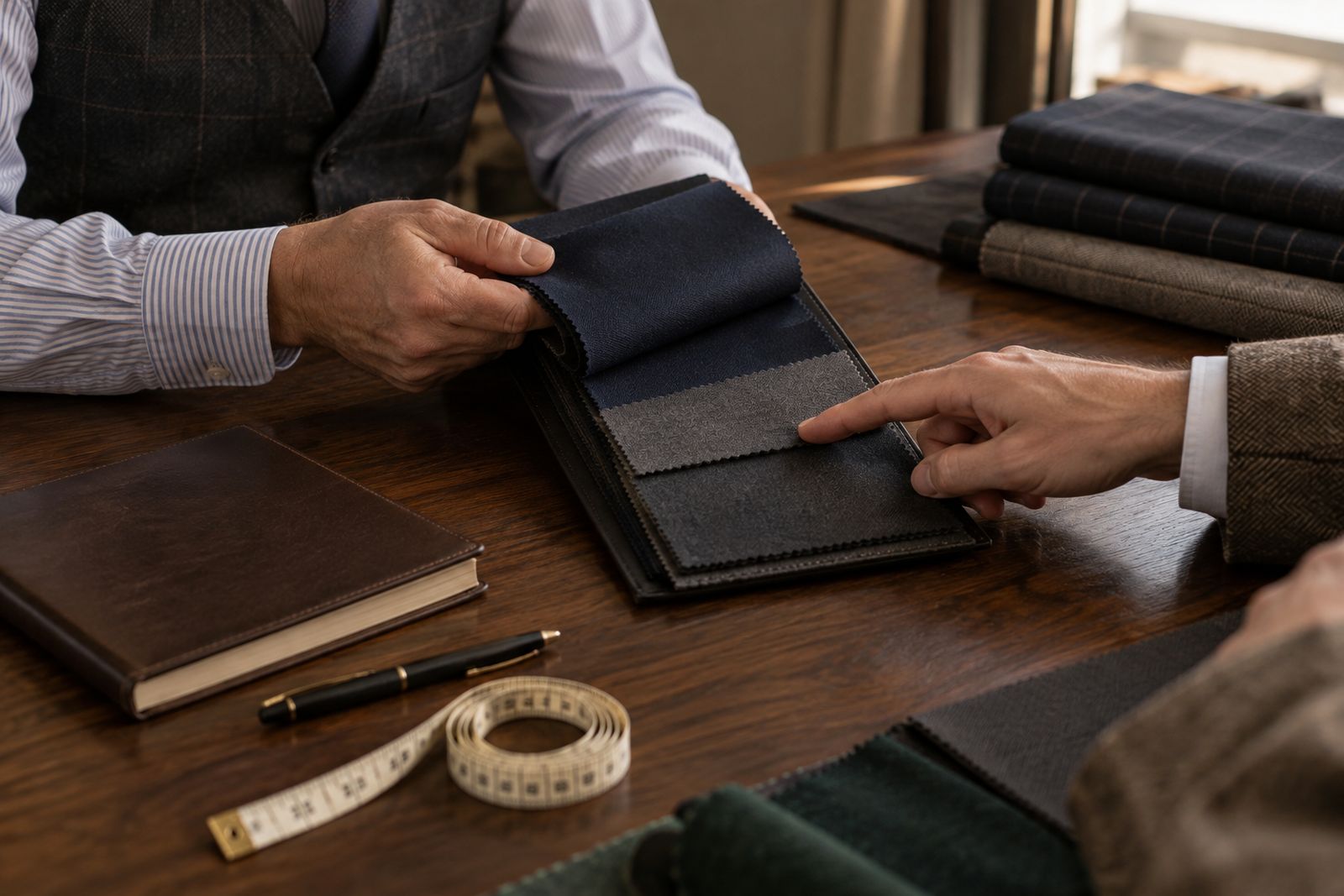
How it works You choose a fine fabric from a famous mill in the swatch book, and the suit arrives in something cheaper that looks similar. Swatches are small, and most clients cannot tell the difference until the suit wears badly.
How to avoid it Ask to see the fabric on the bolt, with the mill’s name woven into the edge (the selvedge). Write the mill and the fabric’s reference number on the order, and ask for the offcuts back with the suit.
- 03
Fabric claims that cannot be true
How it works “Super 200s”, “pure cashmere” or even “vicuña” at a price that would not buy the fabric alone. The label is real; the claim is not.
How to avoid it Ask which mill made it and see the reference. If the price of the whole suit is less than the fabric should cost, walk away.
- 04
Made-to-measure sold as bespoke
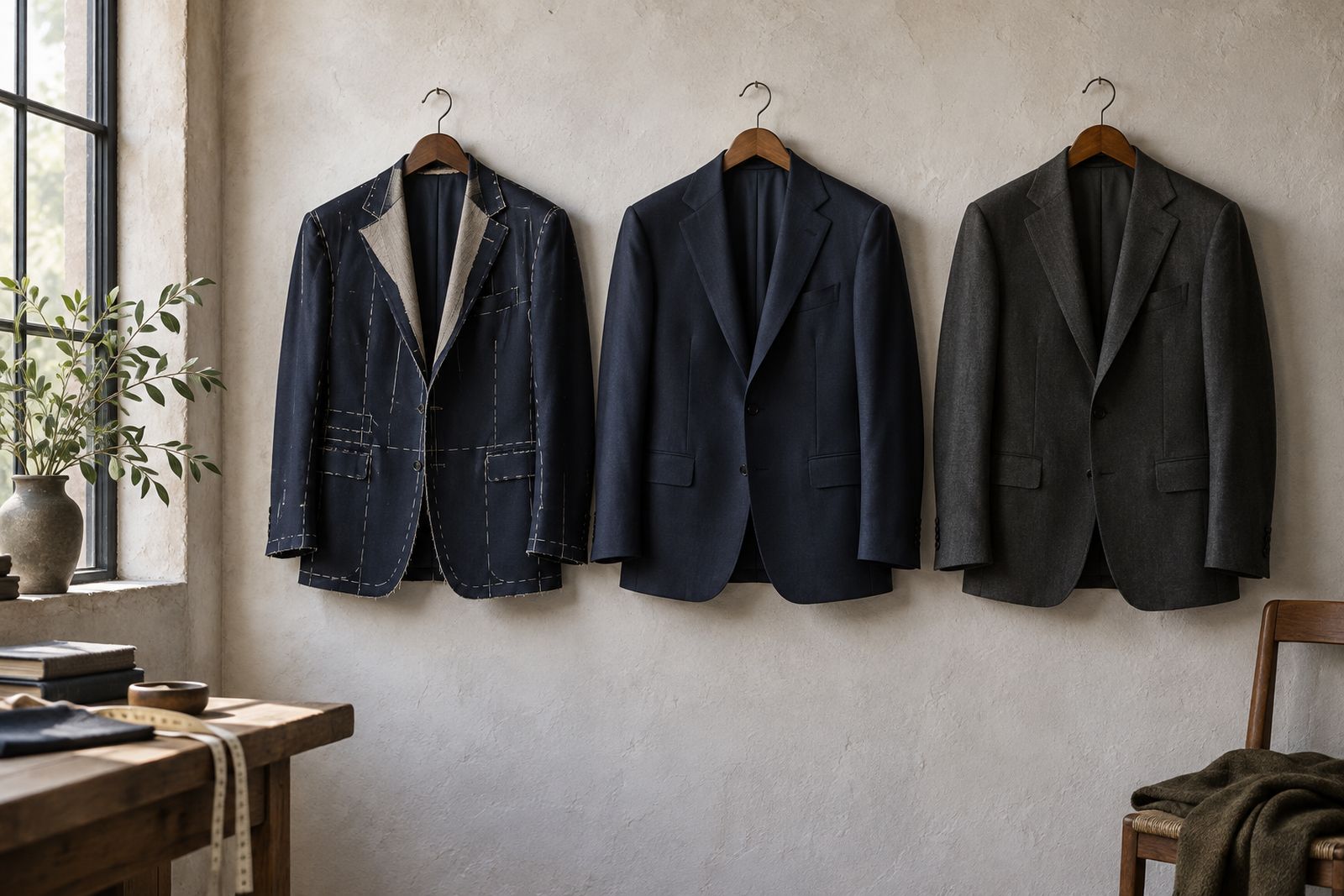
Bespoke vs made-to-measureHow it works The shop calls the suit bespoke, but it adjusts a standard pattern and sends your measurements to a factory. There is no paper pattern cut for you and no basted fitting.
How to avoid it Ask whether a paper pattern will be cut for you alone, how many fittings to expect and whether the first is a basted fitting. Our guide explains the difference.
- 05
“Hand-made, full canvas” that is glued
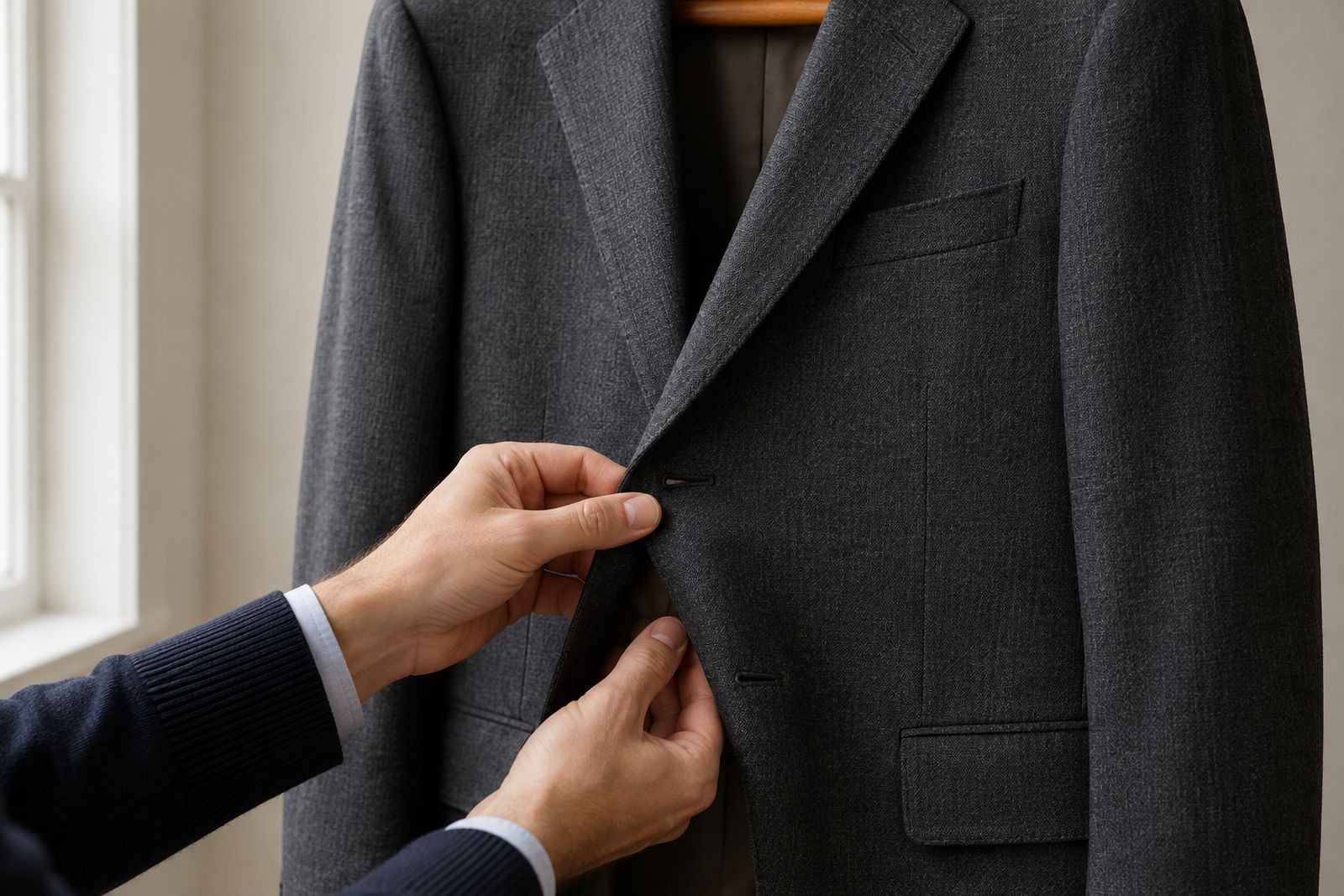
How to tell if a jacket is canvassedHow it works The jacket is sold as full canvas and hand-made, but its front is fused: a glued interlining that is cheaper and quicker, and that can bubble and stiffen with cleaning.
How to avoid it Get the construction written on the order, and check the finished jacket with the pinch test.
- 06
The 24-hour suit
How it works A finished suit promised in a day or two. It can be done, but only from a stock pattern with machine work and no time to correct the fit.
How to avoid it Allow time for at least two fittings. If a shop offers no fitting before delivery, you are buying a guess.
- 07
The bundle deal
How it works Two suits, three shirts and a tie for one headline price. The extras are cheap, the fabrics are the bottom of the range, and the upgrades you are then offered cost more than the bundle saved.
How to avoid it Price one suit properly, in the fabric you want, and compare that with other tailors.
- 08
Paying everything up front
How it works You are pressed to pay the full price on the first visit, often with a discount “for today only”. Once you have paid, you have nothing left to bargain with if the suit is late or does not fit.
How to avoid it Pay a deposit when you order and the balance when you collect the finished suit. Many tailors ask for around half up front.
- 09
The suit that never arrives
How it works You fly home and the tailor promises to ship the finished suit. Months later it has not arrived, or arrives unfinished, and there is no tracking.
How to avoid it Collect in person where you can. If the suit must be shipped, agree the date, the courier, tracking and insurance in writing, and keep part of the payment until it arrives.
- 10
Borrowed names and fake reviews
The TailorGuide AwardsHow it works Claims of “Savile Row training”, celebrity clients or awards that cannot be checked, backed by a wall of five-star reviews written in the same few weeks.
How to avoid it Ask where the cutter trained and look for reviews with photos spread over years. Every winner of a TailorGuide Award is listed on our Awards page.
Checklist
Before you pay a deposit
Run through this list before any money changes hands. If you cannot tick every line, ask the tailor why, or take your business somewhere else.
- 1You chose the tailor yourself and walked in on your own.
- 2You have seen the fabric on the bolt, with the mill’s name on the selvedge.
- 3The mill and fabric reference are written on the order.
- 4The quote covers fabric, making, lining, buttons, alterations, tax and delivery.
- 5The number of fittings is agreed, including a basted fitting for bespoke.
- 6You are paying a deposit, not the whole price, and have a receipt.
- 7You are paying by card where you can.
- 8You know what happens if the suit does not fit.
At a glance
Red flags, and good signs
Walk away if you see
- Someone brought you to the shop
- A price that is only good for today
- No bolt, only a small swatch
- No fitting before the suit is finished
- The full price, in cash, up front
- Vague answers about who makes the suit, and where
- Luxury fabric at a high-street price
Signs of a good tailor
- Clear prices, or a detailed written quote
- A paper pattern cut for you and kept on file
- A basted fitting, with the cutter there
- Fabric from named mills, with references
- A fair deposit and the balance on collection
- Alterations after delivery included in the price
- No pressure to decide on the first visit
If it happens to you
What to do next
- 1
Go back with the paperwork
Take the order, the receipt and the suit to the tailor and ask, in writing, for the alterations or the remake you were promised. Keep copies of every message.
- 2
Dispute the payment
If you paid by card, contact your card issuer and ask about a chargeback for goods not as described or not delivered. Do it quickly: there are time limits.
- 3
Report it
Contact the consumer protection authority where the shop is. If a tout or a driver was involved, report that too.
- 4
Warn others
Leave a factual review with photos of the suit and the paperwork, and tell us. We read every message.
Questions
Is a cheap tailor always a scam?
No. A low price is not the problem; a false claim is. An honest made-to-measure suit at a fair price is a good buy. The scam is selling it as something it is not, such as bespoke, full canvas or a fabric it is not made from.
How much deposit is normal?
Many tailors ask for around half when you order and the rest when you collect the finished suit. Be wary of any shop that wants the full price before the first fitting.
Can a suit made in 24 hours be any good?
It can be wearable, but it is made from a stock pattern with no time to correct the fit. A good suit needs fittings, and fittings need time.
How do I know the fabric is what I paid for?
See it on the bolt with the mill’s name woven into the selvedge, have the mill and reference written on the order, and ask for the offcuts back with the suit.
What if I have a problem with a tailor in your rankings?
Tell us at contact@tailorguide.net. Every tailor in our rankings is visited by our critics as a client, and a problem reported by readers is something we look into.
Choose with confidence
Every tailor in our rankings is visited by our critics as a client and scored on the same four tests.
See the rankings