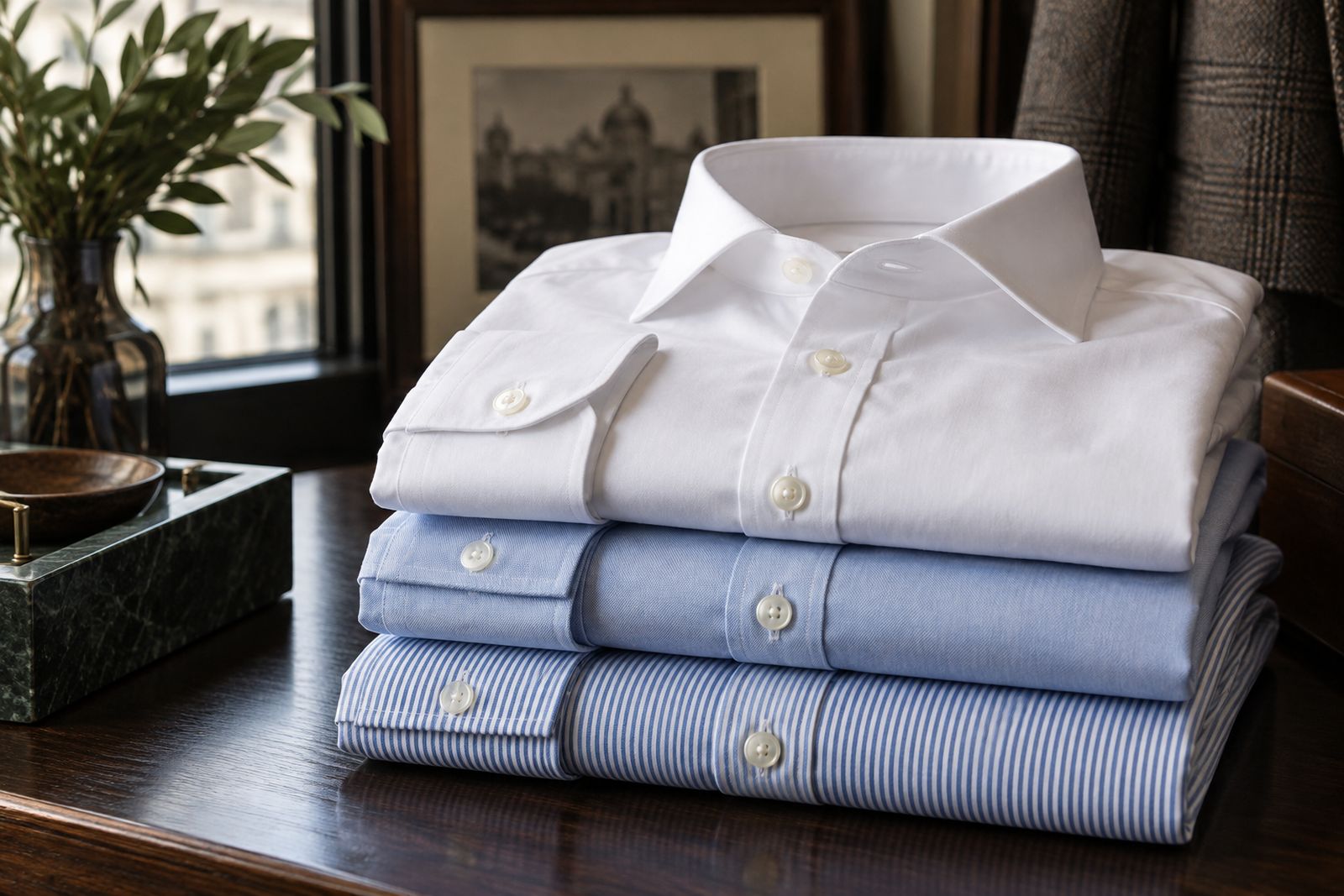
The short answer
Jermyn Street, in St James's, London, is the city's traditional home of shirtmaking. Its shops sell ready-made shirts from under $130 to about $400 and bespoke shirts cut from a personal pattern, typically from about $460 to $550 each with a minimum first order (approximate 2026 prices). Turnbull & Asser has traded at 71-72 Jermyn Street since 1903.
- Jermyn Street runs parallel to Piccadilly, one block south, in St James's.
- Ready-made shirts there run from under $130 to about $400 (2026, approximate).
- Bespoke shirts start around $460 to $550 each, often with a minimum first order of four.
- A bespoke order starts with a trial shirt you wear and wash before the rest are made.
- Check collar, yoke and pattern matching before you buy any shirt.
In this guide
- What is Jermyn Street known for?
- Well-known Jermyn Street shirtmakers
- What makes a Jermyn Street shirt different?
- Are Jermyn Street shirts good quality?
- Ready-made, made-to-measure or bespoke?
- How much is a bespoke shirt in London?
- How to order a bespoke shirt on Jermyn Street
- Which collar and cuff should you choose?
- How Jermyn Street shirt sizes work
- How to look after a fine cotton shirt
- What a good shirtmaker checks
- Questions people ask
Jermyn Street shirts have a reputation that runs well beyond London. The street, in St James's just south of Piccadilly, has been the city's center of shirtmaking for well over a century, and several of its makers still cut bespoke shirts on the premises or in their own workrooms. If you want a better shirt than the high street sells, or your first piece of bespoke clothing, this is where London sends you.
Jermyn Street at a glance
- Where
- St James's, London SW1, parallel to Piccadilly one block south
- Laid out
- From 1664, by Henry Jermyn, Earl of St Albans
- Known for
- Shirtmakers, plus perfumers, cheesemongers and men's outfitters
- Ready-made shirt
- From under $130 to about $400 (2026, approximate)
- Bespoke shirt
- From about $460 to $550 each, usually with a minimum first order
- Bespoke timeline
- About 6 to 8 weeks, including a trial shirt
- Nearest stations
- Piccadilly Circus and Green Park
What is Jermyn Street known for?
Jermyn Street is known for men's shirts. Its makers are synonymous with the classic English dress shirt: crisp collars, fine two-fold cottons and neat, close stitching, sold ready-made in collar and sleeve sizes or cut bespoke. The street is also home to some of London's oldest specialist shops, including the perfumer Floris, founded in 1730, and the cheesemonger Paxton & Whitfield, on the street since 1896.
The street dates from the 1660s, when Henry Jermyn, Earl of St Albans, developed the area near St James's Palace. Much of it is owned by the Crown Estate. A statue of Beau Brummell, the Regency dandy who did much to shape the plain, well-cut English style, has stood by the Jermyn Street entrance to Piccadilly Arcade since 2002.
Well-known Jermyn Street shirtmakers
Several shirtmakers have traded on or around the street for generations. The table lists a few well-known names with facts each firm or a reliable source has published. It is not a ranking, and many other good makers trade nearby.
| Shirtmaker | History | Worth knowing |
|---|---|---|
| Emma Willis | A bespoke shirtmaker with a shop on Jermyn Street | Bespoke with a minimum of four shirts for a first order; shirts made in its Gloucester workrooms |
| Harvie & Hudson | Making men's shirts since 1949 | A family-owned shirtmaker on the street |
| Hilditch & Key | Founded in 1899 by Charles F. Hilditch and W. Graham Key | Opened a Paris shop on the Rue de Rivoli in 1907 |
| Turnbull & Asser | Origins in 1885; renamed Turnbull & Asser in 1895; at 71-72 Jermyn Street since 1903 | Made shirts for the 1962 James Bond film Dr No; received the first Royal Warrant granted by the Prince of Wales in 1980 |
Prices and details as published by each firm or reported in 2026; confirm current prices before you order.
What makes a Jermyn Street shirt different?
A good Jermyn Street shirt differs from a high-street shirt in its fabric, its pattern and its finishing. The best ready-made shirts on the street use fine two-fold cotton, where each yarn is two strands twisted together, which makes the fabric stronger and smoother. They are cut with more care, and the details that wear out first on a cheap shirt are made to last.
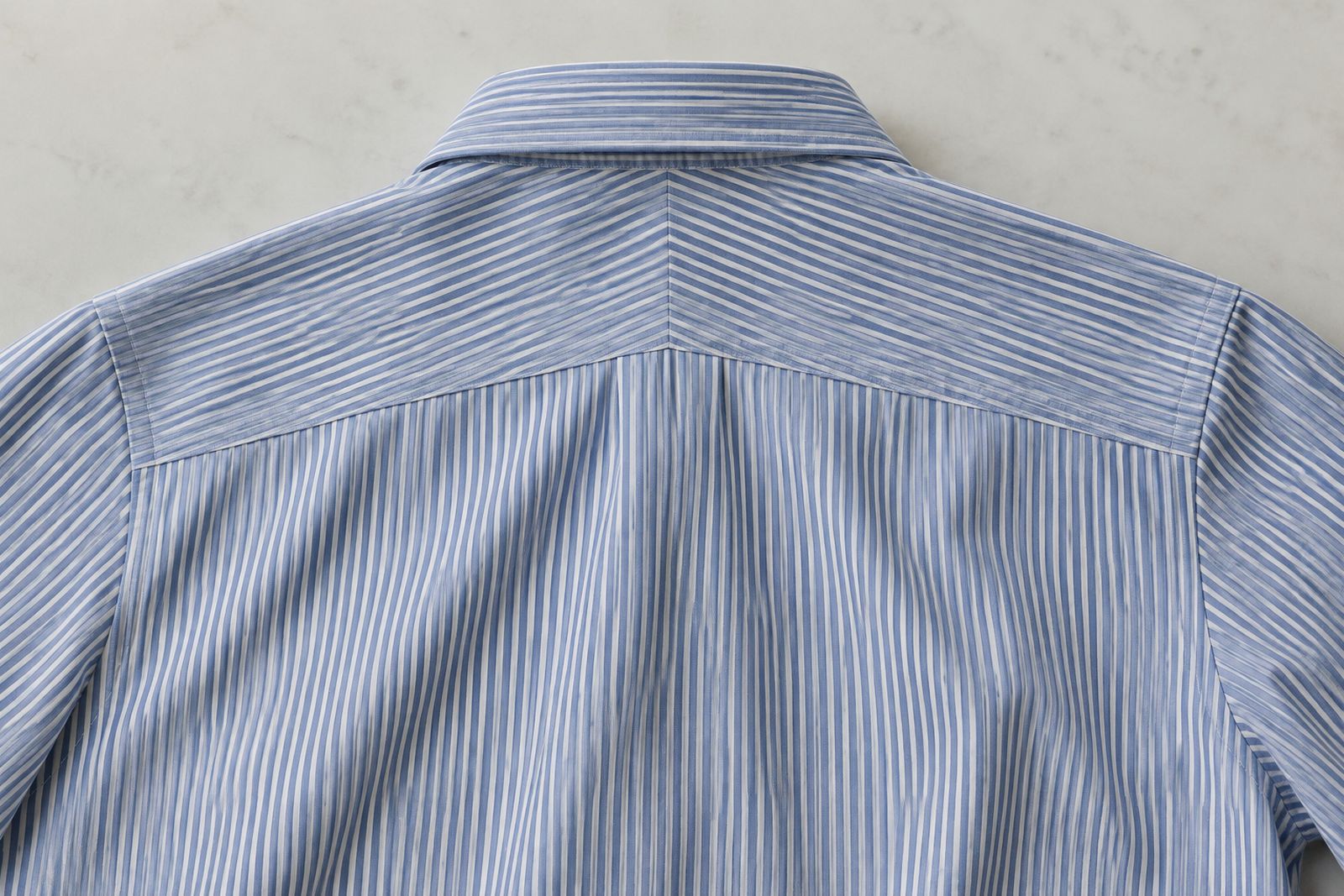
- Two-fold cotton. Stronger and smoother than single-ply fabric of the same fineness, and it keeps its shape through more washes.
- A split yoke. The panel across the shoulders is cut in two pieces on a slight angle, so it follows the slope of your shoulders.
- Pattern matching. Stripes and checks line up across the yoke, sleeves and front placket.
- Fine, close stitching. Small, even stitches give neat, flat seams that pucker less in the wash.
- Mother-of-pearl buttons. Thicker and cooler to the touch than plastic, with a natural luster.
- A firm collar. English shirtmakers favor a collar that stays crisp under a tie and sits close to the neck.
Are Jermyn Street shirts good quality?
The best Jermyn Street shirts are very good quality, and the street's traditional makers set a high standard for ready-made shirts. Quality depends on the maker and the line, so check the shirt itself. A shirt costing $200 to $400 from an established maker should have two-fold cotton, matched patterns, a well-shaped collar and real mother-of-pearl buttons. Our guide to how a dress shirt should fit shows what to look for once it is on.
Check before you buy any shirt
- Collar points are the same length and sit flat under a jacket lapel.
- Stripes or checks line up at the yoke, sleeves and pocket.
- The yoke is split if the shirt is patterned or fitted.
- Stitching is small, even and flat, with no puckering along the side seams.
- Buttonholes are tight and clean, with no loose threads.
- Buttons are mother-of-pearl, sewn on firmly.
- Tails are long enough to stay tucked in when you sit and reach.
Ready-made, made-to-measure or bespoke?
Ready-made shirts suit you if a standard collar and sleeve size fits your neck and arms and the body is not too full or too tight. Made-to-measure adjusts a house pattern to your measurements. Bespoke gives you a pattern drafted for you alone, with a trial shirt to perfect it, and is worth it if you are hard to fit or wear a shirt every day.
| Ready-made | Made-to-measure | Bespoke | |
|---|---|---|---|
| Pattern | Standard sizes by collar and sleeve | House pattern adjusted to you | Drafted for you alone |
| Trial shirt | No | Sometimes | Yes, worn and washed before the order |
| Minimum order | None | Often none | Usually several shirts for a first order |
| Time | Same day | About 3 to 6 weeks | About 6 to 8 weeks for a first order |
| Price per shirt (approximate) | Under $130 to about $400 | About $200 to $400 | From about $460 to $550 |
| Best for | Standard builds | Small fit problems | Hard-to-fit builds, daily wear, special fabrics |
Approximate 2026 ranges. Ask each maker for its current prices and minimums.
Ready-made, large brands
$65–160
Ready-made, established shirtmakers
$160–400
Made-to-measure
$200–400
Bespoke, per shirt
Minimum first order usually applies
$460–650
How much is a bespoke shirt in London?
A bespoke shirt in London typically starts at about $460 to $550, with a minimum first order of several shirts. Emma Willis, for example, sets a minimum of four shirts for an initial order, with the price depending on the fabric. Rare fabrics, special collars and hand finishing raise the price. Once your pattern exists, later shirts can usually be ordered singly.
How to order a bespoke shirt on Jermyn Street
Ordering a bespoke shirt takes two or three visits over about six to eight weeks. The trial shirt is the step that makes bespoke worth paying for: it shows how the pattern behaves on you after washing, when cotton shrinks slightly.
From first visit to finished shirts
- 1
Book a measuring appointment
Call or email the shop. Wear a shirt you like and one you dislike, and bring the jacket you will wear over the new shirts most often.
- 2
Choose fabric and details
Pick fabrics, collar, cuffs, pocket and placket. Turnbull & Asser, for example, offers more than 1,000 fabrics for bespoke, so ask the cutter to narrow them by weight and use.
Tip: Choose your trial shirt in the fabric you will order most, usually plain white or blue.
- 3
Be measured
The cutter measures your neck, chest, waist, seat, shoulders, sleeves and wrists, and notes your posture and the watch you wear.
- 4
Wear and wash the trial shirt
A single trial shirt is made first; Emma Willis says this takes about three weeks. Wear it for a day and wash it at least once before the fitting.
Tip: Note anything that bothers you during the day: a collar that rides up, cuffs that catch on your watch, tails that pull out.
- 5
Refit and confirm the order
The cutter checks the washed shirt on you and corrects the pattern. The rest of the order is then made; Emma Willis quotes about four weeks for this stage.
Which collar and cuff should you choose?
Choose the collar for your face and your ties, and the cuff for how formal you dress. A spread or cutaway collar suits a fuller tie knot and a longer, narrower face; a point collar lengthens a round face; a button-down is the casual choice. Barrel cuffs suit daily wear and French cuffs, which need cufflinks, suit formal dress. Our guide to shirt collars covers every type.
How Jermyn Street shirt sizes work
Ready-made Jermyn Street shirts are sized by collar and sleeve, in inches. A 15½ collar is about 39 cm; collars usually run from 14½ to 18 inches (37 to 46 cm). Sleeves are measured from the center of the back of the neck to the wrist and usually run from about 32 to 37 inches (81 to 94 cm). Most makers also offer two or three body fits, from classic to slim. Our guide to measuring your shirt size shows how to find yours.
How to look after a fine cotton shirt
A well-made shirt lasts years if you treat the collar and cuffs gently, because that is where shirts wear out first. Most of the damage comes from hot washes, tumble dryers and pressing a dry collar flat.
- Remove collar stiffeners before washing, and undo every button, including the cuffs.
- Wash at about 104°F (40°C) unless the label says otherwise; hotter washes shrink and yellow cotton faster.
- Skip the tumble dryer. Hang the shirt on a shaped hanger to dry, then iron while slightly damp.
- Iron the collar from the points inward so you do not push creases into the tips.
- Rotate shirts so each one rests between wears, and have frayed collars or cuffs replaced by the maker rather than throwing the shirt away.
Bespoke shirtmakers often offer to replace a worn collar or cuffs on shirts they made, since they keep your pattern and can match the fabric while it is still available. Ask whether yours does, and what it costs, when you order.
What a good shirtmaker checks
A good shirtmaker looks at the shirt with your jacket on, not only on its own. They want about ¼ to ½ inch (6 to 13 mm) of cuff showing below the jacket sleeve, a collar that sits against the back of the neck without gaping, and a body that is clean but lets you sit and reach. Expect them to ask what watch you wear, since the cuff on that wrist is often cut slightly larger.
Plan your visit with our first-timer's guide to Savile Row, which includes the short walk from the Row to Jermyn Street, and see the 10 best tailors in London if a suit is next.
Questions people ask
What is Jermyn Street known for?
Jermyn Street is known for men's shirts: it has been London's center of shirtmaking for more than a century. It also has long-established specialist shops such as the perfumer Floris, founded in 1730. The street runs parallel to Piccadilly in St James's.
Are Jermyn Street shirts good quality?
The best Jermyn Street shirts are very good quality, with two-fold cotton, matched patterns, firm collars and mother-of-pearl buttons. Quality varies between makers and price lines, so check the shirt itself rather than relying on the address. Established shirtmakers' ready-made shirts typically cost about $160 to $400.
How much is a bespoke shirt in London?
A bespoke shirt in London typically starts at about $460 to $550, usually with a minimum first order. Emma Willis, for example, sets a minimum of four shirts for an initial order. Premium fabrics and special details cost more.
Is there a minimum order for bespoke shirts?
Most bespoke shirtmakers set a minimum for the first order, commonly four shirts or more, because the pattern and trial shirt take time to make. Once the pattern exists, later shirts can often be ordered individually. Ask each maker for its current minimum.
How long does a bespoke shirt take?
A first bespoke shirt order usually takes about six to eight weeks. Emma Willis quotes about three weeks for the trial shirt and about four weeks for the rest of the order after the fitting. Turnbull & Asser says a bespoke shirt can take up to eight weeks.
What is the difference between bespoke and made-to-measure shirts?
A bespoke shirt is made from a pattern drafted for you alone and refined with a trial shirt that you wear and wash. A made-to-measure shirt adjusts an existing house pattern to your measurements, usually without a trial. Made-to-measure is cheaper and quicker; bespoke fits better if you are hard to fit.
Who made James Bond's shirts?
Turnbull & Asser made shirts for the first James Bond film, Dr No, in 1962. The firm has traded at 71-72 Jermyn Street since 1903. It also received the first Royal Warrant granted by the Prince of Wales, in 1980.
TailorGuide is independent. Our guides are written and checked by our team and carry no paid endorsements. How we work.