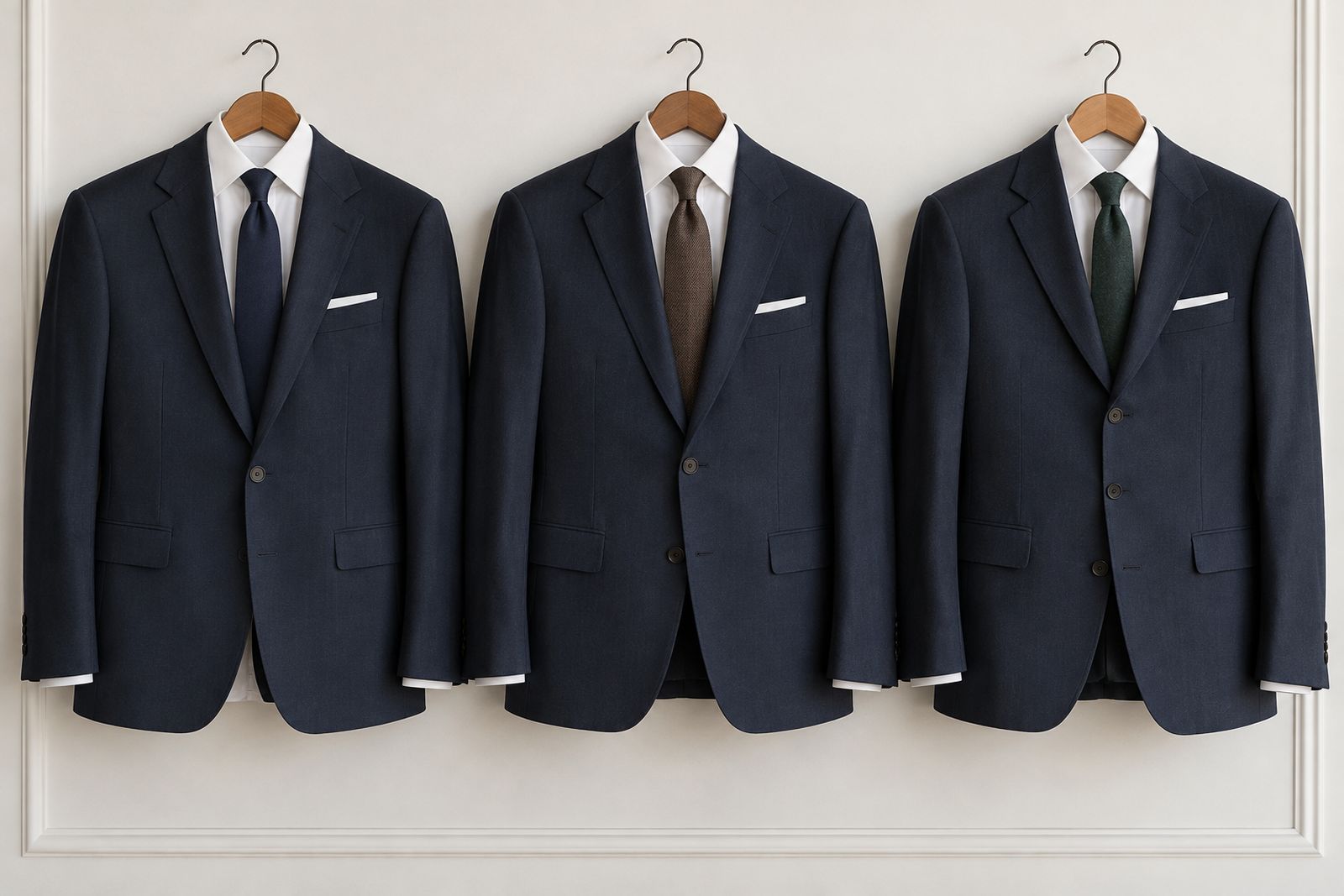
The short answer
A two-button suit is the best choice for most men: it is the most versatile, flatters most builds and works from the office to a wedding. A three-button suit covers more shirt and suits tall men and traditional tastes; a three-roll-two looks like a two-button with a softer lapel. A one-button jacket is mostly for dinner jackets and fashion-led suits.
- A two-button suit is the safest, most versatile choice for a first suit.
- The fewer the buttons, the deeper the V and the longer the torso looks.
- A true three-button suits tall men; a three-roll-two suits almost everyone.
- One-button is the dinner jacket standard and a fashion choice on business suits.
- Whatever the count, the fastening button should sit at or just above your navel.
In this guide
- What is the difference between one, two and three-button suits?
- Is a two-button suit better than a three-button?
- Are three-button suits out of style?
- What is a three-roll-two jacket?
- Is a one-button suit formal?
- Which button style is best for your build?
- Where should the fastening button sit?
- Which is best by occasion?
- Which button style works best without a tie?
- Can a tailor change the number of buttons on a jacket?
- What to tell your tailor
- Questions people ask
The 2 button vs 3 button suit question, and the rarer one-button option, is really a question about the V: the opening between the lapels that shows your shirt and tie. The number of buttons and where they sit decide how deep that V is, and the V changes how tall, broad and formal you look.
One, two and three buttons at a glance
- One-button
- Deepest V; dinner jacket standard; fashion-led on suits
- Two-button
- Medium V; the modern business standard; suits most builds
- Three-button
- Shortest V; covers more shirt; suits tall men
- Three-roll-two
- Looks like a two-button with a longer, softer lapel roll
- Always
- Leave the bottom button open on any jacket with two or more
What is the difference between one, two and three-button suits?
The difference is the depth of the V and how much shirt and tie it shows. On every style the fastening button sits near your natural waist, so adding buttons above it raises the point where the lapels end. A one-button jacket has the longest lapels and the deepest V; a three-button jacket has the shortest lapels and covers the most shirt.
| Style | V depth | Visual effect | Formality | Fasten |
|---|---|---|---|---|
| One-button | Deepest | Long torso, strong vertical line | Formal on dinner jackets; fashion-led on suits | The button, when standing |
| Two-button | Medium | Balanced; flatters most builds | Business standard | Top always, bottom never |
| Three-button | Shortest | Covers more shirt; can shorten the torso | Traditional business | Middle always, top sometimes, bottom never |
| Three-roll-two | Medium, with a longer lapel roll | Soft and relaxed; reads like a two-button | Traditional business and casual tailoring | The middle only |
Is a two-button suit better than a three-button?
For most men, yes. A two-button suit is more versatile and flatters more builds: the medium V lengthens the torso a little, shows enough shirt and tie to frame the face, and looks right with or without a tie. It is the standard business suit today, so it never looks out of place.
A three-button suit is not worse, just more particular. It covers more of the shirt and gives a closed, buttoned-up look that suits tall men and traditional tastes. On a shorter man, a high-fastening three-button jacket can shorten the torso. If you want three buttons but the look of a two-button, choose a three-roll-two.
Are three-button suits out of style?
No, but the high-fastening three-button suit is less common than it was. Three-button suits were very popular in the 1990s, often with a high stance and short lapels, and that version can look dated now. The three-roll-two never went away: it is the classic front of the American sack suit and is common on soft Italian jackets. A well-proportioned true three-button jacket on a tall man still looks good.
What is a three-roll-two jacket?
Three-roll-two
A three-roll-two is a jacket with three buttons whose lapel rolls past the top button down to the middle one. The top button and its buttonhole sit on the turned lapel and are left undone, so the jacket looks like a two-button with a longer, softer lapel.
You fasten only the middle button. The three-roll-two depends on a canvassed front, because the lapel has to roll naturally past the top button rather than being pressed flat. That makes it a mark of a soft, well-made jacket. Our guide to how to button a suit jacket shows how to recognize one.
Is a one-button suit formal?
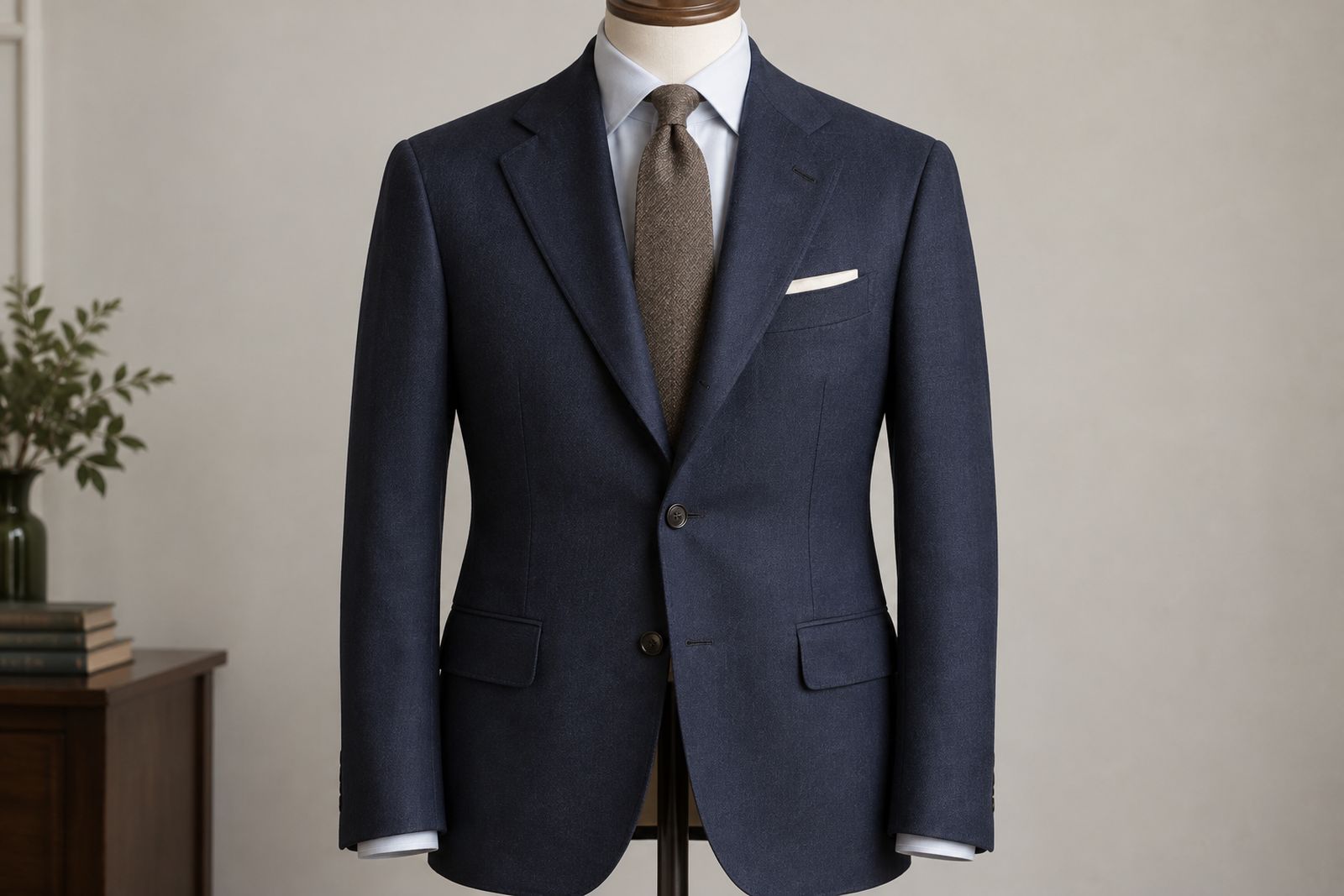
On a dinner jacket, yes: the one-button jacket is the black tie standard, usually with peak or shawl lapels. On a business suit, a single button is a fashion-led choice rather than a more formal one. It gives a deep V and a strong, clean line, and it is associated with some Italian tailoring and with evening-influenced suits. It works well for a wedding or an evening event; for an interview or a conservative office, a two-button suit is safer. Our guide to black tie covers the dinner jacket.
Which button style is best for your build?
The deeper the V, the longer the torso looks. That makes one and two-button jackets the better choice for shorter men and three-button jackets an option mainly for taller ones.
| One-button | Two-button | Three-button | Three-roll-two | |
|---|---|---|---|---|
| Tall and slim | ||||
| Average height and build | ||||
| Shorter than average | ||||
| Broad or athletic | ||||
| Heavier through the middle |
- Shorter men: a two-button or one-button jacket with the button at the natural waist lengthens the torso. Avoid a high-fastening three-button.
- Tall men: any style works. A true three-button can balance a long torso.
- Heavier men: a two-button with the button at the natural waist creates a long, slimming V. A high-fastening three-button can make the chest look wider.
- Broad or athletic men: a two-button or three-roll-two shows the shape of the chest without straining at a high button.
Where should the fastening button sit?
The fastening button should sit at or slightly above your natural waist, the narrowest point of your torso, roughly level with or just above your navel. That position is called the button stance. Too high, and the V is short and the torso looks boxy; too low, and the jacket looks sloppy and the legs look shorter. A good tailor sets it for your body, which is why a jacket from one maker can suit you when the same style from another does not.
Which is best by occasion?
| Occasion | Best choice | Also correct |
|---|---|---|
| First or only suit | Two-button | Three-roll-two |
| Job interview | Two-button | Three-roll-two or three-button |
| Everyday business | Two-button | Any style |
| Wedding guest | Two-button | One-button for an evening wedding |
| Black tie | One-button dinner jacket | Double-breasted dinner jacket |
| Sport coat or blazer | Two-button or three-roll-two | Three-button |
Availability matters too. In ready-to-wear, most suits are two-button; three-roll-two jackets come mainly from makers working in the traditional American and Neapolitan styles, and one-button suits are a niche. In made-to-measure and bespoke you can choose any style and, more usefully, set the button stance for your own body.
Which button style works best without a tie?
A two-button or three-roll-two jacket works best without a tie. The deeper V leaves room for an open collar to sit naturally and shows enough shirt to look intentional. A high-fastening three-button jacket worn without a tie leaves a small triangle of open collar at the throat, which can look cramped; it looks better with a tie or a knitted roll-neck. A one-button jacket with an open collar works for evenings, though the very deep V puts a lot of shirt on show, so the shirt needs to fit well through the chest.
Whatever the button count, the shirt collar matters as much as the jacket when you go without a tie: a collar with enough structure to stand up under the lapels keeps the neckline from collapsing. The lapels themselves are covered in our guide to suit lapels.
Can a tailor change the number of buttons on a jacket?
Not in any useful way. Buttonholes cannot be removed once they are cut, and the lapel roll and the shape of the front are built into the canvas and the pattern, so a three-button jacket cannot become a clean two-button. Some people have an ordinary three-button jacket pressed so the lapel rolls past the top button, imitating a three-roll-two. It rarely looks quite right: on a true three-roll-two the top buttonhole is made to be seen on the turned lapel, while on a converted jacket the back of the buttonhole often shows.
A tailor can move a fastening button slightly to ease or tighten the front, and can change the buttons themselves. Choose the button style when you buy, and check the button stance on your own body, because that is the part you cannot change later. Our guide to how a suit jacket should fit shows what to look for around the waist button.
What to tell your tailor
On a made-to-measure or bespoke jacket, the button count is only one part of the decision. Tell the tailor:
- How many buttons you want, and whether a three-button should roll to the middle (three-roll-two) or close at the top.
- Where you want the button stance: at your natural waist unless you want a deliberate high or low look.
- How deep a V you want, especially if you will often wear the suit without a tie.
- Whether you want the lapels to roll softly, which needs a canvassed front.
- Sleeve button count, usually four on a suit, to match the formality of the front.
The button count is one of several front details; our guide to the parts of a suit jacket covers the rest, including the button stance and the quarters. If you are also weighing a double-breasted front, read single vs double-breasted suits, and for lapel shape, peak vs notch lapels.
Questions people ask
Is a two-button suit better than a three-button?
For most men, yes. A two-button suit is more versatile, suits more builds and is the modern business standard. A three-button suit works well on tall men and for traditional tastes.
Are three-button suits out of style?
Not entirely. The high-fastening three-button suit of the 1990s can look dated, but the three-roll-two remains a classic, and a well-proportioned three-button jacket still suits a tall man.
Is a one-button suit formal?
A one-button dinner jacket is formal and the black tie standard. On a business suit, one button is a fashion-led choice rather than a more formal one. For interviews and conservative offices, choose two buttons.
Which button style is best for short men?
A two-button or one-button jacket with the fastening button at the natural waist. The deeper V lengthens the torso. Avoid a high-fastening three-button jacket, which shortens it.
How do you button a three-button suit?
Fasten the middle button always, the top button sometimes and the bottom never. On a three-roll-two, where the top button sits on the lapel roll, fasten only the middle.
Does the number of buttons change how formal a suit is?
Only a little. Fabric, color and lapel shape matter far more. A one-button dinner jacket is formal because it is a dinner jacket, not because it has one button.
What is the best button style for a tall man?
Any style works on a tall man. A two-button is the most versatile, and a true three-button can balance a long torso by covering more of the shirt.
Should a sport coat have two or three buttons?
Either works. Two buttons is the most common and most versatile choice, and a three-roll-two is a classic on tweed and other soft sport coats. Choose the style whose V suits your height, as you would with a suit.
TailorGuide is independent. Our guides are written and checked by our team and carry no paid endorsements. How we work.