The short answer
Milanese tailoring is the northern Italian style of bespoke suit: a defined, fairly straight shoulder with light padding, a clean and close chest, a shaped waist and sober, businesslike lines, often finished with a hand-sewn Milanese lapel buttonhole. It sits between English structure and Neapolitan softness. A bespoke suit in Milan costs roughly $3,900 to $9,000+ (approximate, 2026).
- The Milan cut is structured but lighter than English: a clean shoulder, close chest and shaped waist.
- Naples is softer, with a shirt-like shoulder and patch pockets; Milan favors flap pockets and cleaner lines.
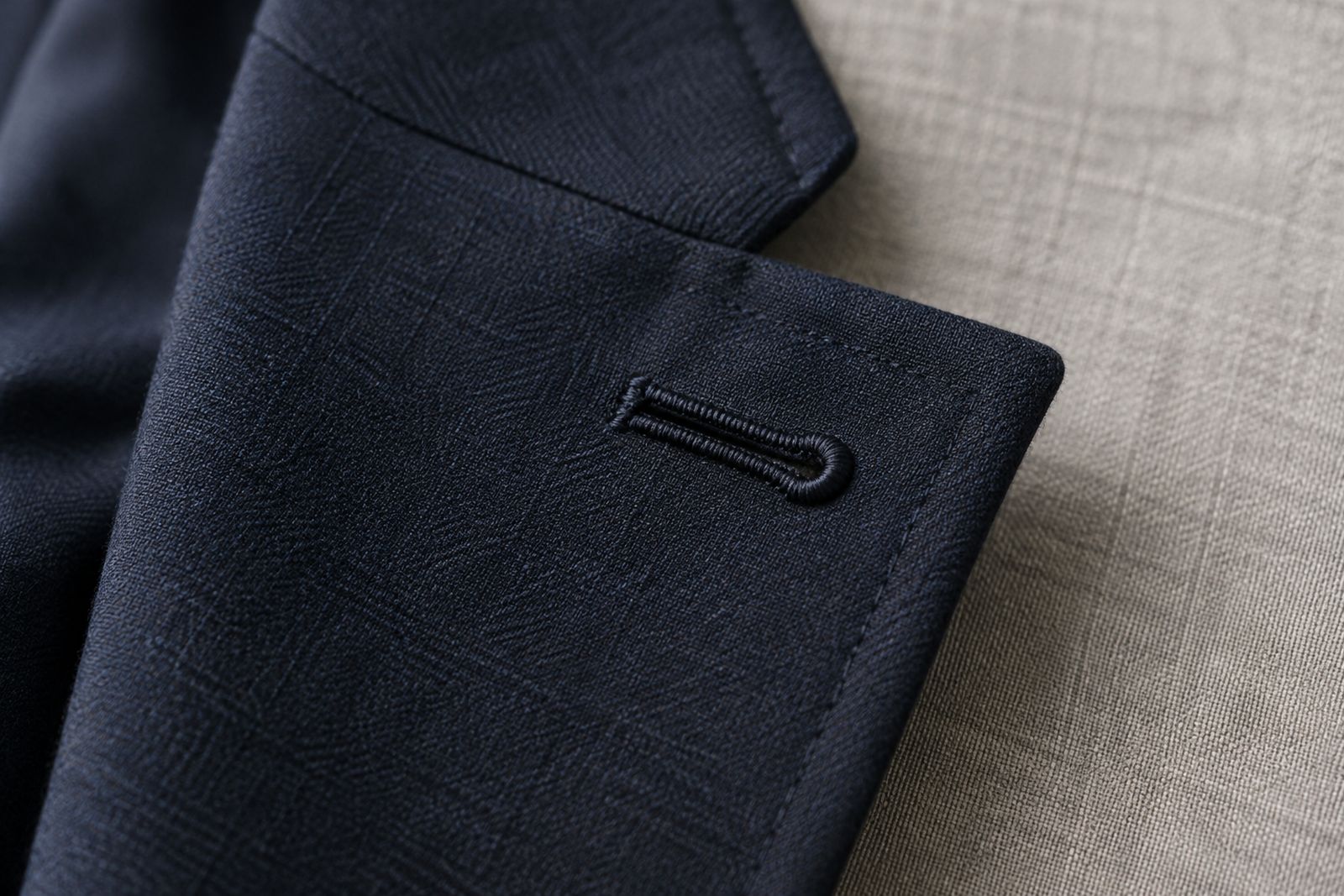
- The raised, hand-sewn Milanese buttonhole on the lapel is a signature detail.
- Bespoke in Milan costs roughly $3,900 to $9,000+, with 22% VAT normally included.
- Allow two or three fittings; many workshops close for part of August.
In this guide
- What is a Milanese suit?
- What defines the Milan cut?
- Where did Milanese tailoring come from?
- How the Milan tailoring market works
- Milanese vs Neapolitan vs London tailoring
- Is Milanese tailoring right for you?
- How much does a bespoke suit cost in Milan?
- How to commission a suit in Milan
- What to tell a Milanese tailor
- Who are the best tailors in Milan?
- Questions people ask
Milanese tailoring is easy to miss because it does not shout. Where a Neapolitan jacket is soft and a Savile Row coat is built up, a Milan suit is clean, close and composed: the suit of a city that has long been Italy's capital of business and fashion. If you want Italian tailoring that works in a boardroom, this is the style to understand.
Milanese tailoring at a glance
- Shoulder
- Defined and fairly straight, with light padding and a smooth sleevehead
- Chest
- Clean and close, with a firm canvas
- Waist
- Shaped, without the hourglass of some English houses
- Details
- Flap pockets, sober fabrics, the raised Milanese lapel buttonhole
- Character
- Composed, urban, businesslike
- Bespoke price
- Roughly $3,900 to $9,000+ (2026, approximate)
- Timeline
- About 8 to 16 weeks, 2 or 3 fittings
What is a Milanese suit?
A Milanese suit is a bespoke suit cut in the northern Italian manner: structured enough to hold a clean line, but lighter and closer to the body than a traditional English coat. The shoulder is defined and fairly straight, with a thin pad and a smooth sleevehead. The chest is clean rather than draped, the waist is shaped, and the overall look is sober and precise.
The style suits a working city. Milan's tailors have long dressed bankers, lawyers and industrialists, so the suits favor navy and gray worsteds, flap pockets and proportions that look correct in an office. Flourishes are kept to the finishing, where hand work shows in the buttonholes and edges rather than in the silhouette.
What defines the Milan cut?
Five features define the Milan cut. None is unique to the city, but together they make a Milanese suit recognizable.
- A clean, defined shoulder. Light padding gives a straight line from collar to sleeve, without the rope or extension of some English houses, and without the shirring of a Neapolitan spalla camicia.
- A close, smooth chest. A firm canvas keeps the chest clean, with little or no drape.
- A shaped waist. The coat follows the body closely through the waist but does not flare dramatically over the hips.
- Restrained details. Flap pockets rather than patch pockets, and fabrics chosen for the office.
- The Milanese buttonhole. A lapel buttonhole sewn by hand over a raised cord, so it stands slightly proud of the fabric.
Milanese buttonhole
A Milanese buttonhole (asola milanese) is a lapel buttonhole sewn entirely by hand over a cord or gimp, giving a raised, rounded edge. It is decorative and a sign of hand finishing.
Where did Milanese tailoring come from?
Much of Milan's bespoke tradition runs through the Caraceni family. Domenico Caraceni founded his house in Rome in 1913 and developed a lighter, more fluid style that drew on British tailoring; he is often said to have studied it by taking apart Henry Poole garments. His relative Augusto Caraceni carried the name to Milan.
A. Caraceni has worked from Via Fatebenefratelli 16 in Milan since 1946 and was later led by Mario Caraceni, who kept the A. Caraceni name. A second Milan house carrying the name, Ferdinando Caraceni, was later run by Ferdinando's daughter, Nicoletta.
Milan's tailoring also sits beside two great textile districts. The wool mills around Biella, in Piedmont west of the city, weave much of the world's finest suiting, and Como, to the north, is Italy's center of silk. A Milanese tailor can show you fabric books from mills within about two hours' drive.
How the Milan tailoring market works
Milan offers four ways to get a suit made, and the city's fame as a fashion capital makes it easy to confuse them. Decide which one you want before you book.
Independent sartorie
A sartoria is a bespoke workroom, often run by a master tailor with a small team and usually seen by appointment. It cuts a personal pattern and fits a basted garment. This is where the Milanese style lives, and where prices start at roughly $3,900.
Fashion houses and mill brands
Luxury fashion houses and fabric mills sell made-to-measure in Milan, much of it in the shopping streets around Via Montenapoleone and Via della Spiga. The fabric and finish can be excellent, but the pattern is a house block adjusted to you, made in a factory. Expect roughly $1,000 to $2,800 for made-to-measure from brands and specialist shops, more from the biggest names.
Visiting tailors
Tailors from elsewhere in Italy, especially Naples, visit Milan to see clients, and many Italian tailors gather at the Pitti Uomo menswear fair in Florence each January and June. If you like a Neapolitan house but live in the north, ask whether it holds fittings in Milan.
Neighborhood tailors
Small alteration tailors work in every district. Use them for hems, sleeves and waist adjustments on ready-made suits, and for repairs; they are not the place for a bespoke commission.
| Route | Fittings | Typical time | Typical price (approximate) |
|---|---|---|---|
| Independent sartoria | 2 or 3, basted | About 8 to 16 weeks | $3,900 to $9,000+ |
| Brand or mill made-to-measure | 0 or 1 | About 4 to 8 weeks | $1,000 to $2,800, more at top brands |
| Visiting tailor | Fittings on scheduled visits | Depends on the visit schedule | Usually the house's home price |
| Ready-to-wear plus alterations | Alterations only | About 1 to 2 weeks for alterations | $220 to $900 for the suit |
Approximate 2026 figures; Italian prices normally include 22% VAT.
Milanese vs Neapolitan vs London tailoring
The difference between Milanese and Neapolitan tailoring is mainly structure: Milan builds a cleaner, firmer shoulder and chest, while Naples strips structure out for a soft, shirt-like shoulder and an easy fit. London, especially at the military and structured houses, builds up the most. The table compares the three.
| Feature | Milan | Naples | London (classic English) |
|---|---|---|---|
| Shoulder | Defined, fairly straight, light padding | Soft, unpadded; often spalla camicia with shirring | Structured, often padded and roped |
| Chest | Clean and close | Light canvas, soft | Firm canvas; clean, or draped at soft houses |
| Waist | Shaped | Shaped but easy | Suppressed, often hourglass |
| Length | Medium | Often shorter | Longer, covering the seat |
| Pockets | Flap | Patch, curved; barchetta breast pocket | Flap, often with a ticket pocket |
| Front | Usually two buttons | Often three-roll-two | Two buttons, or one at some houses |
| Typical fabrics | Navy and gray worsteds | Lighter wools, linens, blends | Medium to heavier worsteds and flannels |
| Character | Composed, urban | Relaxed, sunny | Upright, formal |
These are tendencies. Every house has its own style, and many modern tailors blend regional styles.
Milan
Clean and composed
- Defined shoulder, light pad
- Close, smooth chest
- Flap pockets
- Built for the office
Naples
Soft and relaxed
- Spalla camicia shoulder
- Barchetta and patch pockets
- Three-roll-two front
- Built for warmth and ease
London
Structured and upright
- Padded, often roped shoulder
- Suppressed waist, longer skirt
- Ticket pocket, double vents
- Built for a cooler climate
For the southern style in depth, read Neapolitan tailoring explained; for the London houses, see Savile Row house styles.
Is Milanese tailoring right for you?
Choose the Milan cut if you wear suits for work, like a clean line and want Italian finishing without a casual look. It flatters slim and average builds, and its light structure gives a narrow or sloping shoulder some definition without the bulk of an English coat. If you want maximum softness for a hot climate, Naples suits you better; if you want an upright, formal coat for a cool one, look to London.
The Milan cut
For
- +Looks sharp in an office without looking stiff
- +Lighter and more comfortable than many English coats
- +Hand finishing such as the Milanese buttonhole
- +Works with business shirts and ties as well as open collars
Against
- –Less relaxed than a Neapolitan jacket in the heat
- –Less dramatic shape than the boldest English houses
- –You may need to travel to Milan for fittings
How much does a bespoke suit cost in Milan?
A bespoke suit from an established Milan sartoria costs roughly $3,900 to $9,000 or more in 2026. Prices in Italy normally include 22% VAT; if you live outside the EU and will take the suit home, ask whether a VAT refund applies.
Bespoke sartoria
$3,900–9,000
Made-to-measure
$1,000–2,800
High-street ready-to-wear
$220–900
The Milan house Musella Dembech shows how mixed modern Milanese tailoring can be: Permanent Style described its cut as combining the strong lines and lapels of northern Italian tailors with the soft structure and shoulders of the south. Our bespoke suit prices by city compares Milan with London, New York and Dubai.
How to commission a suit in Milan
Commissioning a suit in Milan works like bespoke anywhere: a consultation, two or three fittings and collection, over about 8 to 16 weeks. The difference for visitors is planning the fittings around your trips.
Ordering a Milanese suit, step by step
- 1
Book ahead by email
Write in English or Italian with your dates, what you want and your budget. Many workrooms are small, so a booked appointment matters.
- 2
Avoid mid-August
Many Italian businesses, including small workshops, close for part of August around the Ferragosto holiday on 15 August. Plan fittings for other months.
Tip: Ask the house about its closures before you book flights for a fitting.
- 3
Bring a clear brief
Say how you will wear the suit, in which season and climate, and bring photos. Milanese tailors respond well to precise requests about lapel width and button position.
- 4
Do the first fitting in person
The basted fitting is where the pattern is corrected on your body. If you can return only once, ask whether the house can ship the finished suit or finish it at a later visit.
- 5
Collect and check
Try the finished suit with the shoes and shirt you will wear, and ask how to care for it.
What to tell a Milanese tailor
Tell a Milanese tailor what the suit is for before you discuss style. A suit for daily office wear in a heated building calls for a 9 to 11 oz (280 to 340 g) worsted; a summer suit for travel, 7 to 9 oz (220 to 280 g) in a high-twist or blended fabric. Then be specific about the details that matter to you.
Points to cover at the consultation
- How often you will wear the suit, and in which season.
- Two or three photos of suits you like.
- Lapel width and shape: notch or peak. See lapels explained.
- Shoulder: how much padding you want, if any.
- Pockets: flap, jetted or patch, and whether you want a ticket pocket.
- Trousers: pleats or flat front, and whether you want turn-ups (cuffs).
- Your total budget, and whether the quote includes VAT.
Who are the best tailors in Milan?
TailorGuide publishes its city rankings separately from its guides; see all city rankings. This guide explains the style and how to commission it, and names houses only to illustrate history and prices that have been publicly reported.
To compare the Milan cut with the other great schools, read English vs Italian vs American tailoring.
Questions people ask
What is a Milanese suit?
A Milanese suit is a bespoke suit cut in the northern Italian manner: a defined, fairly straight shoulder with light padding, a clean and close chest, a shaped waist and sober, businesslike details. It is more structured than a Neapolitan suit and lighter than a traditional English one. Hand finishing, such as the raised Milanese lapel buttonhole, is common.
What is the difference between Milanese and Neapolitan tailoring?
Milanese tailoring builds a cleaner, firmer shoulder and chest with flap pockets and restrained lines, while Neapolitan tailoring removes structure for a soft, shirt-like shoulder, patch pockets and a barchetta breast pocket. Milan suits the office; Naples suits warmth and ease. Both rely heavily on hand work.
What is a Milanese buttonhole?
A Milanese buttonhole is a lapel buttonhole sewn entirely by hand over a cord or gimp, so it has a raised, rounded edge. It is usually decorative, on the lapel rather than the front. It signals hand finishing.
How much does a bespoke suit cost in Milan?
A bespoke suit from an established Milan sartoria costs roughly $3,900 to $9,000 or more in 2026 (approximate). Smaller workrooms sit at the lower end and the oldest names at the upper end. Italian prices normally include 22% VAT.
Can you get a bespoke suit made on a short trip to Milan?
You can start one, but you cannot usually finish one. Bespoke needs two or three fittings over about 8 to 16 weeks, so plan to return or ask whether the house can finish and ship the suit. Made-to-measure is the realistic option for a single short visit.
Who are the best tailors in Milan?
TailorGuide publishes its city rankings separately from its guides; see all city rankings. Houses with long histories in the city include A. Caraceni, at Via Fatebenefratelli since 1946. Choose a house by its cut and by how it fits your plans for fittings.
Is Milanese tailoring the same as Italian tailoring?
No. Italian tailoring includes several regional schools, chiefly Milan, Naples and Rome, which differ in shoulder, structure and details. Milan is the most structured and businesslike of the three, Naples the softest. Many modern tailors blend elements of each.
TailorGuide is independent. Our guides are written and checked by our team and carry no paid endorsements. How we work.