The short answer
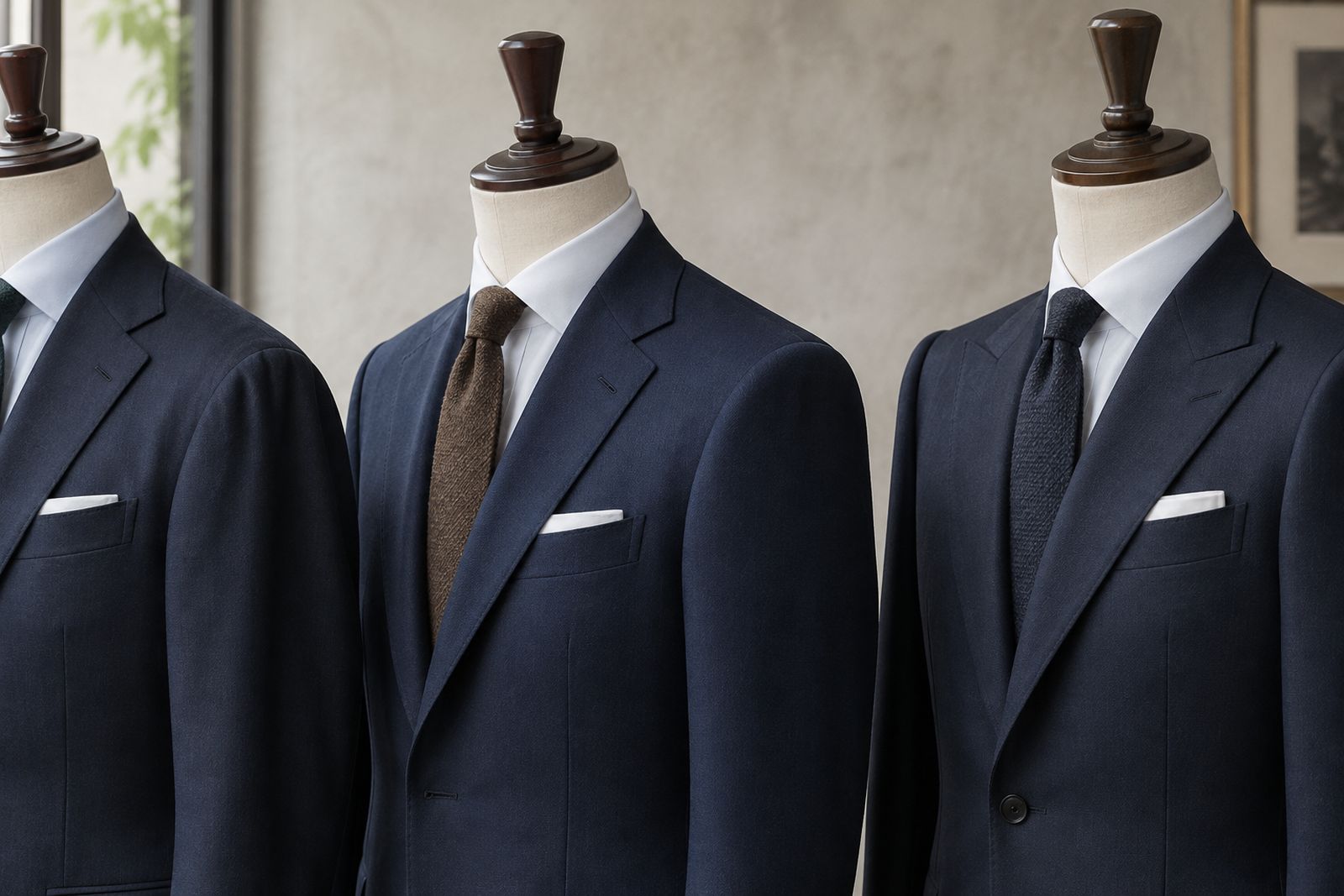
A house style is the silhouette a tailoring house gives every suit it cuts. On Savile Row the range runs from soft to sharp: Anderson & Sheppard and Steven Hitchcock cut a soft English drape; Henry Poole, Norton & Sons and Thom Sweeney sit in a classic middle; Huntsman, Richard Anderson, Gieves & Hawkes, Dege & Skinner and Edward Sexton cut more structured, shaped coats.
- Choose a house by its silhouette first, then by name or price.
- Soft drape: Anderson & Sheppard and Steven Hitchcock.
- Structured one-button: Huntsman and, longer and cleaner, Richard Anderson.
- Military roots: Gieves & Hawkes and Dege & Skinner; boldest shape: Edward Sexton.
- A cutter will adjust details for you, but not abandon the house cut.
In this guide
- What is a house style in tailoring?
- Savile Row house styles compared
- What is the Anderson & Sheppard drape cut?
- What is the Huntsman style?
- Military and bold: Gieves & Hawkes, Dege & Skinner and Edward Sexton
- Classic English: Henry Poole, Norton & Sons and Thom Sweeney
- Which Savile Row tailor is best for you?
- How to read a house style in the fitting room
- What can you ask a house to change?
- Questions people ask
Savile Row house styles are the reason two bespoke suits made a few doors apart can look like different garments. Every client gets a personal pattern, but each house drafts it within its own proportions: how much padding sits in the shoulder, how high the armhole is cut, how full the chest is, where the waist sits and how the skirt falls. Once you can see those choices, choosing a house becomes much easier.
House style
A house style is the consistent silhouette and set of proportions a tailoring house applies to every garment it cuts, passed from cutter to apprentice and recognizable across decades.
What is a house style in tailoring?
A house style is a set of decisions that a house makes the same way for every client. The cutter still drafts your pattern from your measurements and posture, so the suit fits you alone. But the shoulder line, armhole, chest shape, waist and length follow the house's view of how a coat should look. That view is learned through years of apprenticeship, so it changes slowly.
Most house styles can be placed on a line from soft to structured. Soft houses use little or no shoulder padding and let the chest fall in gentle folds. Structured houses build up the shoulder, often with a rope at the sleevehead, and shape the waist firmly. Neither is better. They suit different bodies, climates and tastes.
Soft drape
Anderson & Sheppard, Steven Hitchcock
- Natural shoulder, little padding
- Fullness across the chest and blades
- High, small armholes for movement
- Relaxed, easy look
Classic English
Henry Poole, Norton & Sons, Thom Sweeney
- Clean, gently built shoulder
- Canvassed chest, moderate shape
- Defined but not severe waist
- Business and formal versatility
Structured and shaped
Huntsman, Richard Anderson, Gieves & Hawkes, Dege & Skinner, Edward Sexton
- Strong or roped shoulder
- Close chest, firmly shaped waist
- Often one button or a high button stance
- Sharp, upright or bold look
Savile Row house styles compared
The table summarizes each house as described on its TailorGuide profile and in recent coverage of the Row. Follow the links for each house's full profile, prices and history.
| House | Where | Shoulder | Chest and waist | Overall look |
|---|---|---|---|---|
| Anderson & Sheppard | 32 Old Burlington Street | Soft, natural | Full, draped chest; high, small armholes | Soft English drape |
| Steven Hitchcock | Mayfair, by appointment | Soft, natural | Drape kept quieter; light canvas | Soft English drape, restrained |
| Henry Poole | 15 Savile Row | Clean, gently built | Balanced, canvassed chest | Classic English, gently structured |
| Norton & Sons | 16 Savile Row | Softer | Close chest, nipped waist, slight skirt | Traditional English, sporting heritage |
| Thom Sweeney | 24c Old Burlington Street | Less padding | Narrower sleeves, slightly wider lapels | Modern English, relaxed but polished |
| Huntsman | 11 Savile Row | Strong, structured | Clean chest, defined waist | Structured one-button |
| Richard Anderson | 13 Savile Row | Minimal padding | Hand-padded chest, waisted seams | Long, clean, one-button |
| Gieves & Hawkes | 1 Savile Row | Structured, roped | High armholes, upright chest | Military-inspired English |
| Dege & Skinner | 10 Savile Row | Strong | Upright; narrow cavalry-cut trousers | Classic English with military expertise |
| Edward Sexton | 35 Savile Row | Roped | Nipped waist, flared skirt, dramatic lapels | Bold, waisted and flared |
Addresses as of 2026. Every house adapts its cut to the client, so treat these as tendencies, not fixed rules.
What is the Anderson & Sheppard drape cut?
The Anderson & Sheppard drape cut is a soft English silhouette with a natural, lightly padded shoulder, high and small armholes, and extra fullness across the chest and shoulder blades that falls in soft vertical folds. The fullness lets the coat move with you, and the small armhole stops the whole jacket lifting when you raise your arm. The look is easy and unforced rather than sharp.
Anderson & Sheppard was founded on Savile Row in 1906 by Per Anderson, who had worked under the tailor Frederick Scholte, the cutter most associated with the drape, and the trouser cutter Sidney Sheppard. After almost a century on the Row, the house moved to Old Burlington Street, one block west. Its drape is the most widely known soft cut in London.
Steven Hitchcock
Steven Hitchcock trained at Anderson & Sheppard under his father, John Hitchcock, the house's long-serving head cutter, and cuts in the same tradition. His drape is more restrained: a soft shoulder, high armholes and light canvases, with less visible fullness in the chest. He works by appointment in Mayfair rather than on the Row itself.
What is the Huntsman style?
The Huntsman style is a structured, single-button jacket with a strong shoulder, a clean chest and a defined waist. It looks sharp and finished the moment you put it on. Huntsman began in 1849 and moved to 11 Savile Row in 1919, and its riding heritage shows in the clean, close line of the coat.
Richard Anderson
Richard Anderson trained at Huntsman and rose to head cutter before opening his own house at 13 Savile Row in 2001. His cut keeps the one button and the clean line but runs longer and leaner: minimal shoulder padding, a hand-padded chest and waisted seams. If you like Huntsman's clarity but want something less built-up at the shoulder, compare the two.
Military and bold: Gieves & Hawkes, Dege & Skinner and Edward Sexton
These three houses cut the most upright and shaped coats on the Row. Two come from military tailoring, and the third brought a 1960s sense of drama to the same precise construction.
Gieves & Hawkes
Gieves & Hawkes traces its origins to 1771 and built its name on naval and army uniforms. Its style is military-inspired English: structured, roped shoulders, high armholes and an upright chest, though recent coverage notes a more relaxed cut under its current head cutter. It is also the house where you can buy bespoke, made-to-measure and ready-to-wear under one roof at No. 1.
Dege & Skinner
Dege & Skinner, founded in 1865 and now at 10 Savile Row, cuts classic English suits backed by deep military and ceremonial expertise. Expect a strong shoulder and a straight, upright line, and ask about its narrow cavalry-cut trousers. It suits clients who want a traditional coat with real backbone.
Edward Sexton
Edward Sexton co-founded Nutters of Savile Row with Tommy Nutter in 1969, and the house that bears his name at 35 Savile Row keeps its bold shape: roped shoulders, high armholes, a nipped waist, a flared skirt and dramatic lapels. It is the most theatrical silhouette on the Row, and it is still cut with full bespoke discipline.
Classic English: Henry Poole, Norton & Sons and Thom Sweeney
The middle of the range is where most first-time clients feel at home: a recognizably English suit with a clean shoulder and a shaped waist, but nothing extreme.
Henry Poole
Henry Poole, whose origins go back to 1806 and which opened onto Savile Row in 1846, cuts classic English suits that are gently structured: a clean shoulder, a canvassed chest and proportions that work for business and formal wear. Recent coverage describes a house preoccupied with balance, placing the buttons to moderate the torso and cutting trousers to sit on the waist. It is the safest choice if you want a suit that looks correct anywhere.
Norton & Sons
Norton & Sons, at 16 Savile Row, cuts traditional English suits with a sporting heritage. Its coat has a softer shoulder than the military houses, a close chest, a nipped waist, a slight skirt and a high armhole. Country clothes and tweeds are a natural fit here, as are city suits with a little more life in the line.
Thom Sweeney
Thom Sweeney, founded in 2007 by Thom Whiddett and Luke Sweeney, is the youngest house on this list and works from Old Burlington Street. Its modern English cut is relaxed but polished: less padding, slightly wider lapels and narrower sleeves. It appeals to clients who want English tailoring that wears a little more casually.
Which Savile Row tailor is best for you?
The best Savile Row tailor for you is the one whose house style suits your build and the way you live. A soft drape flatters men who value comfort and movement; a structured coat gives a sloping or narrow shoulder more line. For our ranking of the ten, see the 10 best tailors in London.
| Soft drape | Classic English | Structured and shaped | |
|---|---|---|---|
| You want comfort and freedom of movement | |||
| You want a sharp, formal line | |||
| Your shoulders slope or are narrow | |||
| You wear suits in warm offices daily | |||
| You want a suit that reads as English anywhere | |||
| You want something distinctive |
Matching the house to the occasion
What you will wear the suit for narrows the field further. A house's history usually tells you where its cut is strongest, so use it as a guide when you are choosing between two houses you like.
| You need | Look at | Why |
|---|---|---|
| Daily business suits | Henry Poole, Norton & Sons, Thom Sweeney, Anderson & Sheppard | Classic or soft cuts that look right in an office and are comfortable all day |
| Dinner jackets and formal wear | Henry Poole, Huntsman, Richard Anderson, Edward Sexton | A clean, shaped line suits evening wear; Henry Poole says it made the first dinner jacket in 1865 |
| Country clothes and tweeds | Norton & Sons, Huntsman | Sporting and riding heritage shapes their coats |
| Uniforms and ceremonial dress | Gieves & Hawkes, Dege & Skinner | Both have long military and ceremonial practice |
| A relaxed, modern suit | Thom Sweeney, Anderson & Sheppard, Steven Hitchcock | Less padding and a softer shoulder wear more casually |
| A statement suit | Edward Sexton | The boldest silhouette on the Row |
Every house makes a full range of garments; this table points to where each style naturally leans.
Climate matters too. A soft, lightly canvassed coat is more comfortable in warm offices and on summer days, while a structured coat keeps its shape best in medium and heavier fabrics. Our guide to year-round suit fabric helps you pair the cut with the right weight.
How to read a house style in the fitting room
You do not need jargon to read a house style. Look at a finished coat on a hanger or on a client, then on yourself, and check the same seven points every time.
Seven things to look at
- The shoulder line: does it follow your own shoulder or extend and square it?
- The sleevehead: smooth and flat, or raised in a rope where it meets the shoulder?
- The armhole: high and close, so the jacket stays put when you lift your arm?
- The chest: clean and close, or with soft folds of drape?
- The waist: where it is set and how firmly it is shaped.
- The skirt: straight, or flaring slightly over the hips?
- The front: one button or two, and how high the button sits.
Our guides to lapels and one, two or three-button suits explain the details that sit on top of the silhouette.
What can you ask a house to change?
You can ask any house to adjust details within its style: a little less padding, a slightly lower button, a narrower lapel, slanted pockets or a ticket pocket. A good cutter will say yes to most of these and tell you plainly when a request would fight the house cut. What you cannot sensibly ask is for a structured house to cut a soft drape, or the reverse.
Once you have a family of styles in mind, read what Savile Row is for how the houses work, and check current bespoke suit prices before you book.
Questions people ask
What is the Anderson & Sheppard drape cut?
The Anderson & Sheppard drape cut is a soft English silhouette with a natural shoulder, high and small armholes and extra fullness across the chest and shoulder blades that falls in soft folds. It moves easily with the body and looks relaxed rather than sharp. The house has cut it since its founding in 1906.
What is the Huntsman style?
The Huntsman style is a structured, single-button jacket with a strong shoulder, a clean chest and a defined waist. It looks sharp and finished, and it draws on the house's riding heritage. Huntsman has been at 11 Savile Row since 1919.
Which Savile Row tailor is best?
The best Savile Row tailor is the one whose house style suits your body and taste: soft drape, classic English or structured. Visit one soft and one structured house before you decide. For our ranking, see the 10 best tailors in London.
What is a house style in tailoring?
A house style is the consistent silhouette a tailoring house gives every suit it cuts: its shoulder, armhole, chest, waist and length. Each client still gets a personal pattern, but within the house's proportions. Styles pass from cutter to apprentice and change slowly.
Can you ask a Savile Row house to change its style?
You can ask for changes to details, such as less padding, a narrower lapel or a different button position, and a good cutter will accommodate most of them. You cannot sensibly ask a structured house to cut a soft drape, or the reverse. Choose the house whose silhouette you already like.
Which Savile Row house is the most structured?
Huntsman, Gieves & Hawkes, Dege & Skinner and Edward Sexton cut the most structured coats on the Row, with strong or roped shoulders and firmly shaped waists. Edward Sexton is the boldest, with a nipped waist, flared skirt and dramatic lapels. Richard Anderson keeps a clean, structured line with less shoulder padding.
Is Anderson & Sheppard on Savile Row?
No. Anderson & Sheppard was founded on Savile Row in 1906 but moved after almost a century to 32 Old Burlington Street, one block west. Thom Sweeney is also on Old Burlington Street. Both are a minute's walk from the Row.
TailorGuide is independent. Our guides are written and checked by our team and carry no paid endorsements. How we work.