The short answer
Worsted wool is wool spun from long fibers that have been combed to lie parallel, giving a smooth, strong, crisp yarn. Woolen yarn is carded only, so its fibers stay jumbled, making it fuzzier, loftier and warmer. Most business suits are worsted. Flannel and tweed are typical woolen fabrics, although worsted flannel also exists.
- Worsted yarn is carded and then combed; woolen yarn is carded only.
- Worsted is smooth, strong and crisp and holds a trouser crease; woolen is soft, lofty and warm.
- Most year-round business suits are worsted, typically 9 to 11 oz (280 to 340 g).
- Flannel can be woolen (softer, warmer) or worsted (smoother, crisper, usually lighter).
- A 100% worsted wool label describes the fiber and yarn, not the weight or Super number.
In this guide
- What is worsted wool?
- What is woolen wool?
- Worsted vs woolen: the differences
- Is worsted wool good for suits?
- Is flannel worsted or woolen?
- Tweed and other woolen fabrics
- Common worsted suit fabrics
- What does 100% worsted wool mean?
- Worsted or woolen: which should you choose?
- The tailor's view
- Questions people ask
Worsted wool is the fabric of almost every business suit, and woolen wool is the fabric of flannel and tweed. Both start as the same raw fleece. The difference lies in how the fibers are prepared before spinning, and that one step changes how the fabric looks, feels, wears and keeps you warm. The name worsted comes from Worstead, a village in Norfolk, England, that was once a center of the wool weaving trade.
Worsted
Carded, then combed
- Long fibers only; short fibers combed out
- Fibers lie parallel
- Smooth, compact, tightly twisted yarn
- Crisp surface with a clearly visible weave
- Strong; holds a sharp crease
- Cooler for its weight
Woolen
Carded only
- Shorter fibers, often of mixed lengths
- Fibers lie in every direction
- Fuzzy, lofty, softly twisted yarn
- Soft surface that often hides the weave
- Holds a softer crease
- Warmer for its weight
What is worsted wool?
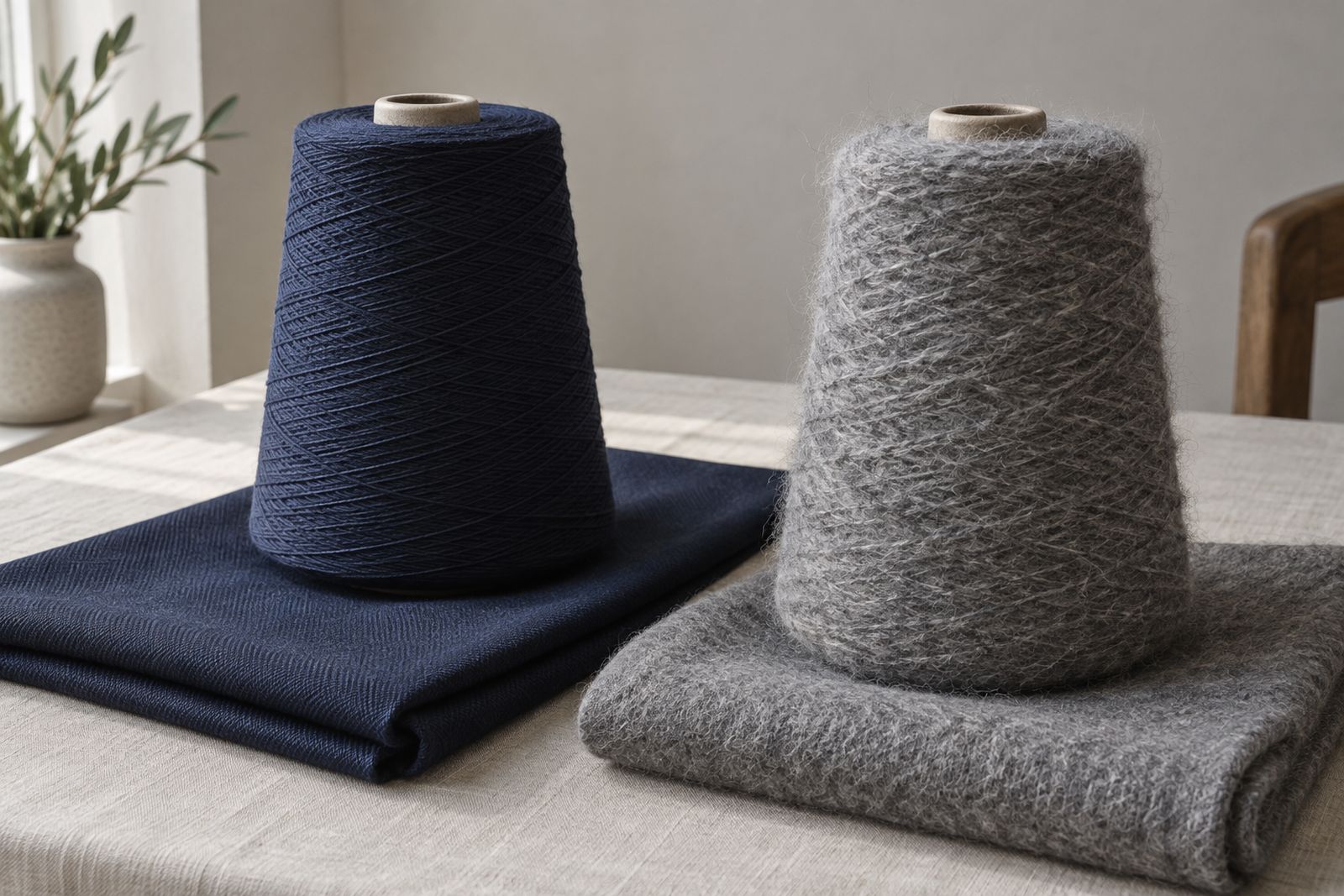
Worsted wool is wool yarn made from long fibers that have been carded and then combed so they lie parallel before spinning. Combing removes the short fibers, called noils, and leaves a smooth rope of long, aligned fiber called top. The top is drawn out thinner and more evenly, then spun with a relatively high twist into a yarn that is smooth, even and strong. For suiting, two of these yarns are often twisted together into a two-ply yarn for extra strength.
Woven up, worsted yarn gives a fabric with a clean surface and a clearly visible weave: you can see the diagonal of a twill or the grid of a plain weave. It feels smooth and dry, takes a sharp crease, resists pilling and sheds dust. Because the yarns are compact, a worsted fabric has clear gaps between them and breathes well for its weight.
Worsted
Worsted is wool yarn spun from long, combed fibers that lie parallel, and the fabric woven from that yarn. It is smooth, strong and crisp.
What is woolen wool?
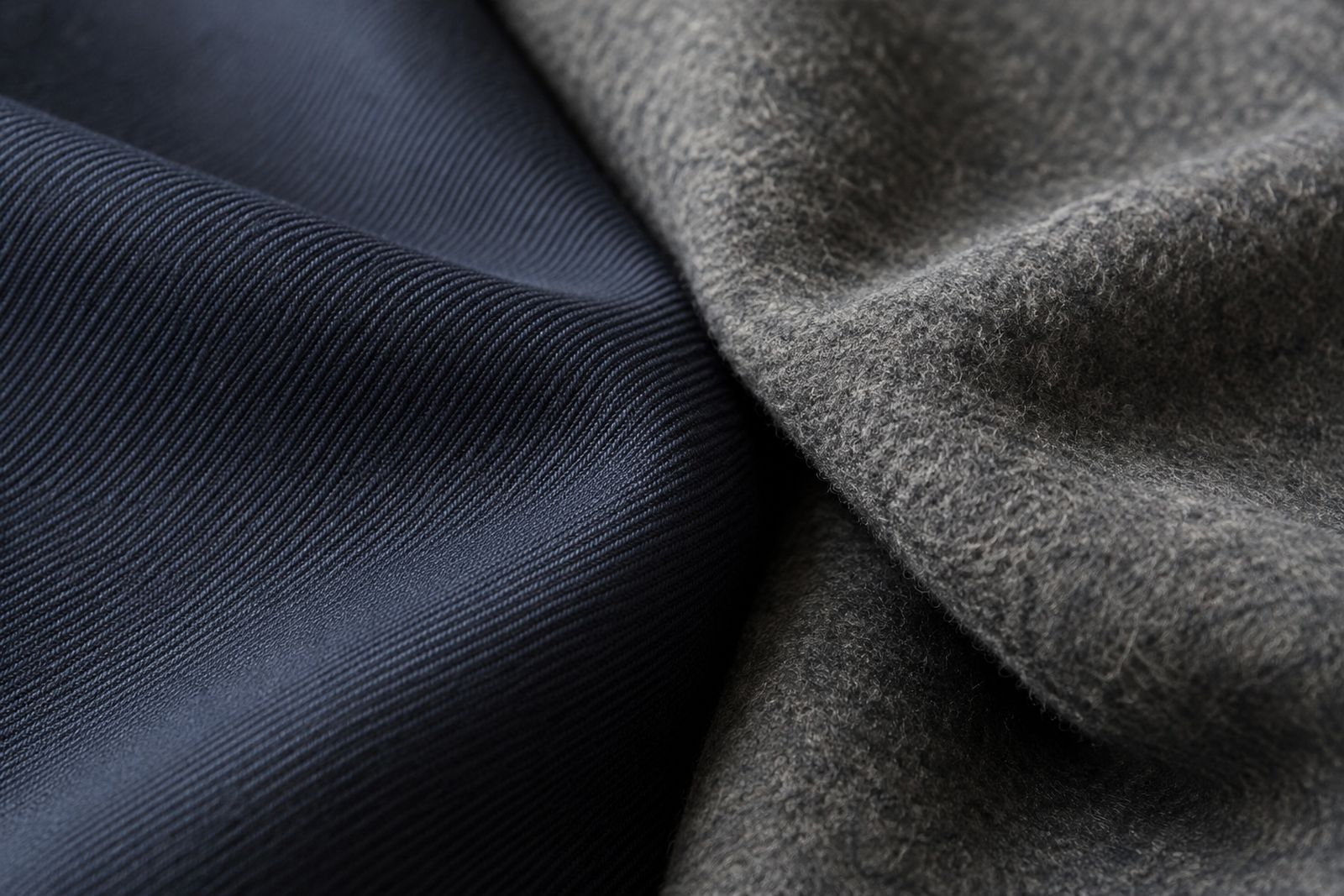
Woolen wool is wool yarn made from fibers that have been carded but not combed. Carding opens and mixes the fibers into a thin web but leaves them pointing in every direction. The web is divided into narrow strands, which are spun with less twist. The result is a fuzzy, lofty yarn full of trapped air.
Woolen fabrics are often milled (fulled) after weaving: washed and worked so the fibers shrink and felt slightly together. Milling, sometimes followed by brushing, raises a soft surface, or nap, that hides the weave. That is why a woolen flannel looks almost like fine felt, and why woolens feel soft, warm and springy.
Woolen (spelled woollen in Britain)
Woolen is wool yarn spun from carded fibers that lie in every direction, and the fabric woven from that yarn. It is fuzzy, lofty and warm.
Worsted vs woolen: the differences
The differences run from the fiber all the way to the finished suit.
| Feature | Worsted | Woolen |
|---|---|---|
| Fiber preparation | Carded, then combed | Carded only |
| Fibers used | Long fibers; short ones removed | Shorter fibers, often of mixed lengths |
| Fiber alignment | Parallel | Random |
| Yarn | Smooth, compact, higher twist | Fuzzy, lofty, lower twist |
| Fabric surface | Clean; weave clearly visible | Soft and napped; weave often hidden |
| Feel | Smooth and dry | Soft and springy |
| Warmth for its weight | Cooler | Warmer |
| Crease holding | Takes and holds a sharp crease | Holds a softer crease |
| Durability | High, though smooth worsteds can turn shiny at the seat after years of wear | Good; soft flannels wear thin at friction points, tweeds are very tough |
| Typical suit weights | Mostly 7 to 13 oz (220 to 400 g) | Mostly 11 oz (340 g) and up |
| Typical fabrics | Tropical, serge, gabardine, sharkskin, birdseye, hopsack, high-twist, worsted flannel | Flannel, tweed, Saxony, cheviot, Donegal, melton |
| Best season | All year, chosen by weight | Autumn and winter |
| Typical use | Business and formal suits, trousers | Winter suits, sport coats, trousers, overcoats |
Stage 1: Scouring
Raw wool is washed to remove grease, dirt and plant matter.
Stage 2: Carding
Wire-covered rollers open and mix the fibers into a thin web. Woolen yarn is divided into strands and spun from here.
Stage 3: Gilling
Rows of pins straighten the fibers and begin to line them up.
Stage 4: Combing
Short fibers (noils) are removed, leaving long parallel fibers called top.
Stage 5: Drawing
The top is drawn out into thinner, more even strands.
Stage 6: Spinning
The strand is twisted into yarn, often then plied two together for suiting.
Stage 7: Weaving and finishing
The yarn is woven, then washed, pressed and set at the mill.
Is worsted wool good for suits?
Yes. Worsted wool is the best all-round fabric for suits and the default for business and formal tailoring. Its smooth surface looks sharp, its strength survives daily sitting and commuting, and it takes a trouser crease that lasts. In the right weight it works in every season: 7 to 9 oz (220 to 280 g) for heat, 9 to 11 oz (280 to 340 g) for year-round wear and 12 oz (370 g) and up for cold weather.
Most fine worsted suiting also carries a Super number, which tells you how fine the fibers are. That is a separate question from worsted or woolen; see Super numbers explained.
Worsted wool: pros and cons
For
- +Smooth, sharp appearance
- +Strong and hard-wearing
- +Holds a crisp crease
- +Breathes well for its weight
- +Works in every season, chosen by weight
Against
- –Smooth worsteds can turn shiny at the seat and elbows with years of wear or heavy pressing
- –Less warm than a woolen of the same weight
- –Shows creases and iron marks more than a napped fabric
- –Very fine worsteds wear faster
Is flannel worsted or woolen?
Flannel can be either. Traditional flannel is woolen: carded yarn, woven and then milled and brushed until the surface is soft and the weave all but disappears. Worsted flannel uses worsted yarn and is milled more lightly, so it has a flannel look and feel but is smoother, crisper and usually lighter.
| Feature | Woolen flannel | Worsted flannel |
|---|---|---|
| Surface | Deep, soft nap; weave hidden | Light nap; weave faintly visible |
| Feel | Soft, warm, slightly spongy | Smoother and firmer |
| Typical weight | 12 to 14 oz (370 to 430 g) or more | Often 9 to 12 oz (280 to 370 g) |
| Crease | Soft crease that needs regular pressing | Holds a sharper crease |
| Warmth | Warmest | Warm, but wearable for more of the year |
| Wear | Can wear thin at the seat and inner thighs | More durable at friction points |
| Best for | Cold winters; the classic gray flannel suit | Three-season wear, travel, trousers |
Tweed and other woolen fabrics
Tweed is the best-known woolen fabric: rough, textured, often flecked or patterned, and woven from coarser wool, traditionally in Scotland and Ireland. The most famous, Harris Tweed, must by Act of Parliament be handwoven by islanders in their homes in the Outer Hebrides. Tweed is warm and very hard-wearing, and it suits sport coats and country suits better than city business wear; see suit jacket vs blazer vs sport coat.
- Saxony: a soft woolen made from fine merino-type wool, with a gentle nap. Used for suits and jackets.
- Cheviot: a firmer, rougher tweed made from the wool of Cheviot sheep.
- Donegal tweed: a tweed with small colored flecks scattered through it, named after County Donegal in Ireland.
- Melton: a dense, heavily milled woolen used for overcoats and for the undersides of tailored jacket collars.
Common worsted suit fabrics
Most of what you see in a business fabric book is worsted. These are the main types.
| Fabric | Weave | Character | Best for |
|---|---|---|---|
| Tropical | Light plain weave | Light, airy, smooth | Summer suits |
| High-twist (fresco type) | Open plain weave of high-twist two- or three-ply yarns | Crisp, breathable, crease-resistant | Hot weather and travel |
| Serge | Even twill | Smooth, durable, versatile | Year-round business suits |
| Gabardine | Steep, tight twill | Dense, smooth, hard-wearing | Suits and trousers |
| Sharkskin | Two-tone weave | Crisp, with a subtle sheen | Business suits |
| Birdseye and nailhead | Small dot patterns | Solid from a distance, textured up close | Business suits |
| Hopsack | Basket weave | Open and textured | Summer suits and blazers |
| Pinstripe | Fine stripes on a twill or plain ground | Formal and sharp | City business suits |
Fresco is a mill's trade name that has become shorthand for the whole family of open, high-twist worsteds. They are among the most useful fabrics for heat; see the best suit fabric for hot weather.
What does 100% worsted wool mean?
A label reading 100% worsted wool tells you two things: the fabric is all wool, and the yarn was worsted spun. It does not tell you the weight, the Super number, the weave or how the garment was made. A light tropical and a heavy winter serge can both be 100% worsted wool. Read it as a good sign, then check the weight and the construction.
Worsted or woolen: which should you choose?
Choose by what the suit has to do. Worsted wins for business, travel and heat; woolen wins for winter warmth and texture.
| Worsted | Woolen | |
|---|---|---|
| First or only business suit | ||
| Sharp trouser crease | ||
| Hot climate | ||
| Frequent travel | ||
| Cold-winter city suit | ||
| Weekend or country jacket | ||
| Overcoat |
If you are buying one suit, make it worsted. If you live somewhere with real winters, add a woolen flannel as your second or third suit: a mid-gray flannel is one of the most useful cold-weather suits there is, and it works with the same shirts and ties as your worsteds.
The tailor's view
Tailors handle the two very differently. Woolen fabrics are forgiving: they shrink and stretch readily under a hot iron, so a tailor can mold them into shape, and their soft surface hides stitching and small flaws. Smooth worsteds show everything, from a slightly uneven seam to an iron mark, so they demand precise pressing. That is one reason a beautifully finished worsted suit is a good test of a tailor's skill.
Ask about trousers in particular. Woolen flannel trousers are wonderfully warm, but they bag at the knee and wear at the seat and inner thighs, so an extra pair is sensible. Worsted trousers keep their crease and shape longer between pressings. Either way, regular rest on a hanger and occasional pressing keep them looking right; see how to care for a suit.
Before you choose
- Rub the swatch: smooth and dry suggests worsted, soft and fuzzy suggests woolen
- Ask for the weight in ounces or grams
- For flannel, ask whether it is woolen or worsted
- Crush a corner for 10 seconds and see how quickly it recovers
- Think about where, when and how often you will wear it
- For a woolen suit, consider an extra pair of trousers
Worsted for work, woolen for warmth and texture: that is the short version. For every other fiber and weave, see suit fabrics explained.
Questions people ask
What is the difference between worsted and woolen?
Worsted yarn is carded and then combed so long fibers lie parallel, giving a smooth, strong, crisp yarn. Woolen yarn is carded only, so its fibers stay jumbled, making it fuzzier, loftier and warmer. Worsted suits look sharp and wear hard; woolen suits are softer and warmer.
Is worsted wool good for suits?
Yes, worsted wool is the best all-round suit fabric. It is smooth, strong, breathable and holds a crisp crease. Chosen in the right weight, it works in every season.
Is flannel worsted or woolen?
Flannel can be either. Traditional flannel is woolen, milled and brushed so the weave disappears under a soft nap. Worsted flannel is smoother, crisper and usually lighter, and it holds a sharper crease.
What does 100% worsted wool mean?
It means the fabric is all wool and the yarn was worsted spun from combed, parallel fibers. It says nothing about the weight, the Super number or how the garment was made. Check those separately.
Is worsted wool warm?
Worsted wool is warm enough for winter in heavier weights, but it is cooler than a woolen fabric of the same weight. In light weights of 7 to 9 oz (220 to 280 g), worsted is one of the best fabrics for hot weather. Warmth depends mainly on weight and weave.
Is worsted wool itchy?
Fine worsted suiting is rarely itchy, because the fibers are fine and the yarn surface is smooth. Coarser woolens such as tweed can feel scratchy against bare skin, which matters less in a lined jacket worn over a shirt. If you are sensitive, choose a finer worsted and ask for trousers lined to the knee.
Is merino wool worsted?
Merino is a breed of sheep, not a spinning method, so merino wool can be spun as worsted or woolen. Most fine worsted suit fabrics are made from merino. Soft woolens such as Saxony also use merino-type wool, while tweeds often use coarser breeds.
Can you wear a worsted suit in summer?
Yes, if it is a light, open worsted. A tropical or high-twist worsted of 7 to 9 oz (220 to 280 g), with a half-lined jacket, is comfortable in summer heat. A heavy or densely woven worsted will be too warm.
TailorGuide is independent. Our guides are written and checked by our team and carry no paid endorsements. How we work.