The short answer
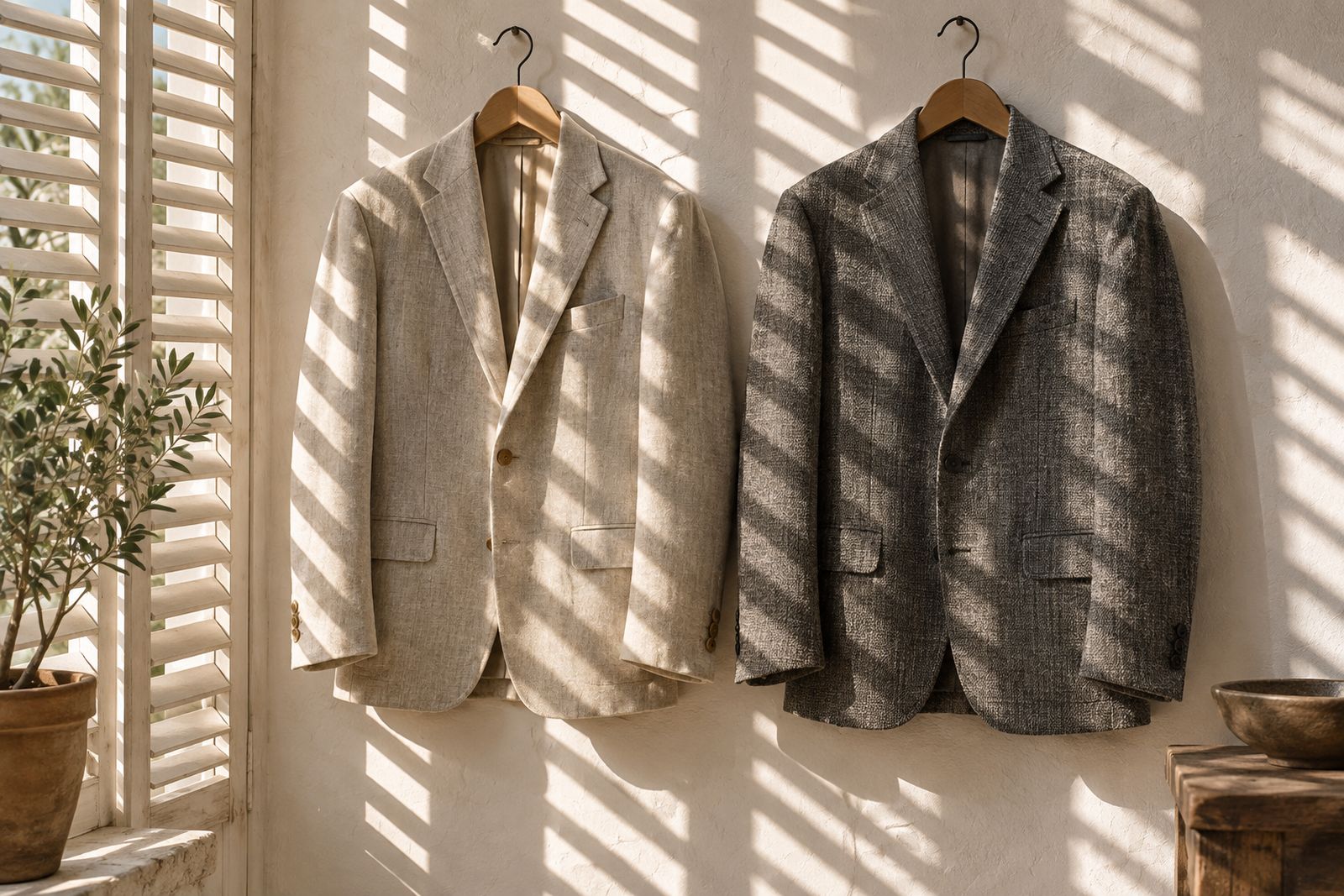
The best suit fabric for hot weather is an open-weave wool, such as a high-twist fresco-type fabric or hopsack, of about 7 to 9 oz (220 to 280 g). It breathes, resists creasing and copes with humidity better than most alternatives. Linen is coolest in dry heat but creases. Mohair blends stay crisp. Cotton and seersucker suit casual days.
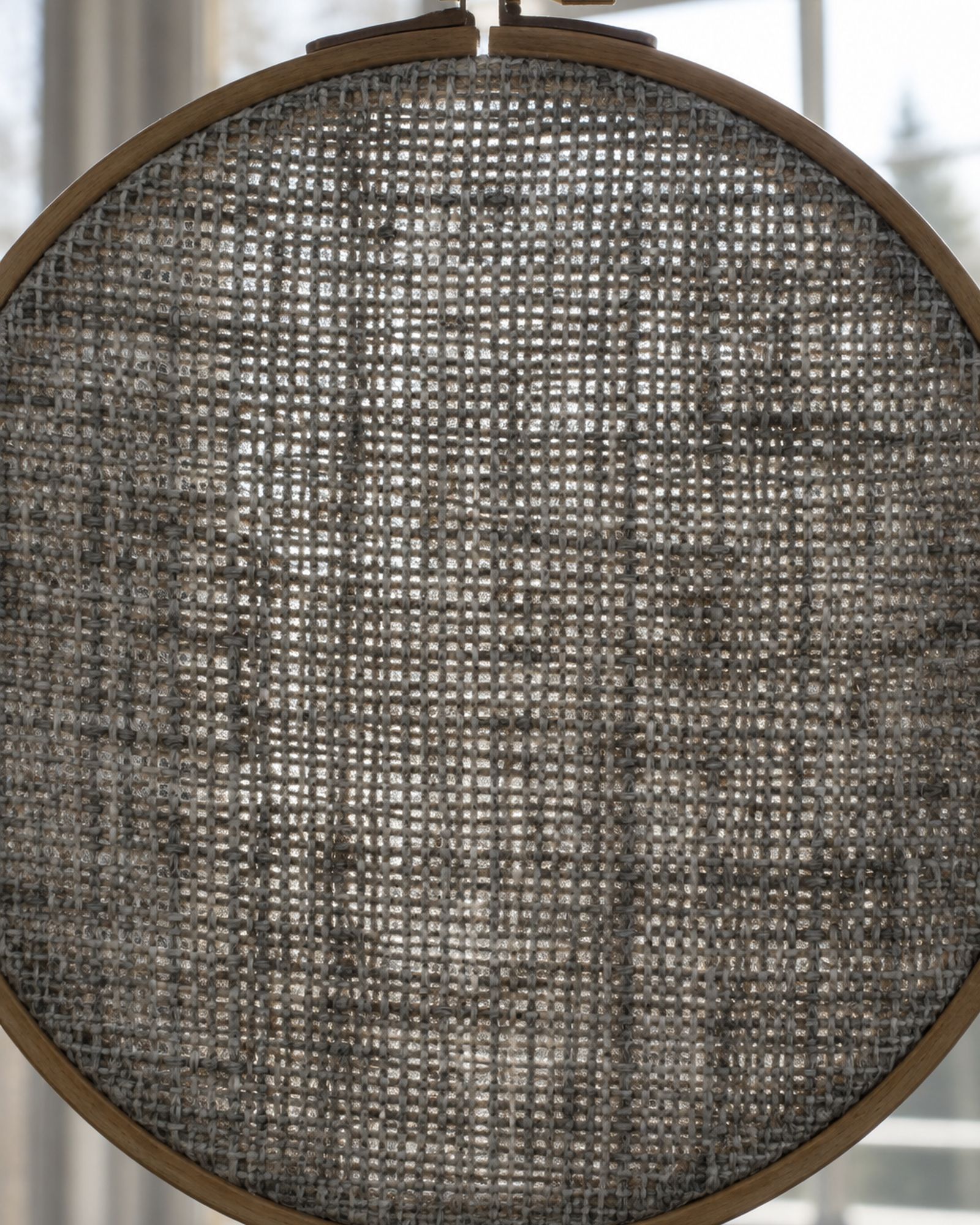
- Openness of weave matters more than fiber or color: hold the fabric up to the light.
- Aim for 7 to 9 oz (220 to 280 g); open high-twist weaves can go to about 10 oz (310 g) and still breathe.
- High-twist wool and mohair blends are best in humid heat because they resist creasing and stand off the skin.
- Linen is coolest in dry heat but creases; heavier linen creases less.
- Ask for a half-lined or unlined jacket, with cupro (Bemberg) wherever there is lining.
In this guide
- What makes a suit fabric cool?
- The best hot-weather suit fabrics, ranked
- Hot-weather suit fabrics compared
- What weight suit for summer?
- Is linen or wool better for summer suits?
- What suit to wear in humid weather?
- Construction matters as much as fabric
- Fabrics to avoid in the heat
- The tailor's view: what to ask for
- Questions people ask
The best suit fabric for hot weather is one that lets air through, copes with sweat and still looks presentable by evening. Those demands pull in different directions. Linen breathes well but creases; polyester resists creasing but traps heat; a heavy worsted looks sharp but cooks you. Humidity makes it harder, because sweat cannot evaporate and a damp fabric clings and wrinkles. Below are the eight fabrics that handle heat best, ranked, with their weights and the construction that makes them work.
Hot-weather fabric at a glance
- Best overall
- High-twist open-weave wool (fresco type)
- Best for humid heat
- High-twist wool and mohair-wool blends
- Coolest in dry heat
- Linen and linen blends
- Most casual
- Cotton and seersucker
- Weight
- 7 to 9 oz (220 to 280 g); open weaves up to about 10 oz (310 g)
- Construction
- Half-lined or unlined jacket, soft shoulders
- Avoid
- Polyester, flannel, dense gabardine, heavy cotton twill
What makes a suit fabric cool?
Four things decide how cool a suit feels, roughly in this order:
- 1.Openness of the weave. Air moving through the fabric carries heat and moisture away. An open plain weave or hopsack lets far more air through than a dense twill or gabardine of the same fiber.
- 2.How the fiber handles moisture. Wool absorbs water vapor into the fiber and stays comfortable as you sweat; linen absorbs and dries fast; cotton absorbs and dries slowly; polyester barely absorbs at all, so sweat sits on your skin.
- 3.Weight. Lighter fabric means less insulation, but a very light, dense fabric can cling when damp and feel hotter than a slightly heavier open one.
- 4.Construction. A full lining, padded shoulders and a fused front each add a layer between you and the air.
The best hot-weather suit fabrics, ranked
This ranking assumes a typical hot working day: some time outdoors, a lot of sitting and a need to look composed throughout. If you only wear the suit for a few hours in dry heat, linen climbs the list.
1. High-twist open-weave wool (fresco type)
High-twist wool is woven from two- or three-ply yarns twisted very tightly, then set in an open plain weave. The twist makes each yarn springy and wiry, so the fabric resists creasing and stands slightly off the skin, while the open weave lets air pass straight through. Fresco is a trade name of the English mill Martin Sons & Co, now part of Huddersfield Fine Worsteds, and is often used loosely for the whole family; other mills make their own versions.
- Weight: usually sold from about 8 to 11 oz (250 to 340 g); for real heat, stay at about 10 oz (310 g) or lighter.
- Best for: humid heat, travel, business suits in summer.
- Watch for: a dry, slightly grainy hand that some people find rough at first.
2. Wool hopsack
Hopsack is a basket weave, in which two or more yarns travel together over and under as one. The result is an open, textured fabric that breathes well and hides creases. Navy hopsack is the classic summer blazer fabric, and it makes a slightly less formal summer suit.
- Weight: usually about 8 to 11 oz (250 to 340 g).
- Best for: blazers, summer suits, travel.
- Watch for: the visible texture reads a little less formal than a smooth worsted.
3. Mohair and wool blends
Mohair, from the Angora goat, is smooth, springy and lustrous. Blended with wool, it makes a crisp fabric with excellent crease recovery that feels cool and dry against the skin and holds its shape in humidity better than almost anything else. Its slight sheen makes it a favorite for summer evening wear.
- Weight: often 7 to 9 oz (220 to 280 g).
- Best for: humid heat, evening events, travel.
- Watch for: the sheen, a firm and sometimes scratchy hand, and a high price.
4. Linen
Linen, from the flax plant, is the most breathable suit fabric and the coolest in dry heat. It absorbs moisture, dries quickly and feels cool to the touch. It also creases more than any other suit fabric, and in heavy humidity a light linen can turn limp. Heavier linens crease less and hang better than light ones; our guide to linen suits covers weights and blends in detail.
- Weight: light linens 7 to 9 oz (220 to 280 g); heavier linens from about 11 oz (340 g).
- Best for: dry heat, outdoor daytime events, holidays.
- Watch for: creasing and limited formality.
5. Wool, silk and linen blends
This three-fiber blend borrows something from each: wool's crease recovery, linen's coolness and silk's luster and texture. It creases less than pure linen and breathes better than most pure wools of the same weight, which makes it a favorite for summer sport coats and relaxed suits.
- Weight: often 7 to 9 oz (220 to 280 g).
- Best for: summer sport coats, weddings, smart-casual suits.
- Watch for: a higher price and some creasing; the slubby texture reads casual.
6. Tropical worsted
Tropical worsted is a light, plain-weave worsted wool of about 7 to 9 oz (220 to 280 g). It is smooth and formal, so it looks like a normal business suit. Unless the yarn is high-twist, the lightest versions crease more and drape less, and a densely woven one breathes less than its weight suggests.
- Weight: 7 to 9 oz (220 to 280 g).
- Best for: business suits in warm weather, formal summer events.
- Watch for: creasing in the lightest weights; ask for two-ply yarn.
7. Seersucker
Seersucker is a cotton fabric woven with some warp yarns held slack, which creates its puckered stripes. The puckers hold the fabric away from the skin so air can circulate, and they disguise creases. It is relaxed and summery, and strongly associated with summer in the American South.
- Weight: light; sold as a summer-weight cotton.
- Best for: casual summer events and daytime weddings in the heat.
- Watch for: informality; it is not business wear in most offices.
8. Cotton
Cotton suits, in poplin, twill or gabardine, breathe reasonably well and feel cool and dry when you first put them on. In real humidity they absorb sweat and dry slowly, crease readily and bag at the knees and elbows. Light cottons are far better than heavy chino twills. Cotton is a relaxed, daytime choice.
- Weight: light poplins and twills, ideally under about 9 oz (280 g).
- Best for: casual summer suits, dry heat.
- Watch for: creasing, bagging and slow drying in humidity.
Hot-weather suit fabrics compared
| Fabric | Breathability | Crease resistance | Humid heat | Dry heat | Formality | Typical weight |
|---|---|---|---|---|---|---|
| High-twist wool | Very high | Very high | Excellent | Very good | Business to formal | 8 to 10 oz (250 to 310 g) |
| Wool hopsack | High | High | Very good | Very good | Business to smart casual | 8 to 11 oz (250 to 340 g) |
| Mohair and wool | High | Excellent | Excellent | Very good | Business to evening | 7 to 9 oz (220 to 280 g) |
| Linen | Highest | Poor | Fair | Excellent | Smart casual to daytime formal | 7 to 13 oz (220 to 400 g) |
| Wool, silk and linen | High | Fair | Good | Very good | Smart casual | 7 to 9 oz (220 to 280 g) |
| Tropical worsted | Good | Fair to good | Good | Good | Business to formal | 7 to 9 oz (220 to 280 g) |
| Seersucker | High | Good; puckers hide creases | Good | Very good | Casual | Light summer weight |
| Cotton | Good | Poor | Poor to fair | Good | Casual | Ideally under 9 oz (280 g) |
| Polyester, for comparison | Poor | Very high | Poor | Poor | Business, but often shiny | Varies |
What weight suit for summer?
For most summer suits, choose 7 to 9 oz (220 to 280 g). Below about 7 oz (220 g), fabrics become fragile, crease heavily and show every bulge. Open high-twist weaves are the exception: their structure lets them breathe at 9 to 10 oz (280 to 310 g), and the extra weight helps them drape and resist creasing.
Scale from 200 g to 500 g, with oz below. Tropical and summer: 220 to 280 g. Year-round: 280 to 340 g. Autumn and winter: 370 to 430 g. Lightest practical suit weight: at 220 g. Upper limit for open weaves in heat: at 310 g.
Is linen or wool better for summer suits?
Linen is better for dry heat and casual occasions; wool is better for humidity, business and anything where you need to look pressed. Linen is the most breathable fabric and the coolest to the touch, but it creases within the hour. An open-weave wool is nearly as cool, copes with sweat, springs back from creases and looks like a proper suit all day.
Linen
Dry heat, daytime, casual
- Most breathable suit fabric
- Cool to the touch
- Dries quickly
- Creases heavily
- Relaxed, daytime look
High-twist wool
Humid heat, business, travel
- Very breathable in an open weave
- Handles sweat well
- Springs back from creases
- Holds its shape all day
- Looks like a business suit
A wool and linen blend sits between the two: cooler than most wools, with fewer creases than pure linen.
What suit to wear in humid weather?
In humid weather, wear a high-twist wool or a mohair-wool blend of 7 to 9 oz (220 to 280 g), in a half-lined or unlined jacket. Humidity stops sweat from evaporating, so the fabric has to stay comfortable when damp, resist creasing and stand away from the skin. Wool takes moisture into the fiber and feels dry for longer than cotton, and high-twist yarn keeps the fabric springy. Cotton and light linen tend to go limp and crumpled, and polyester feels clammy.
| Climate | What it feels like | Best fabrics | Weight |
|---|---|---|---|
| Hot and humid: summer in New York or Washington, the tropics | Sticky; sweat does not evaporate | High-twist wool, mohair blends; seersucker for casual | 7 to 9 oz (220 to 280 g) |
| Hot and dry: inland deserts, Mediterranean summers | Fierce sun; sweat dries quickly | Linen, linen blends, high-twist wool | 7 to 9 oz (220 to 280 g) |
| Very hot and often humid outside, cold air-conditioning inside: Dubai | Repeated swings between heat and chill | High-twist or tropical worsted, half-lined | 8 to 9 oz (250 to 280 g) |
| Hot, humid inland summers: Milan | Heavy, still air | High-twist wool, mohair blends, linen blends | 7 to 9 oz (220 to 280 g) |
| Mostly mild with occasional heatwaves: London | Changeable; rarely extreme | Tropical or high-twist worsted, wool and linen | 8 to 10 oz (250 to 310 g) |
For the practical side of getting through a hot day, from undershirts to commuting, see how to stay cool in a suit.
Construction matters as much as fabric
A great hot-weather fabric can be spoiled by heavy construction. Every layer added to a jacket adds warmth, so ask for these:
- Half lining or no lining. A half-lined jacket keeps lining in the sleeves, so it slides on easily, and usually across the upper back and front, but leaves much of the back open. An unlined jacket has neatly finished seams inside instead. See suit linings explained.
- Breathable lining. Where there is lining, choose cupro (Bemberg) over polyester. Cupro absorbs moisture and breathes; polyester does not.
- Soft shoulders. Little or no shoulder padding means less insulation and a lighter jacket.
- Canvas rather than heavy fusing. A floating canvas breathes and moves with you; a fully fused front adds a glued layer across the chest. See fused vs canvas.
- Patch pockets. They are sewn onto the outside and need no internal pocket bags, which removes another layer.
- A little more ease. A suit cut close to the body traps heat and shows sweat. A touch more room through the chest, seat and thighs lets air move.
Fabrics to avoid in the heat
- Polyester and polyester-rich blends: they barely absorb sweat and feel clammy. See polyester vs wool suits.
- Woolen flannel and tweed: made to trap warm air.
- Dense gabardine and heavy twills: smart and tough, but the tight weave blocks air.
- Heavy cotton twill: absorbs sweat, dries slowly and wrinkles.
- Very fine, very light worsteds of Super 150s and above: they crease quickly and wear fast.
- Fully lined, heavily padded jackets in any fabric: the construction cancels out a good fabric.
The tailor's view: what to ask for
A good tailor in a hot city will raise most of this before you do. If yours does not, these are the steps that matter.
Choosing a hot-weather fabric with your tailor
- 1
Describe the heat
Say whether it is humid or dry, how much time you spend outdoors and how cold the air-conditioning is. A tailor will steer you differently for each.
- 2
Hold swatches to the light
Ask to see the fabrics against a window. The more light you see through the weave, the cooler the suit will be.
- 3
Crush each swatch
Squeeze each one in your fist for 10 seconds and let go. For humid heat, choose those that spring back.
Tip: Linen and cotton crease more when damp, so a swatch that creases when dry will crease more on a sticky day.
- 4
Settle the lining
Ask for a half-lined or unlined jacket, with cupro wherever lining is needed. On an unlined jacket, check that the inside seams are neatly bound or finished.
- 5
Order two pairs of trousers
You sweat most into the trousers and wear them hardest. A second pair lets each rest and dry between wears.
Start with a high-twist wool in navy or mid-gray for work, then add linen or a wool, silk and linen blend for weekends and summer weddings. For how these fabrics compare with every other fiber, see suit fabrics explained. For dressing for a wedding in the heat, see our guide to beach and summer wedding attire.
Questions people ask
Is linen or wool better for summer suits?
Linen is better in dry heat and for casual daytime wear, because it is the most breathable suit fabric. Open-weave wool is better in humidity and for business, because it handles sweat, springs back from creases and looks sharp all day. A wool and linen blend sits between the two.
What is the most breathable suit fabric?
Linen is the most breathable suit fabric. Open-weave wools such as high-twist (fresco-type) fabrics and hopsack come close and cope better with humidity and creasing. The openness of the weave matters more than the fiber's name.
What weight suit for summer?
Choose about 7 to 9 oz (220 to 280 g) for a summer suit. Open high-twist weaves stay cool up to about 10 oz (310 g) and drape better at that weight. Avoid going much below 7 oz (220 g), where fabrics crease heavily and wear quickly.
What suit to wear in humid weather?
Wear a high-twist wool or a mohair-wool blend of 7 to 9 oz (220 to 280 g), with a half-lined or unlined jacket. These fabrics handle sweat, resist creasing and stand away from the skin. Avoid polyester, heavy cotton and light linen in strong humidity.
Is a cotton suit good for hot weather?
A light cotton suit is fine for dry heat and casual occasions, but it is not the best choice for humidity. Cotton absorbs sweat and dries slowly, so it can feel damp and crease. Seersucker, with its puckered weave, copes better than flat cotton.
Are dark suits hotter in summer?
In direct sun, yes: dark colors absorb more sunlight than light ones. But the openness of the fabric matters more than its color, and in shade or indoors the difference is small. A navy open-weave wool is cooler than a cream gabardine.
Is fresco the same as high-twist wool?
Fresco is a trade name of the English mill Martin Sons & Co, now part of Huddersfield Fine Worsteds, for its high-twist open plain weave. The word is often used loosely for any similar fabric. Other mills make their own high-twist fabrics, which work in the same way.
Is mohair good for summer suits?
Yes, mohair-wool blends are among the best summer fabrics, especially in humidity. They are crisp, cool against the skin and very crease-resistant. The trade-offs are a slight sheen, a firmer hand and a high price.
TailorGuide is independent. Our guides are written and checked by our team and carry no paid endorsements. How we work.