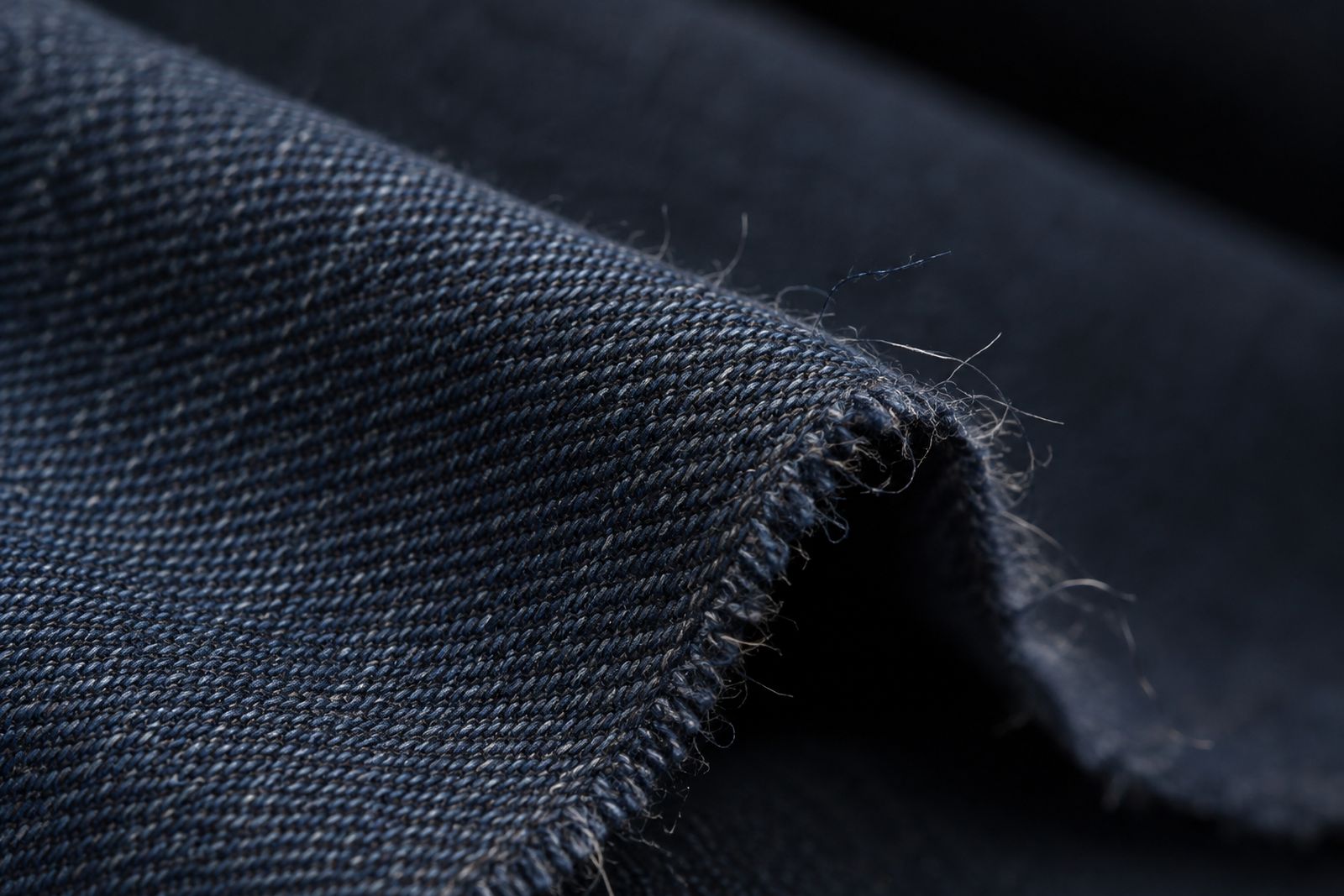
The short answer
A Super number tells you how fine the wool fibers are. Super 120s wool has a mean fiber diameter of 17.75 microns or less, and each step of 10 means fibers half a micron finer. Higher numbers feel softer and drape more fluidly, but crease more and wear faster. For a suit you wear often, Super 100s to 130s is the sweet spot.
- Super 120s means a mean fiber diameter of 17.75 microns or finer under the IWTO code.
- Each 10 points is half a micron finer: Super 100s is 18.75 microns, Super 150s is 16.25.
- Only pure new wool, or wool blended with rare fibers such as cashmere, mohair or silk, can be called Super.
- Choose Super 100s to 130s for daily wear; keep Super 150s and above for occasional wear.
- Yarn twist, ply and weave matter as much as the number.
In this guide
- What does Super 120s mean?
- Super number to micron chart
- Where do Super numbers come from?
- Which fabrics can be called Super?
- Is Super 150s better than Super 120s?
- Do higher Super numbers wrinkle more?
- Super numbers measure fineness, not quality
- Do Super numbers matter for flannel, tweed and summer fabrics?
- What Super number is best for a suit?
- Why do higher Super numbers cost more?
- How to read a Super number on a label
- How to make a fine-wool suit last
- The tailor's view
- Questions people ask
Super 120s is one of the most common labels you will see on a good suit, and one of the most misunderstood. The number is often presented as a quality score, with the suggestion that Super 150s must be better than Super 120s. It is not a quality score. It measures how fine the wool fibers are, under an international code and, in the US, under federal law. Once you know what it measures, you can read a fabric book with confidence and avoid paying extra for a fabric that will wear out sooner.
Super number
A Super number, written as Super 120s or Super 120's, is a label stating the maximum mean diameter of the wool fibers in a fabric. The higher the number, the finer the fibers.
Super numbers at a glance
- What it measures
- Mean fiber diameter, in microns
- Who defines it
- The IWTO Code of Practice; in the US, the Wool Products Labeling Act
- Applies to
- Pure new wool, or wool blended only with rare fibers such as cashmere, mohair or silk
- Super 120s
- 17.75 microns or finer
- Step size
- Every 10 points is 0.5 micron finer
- Everyday sweet spot
- Super 100s to 130s
What does Super 120s mean?
Super 120s means the wool in the fabric has a mean fiber diameter of no more than 17.75 microns. A micron is one thousandth of a millimeter, so these fibers are several times finer than a typical human hair. The figure is an average: every fleece contains a spread of fiber diameters, and the label refers to the mean of a measured sample. Two fabrics labeled Super 120s can therefore differ slightly in real fineness, as long as both sit at or under the limit.
The same logic runs through the whole scale. Super 100s means 18.75 microns or finer, Super 150s means 16.25 microns or finer, and each step of 10 in the Super number takes half a micron off the limit. The finer the fiber, the more fibers it takes to make a yarn of the same thickness, which is why fine fabrics feel softer and drape more fluidly.
Super number to micron chart
This is the full scale from the code of practice of the International Wool Textile Organisation (IWTO). The figures are maximums: a Super 120s fabric may be finer than 17.75 microns, but not coarser.
| Super number | Maximum mean fiber diameter | Character in a suit |
|---|---|---|
| Super 80s | 19.75 microns | Firm and hard-wearing, with a drier hand |
| Super 90s | 19.25 microns | Firm and hard-wearing |
| Super 100s | 18.75 microns | Durable and smooth; a strong everyday grade |
| Super 110s | 18.25 microns | Everyday sweet spot |
| Super 120s | 17.75 microns | Everyday sweet spot; soft with good durability |
| Super 130s | 17.25 microns | Upper end of everyday; noticeably softer |
| Super 140s | 16.75 microns | Fine and soft; better for regular than daily wear |
| Super 150s | 16.25 microns | Fluid drape; creases and wears faster |
| Super 160s | 15.75 microns | Luxury; best for occasional wear |
| Super 170s | 15.25 microns | Luxury; occasional wear |
| Super 180s | 14.75 microns | Luxury; occasional wear |
| Super 190s | 14.25 microns | Very fine and delicate |
| Super 200s | 13.75 microns | Very fine and delicate; rare and very expensive |
| Super 210s | 13.25 microns | Rare and very expensive |
| Super 220s | 12.75 microns | Rare and very expensive |
| Super 230s | 12.25 microns | Rare and very expensive |
| Super 240s | 11.75 microns | Rare and very expensive |
| Super 250s | 11.25 microns | The finest grade on the scale |
Source: IWTO Fabric Labelling Code of Practice. US law applies the same limits to wool products made from January 1, 2007.
Scale from 80 s to 250 s. Hard-wearing: 80 to 100 s. Everyday sweet spot: 100 to 130 s. Fine: regular wear: 130 to 160 s. Luxury: occasional wear: 160 to 250 s. 18.75 µm: at 100 s. 17.75 µm: at 120 s. 16.25 µm: at 150 s. 14.75 µm: at 180 s. 11.25 µm: at 250 s.
Where do Super numbers come from?
The numbers began as a spinning measure. Under the Bradford count system used in the English wool trade, a wool's number was the count of hanks of yarn, each 560 yards (512 m) long, that a spinner could make from one pound (454 g) of combed wool. Finer wool could be spun into more hanks, so a 60s wool was finer than a 50s wool.
Over time the numbers became a selling point, and a selling point needs a measurable definition. The IWTO code provides one by tying each Super number to a maximum mean fiber diameter measured in a laboratory. In the US, the Wool Suit Fabric Labeling Fairness and International Standards Conforming Act, signed in December 2006, wrote the same limits into the Wool Products Labeling Act for wool products made from January 1, 2007. Mislabeling a Super number there is a matter for the Federal Trade Commission.
The measurement itself is a laboratory test of mean fiber diameter, not a judgment by touch, so a Super label is a claim that can be checked. What it cannot check is anything that happens after the fiber is measured: how the yarn is spun, how the fabric is woven and how the suit is made.
Which fabrics can be called Super?
Under the IWTO code, the word Super applies to pure new wool, which may be blended only with rare fibers such as cashmere, mohair or silk. New wool means wool that has not been recycled from used fabric. A fabric that mixes wool with polyester, viscose or another common fiber cannot be called Super, however fine its wool.
Is Super 150s better than Super 120s?
No. Super 150s is finer than Super 120s, not better. The finer fabric feels softer, has more luster and drapes more fluidly. It also creases more readily, shows wear sooner at the seat, elbows and inner thighs, and is harder for a tailor to press and shape. For a suit you wear once a week or less, those trade-offs can be worth it. For a suit you wear three days a week, Super 120s will look better for longer.
Super 100s to 130s
Everyday wear
- Firmer, springier hand
- Recovers well from creases
- Resists wear at the seat and elbows
- Easier to press and tailor
- Lower price
Super 150s and above
Occasional wear
- Softer, silkier hand
- More luster and a more fluid drape
- Creases more readily
- Wears faster at friction points
- Higher price and more care needed
Do higher Super numbers wrinkle more?
Yes, as a rule. Finer fibers have less bulk and spring to pull a fabric straight, so a Super 170s suit creases faster, and holds the creases longer, than a Super 110s suit of the same weight and weave. Lighter weights make it worse, and very fine fabrics are usually woven light.
Twist and weave can offset fineness. A high-twist Super 120s in an open plain weave resists creasing better than a soft, low-twist Super 100s. That is why travel and hot-weather fabrics are sold on twist and weave first and Super number second; see the best suit fabric for hot weather for examples.
Super numbers measure fineness, not quality
A Super number tells you one thing about the raw fiber. It says nothing about these factors, which matter as much for how a suit looks and wears:
- Twist. Tightly twisted yarns are stronger, crisper and more crease-resistant.
- Ply. Two-ply (two-fold) yarns, made by twisting two single yarns together, are stronger and more even than single yarns.
- Weave and density. A closely woven twill wears better than a loose plain weave of the same fiber.
- Weight. Heavier fabrics drape and resist creasing better. Our guide to year-round suit fabric sets out the weight bands.
- Fiber length and evenness. Longer, more uniform fibers make smoother, stronger yarn, and the label does not state them.
- Finishing. How the mill washes, presses and sets the fabric changes its hand and luster.
Do Super numbers matter for flannel, tweed and summer fabrics?
Less than you might expect. Woolen flannels and tweeds are often made from wool coarser than any Super grade, and deliberately so: coarser fibers give tweed its toughness and texture, and help a woolen flannel hold its brushed surface. Worsted flannels sometimes carry a Super number, usually in the everyday range.
Hot-weather fabrics follow similar logic. High-twist and open-weave summer wools tend to use moderate grades, because their job is to stay crisp and hold the fabric off your skin, and very fine fibers would work against that. The highest Super numbers appear mainly in smooth, light worsteds for dress suits, where softness and luster are the whole point.
What Super number is best for a suit?
For most people, Super 100s to 130s. Match the number to how often you will wear the suit and how hard you will use it.
| How you will wear it | Super number | Weight | Why |
|---|---|---|---|
| Daily office suit, rotated with others | Super 100s to 130s | 9 to 11 oz (280 to 340 g) | Best balance of softness, crease recovery and wear |
| Your only suit, for work, interviews and weddings | Super 110s to 130s | About 10 oz (310 g) | Smart enough for occasions, tough enough for regular use |
| Frequent travel | Super 100s to 130s, high-twist | 9 to 10 oz (280 to 310 g) | Twist and weave do more for crease recovery than fineness |
| Hot weather | Super 100s to 130s, open weave | 7 to 9 oz (220 to 280 g) | Light and airy, yet still durable |
| Occasional and evening wear | Super 140s to 160s | 9 to 11 oz (280 to 340 g) | Softness and luster are worth the shorter life |
| Trousers that work hard | Super 100s to 120s | 10 oz (310 g) and up | The seat and inner thighs wear first |
Why do higher Super numbers cost more?
Ultrafine wool is scarce. Only a small share of the merino clip is fine enough for Super 150s and above, and spinning and weaving such fine fiber is slower and needs more care. You pay for that rarity. You do not get more durability for the money; you get softness and luster.
If your budget is limited, spend it on construction and fit before fineness. A well-made half canvas suit in Super 110s will outlast a fused suit in Super 150s; our guide to fused vs canvas construction explains why.
How to read a Super number on a label
Fabric books and garment labels state Super numbers in a few ways. Here is what each tells you.
| Label | What it tells you |
|---|---|
| Super 120s, 100% wool | Pure new wool with a mean fiber diameter of 17.75 microns or finer |
| Super 130s, wool and cashmere | A permitted blend with a rare fiber, labeled under the same code |
| Super 150s, wool and silk | A permitted blend with silk; expect more luster and softness, and gentler wear |
| 120s, wool and polyester | Not a Super fabric; any number describes the wool content only |
| 100% wool, no number | Normal for flannels, tweeds and many good worsteds; judge it by hand and weight |
How to make a fine-wool suit last
If you do choose Super 140s or above, the way you wear and store the suit decides how long it looks good. These habits matter for any wool suit, and they matter most for fine ones.
Care habits for high Super numbers
- 1
Rest it between wears
Give the suit at least a day off after each wear, on a wooden hanger shaped to the shoulders. The fibers recover and the creases drop out on their own.
- 2
Empty the pockets
Phones, keys and wallets stretch fine fabric and wear shiny patches into it. Carry them in a bag instead.
- 3
Brush, do not scrub
After wearing, brush the suit downward with a soft clothes brush to lift dust from the weave. Dust and grit wear fine fibers faster than wearing does.
- 4
Steam rather than press
Use a steamer for everyday creases. Hard pressing with a hot iron flattens fine wool and can leave a shine.
Tip: If you must press, use a low heat and a damp pressing sheet between the iron and the fabric.
- 5
Clean only when needed
Dry clean when the suit is stained or smells, not on a schedule. Solvent and machine pressing age fine fabrics quickly.
The tailor's view
Experienced cutters tend to be wary of very high Super numbers. Fine fabrics are slippery to cut, mark easily under the iron and give less help in holding the shape built into a jacket. A good tailor will usually steer a first-time customer toward Super 110s to 130s and suggest saving the finest fabrics for a second or third suit, once the customer knows how often they wear each one.
Questions to ask about a fabric
- What is the weight in ounces or grams?
- Is the yarn two-ply, and is it high-twist?
- How does it recover when I crush it in my hand?
- How would you expect it to wear if I wore it twice a week?
- Do you like working with this fabric?
- Can I order an extra pair of trousers in it now?
Super numbers are one line in a longer description of a fabric. Read them alongside weight, twist and weave, and choose by how you will wear the suit. For the bigger picture, see suit fabrics explained, or learn how combed and carded yarns differ in worsted vs woolen wool.
Questions people ask
Is Super 150s better than Super 120s?
No, it is finer, not better. Super 150s wool (16.25 microns or finer) feels softer and drapes more fluidly, but it creases more and wears faster than Super 120s (17.75 microns or finer). Choose Super 150s for occasional wear and Super 120s for regular wear.
What does Super 100s mean?
Super 100s means the wool's mean fiber diameter is 18.75 microns or finer under the IWTO code. It is a firm, durable grade that makes an excellent everyday or travel suit. It is not a low-quality fabric, only a less fine one.
What Super number is best for a suit?
Super 100s to 130s is best for most suits, especially ones you wear often. It balances softness with crease recovery and durability. Keep Super 150s and above for suits you wear occasionally.
Do higher Super numbers wrinkle more?
Yes, generally. Finer fibers have less spring, so high Super numbers crease more easily, especially in light weights. High-twist yarns and a heavier weight can offset this.
Is Super 120s good quality?
Super 120s describes fiber fineness, not quality, but it is a very good grade for suits. Quality depends on the yarn, weave and finishing, and on how the suit is made. A Super 120s from a good mill, made up with a canvas, is an excellent everyday suit.
What is the difference between 120s and Super 120s?
Under the IWTO code, the word Super is reserved for pure new wool or wool blended with rare fibers such as cashmere, mohair or silk. A number without Super on a wool and polyester blend describes only the wool fibers. That fabric will not breathe or wear like pure Super 120s wool.
Does a higher Super number mean a warmer suit?
No. Warmth depends on the fabric's weight, weave and yarn, not on fiber fineness. A Super 150s at 8 oz (250 g) is cooler than a Super 100s at 12 oz (370 g).
Can you tell a Super number by touch?
Only roughly. Higher numbers feel softer and smoother, but twist, weave and finishing change the hand so much that two fabrics with the same number can feel very different. Trust the label for fineness and your hand for how the fabric will behave.
TailorGuide is independent. Our guides are written and checked by our team and carry no paid endorsements. How we work.