The short answer
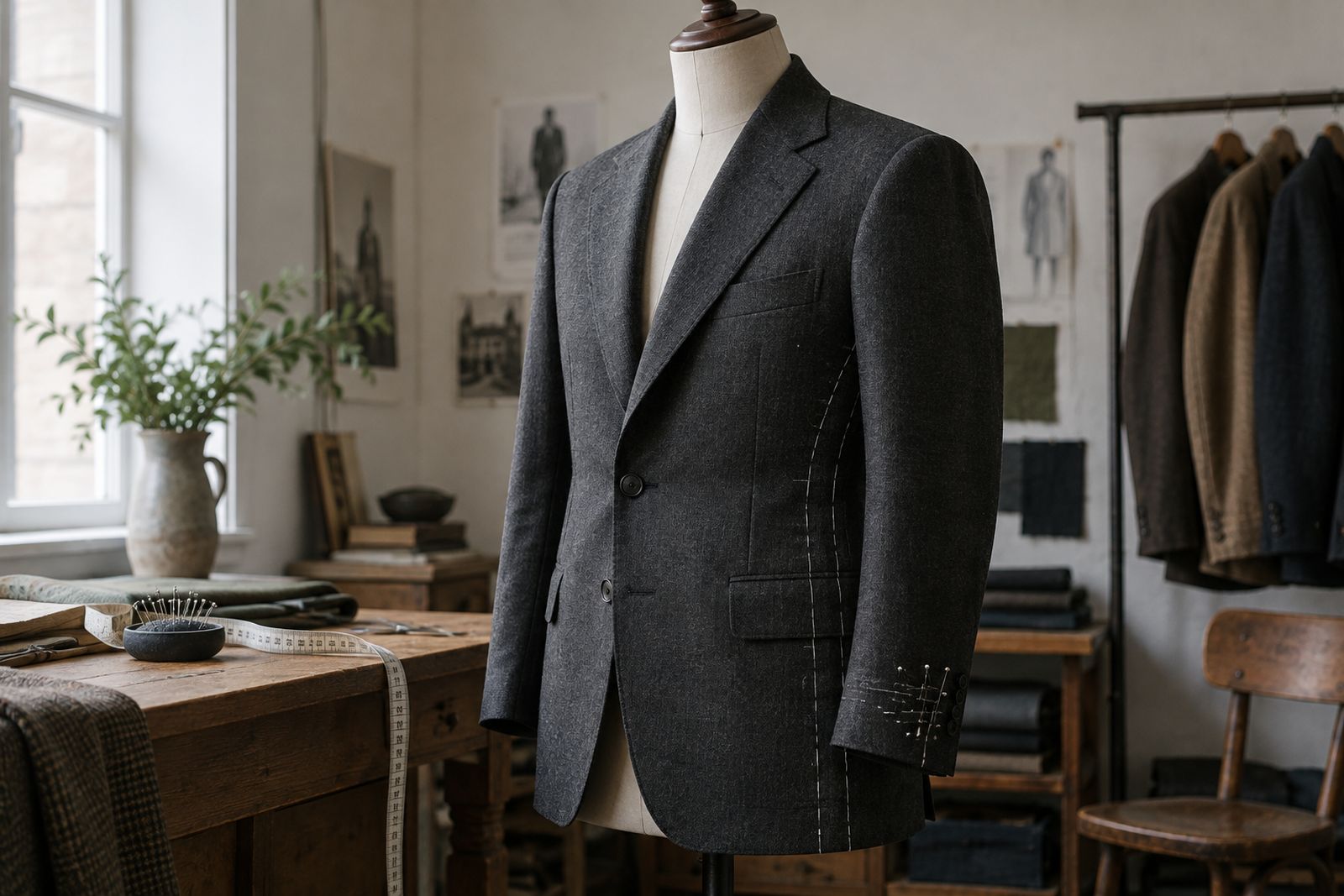
A tailor can easily hem trousers, adjust the trouser waist and seat, taper the legs, take in a jacket at the sides and back, and shorten sleeves that have non-working buttons. Sleeves with working buttonholes, collar gaps and letting out are possible but harder. Shoulders and jacket length are hard and often not worth it, so buy for the shoulders and alter the rest.
- Easy: trouser hems, waist and seat, tapered legs, a jacket taken in, sleeves without working buttonholes.
- A tailor can only let out the fabric already folded inside the seams.
- Hard: shoulders, jacket length and sleeves with working buttonholes.
- Taking a jacket in by one size is usually fine; two sizes usually is not.
- Buy for the shoulders and chest, then alter everything else.
In this guide
- What can a tailor alter on a suit?
- The one rule: a tailor can only add what is already there
- Easy alterations on suit trousers
- Easy alterations on a suit jacket
- Alterations that are possible but harder
- Can a tailor fix suit shoulders?
- Can a tailor shorten a suit jacket?
- Can you tailor a suit two sizes down?
- Which suit alterations are not worth it?
- The tailor's view: how to buy a suit you can alter
- Questions people ask
Almost every ready-made suit needs some alteration, and a good tailor can turn a close fit into a very good one. But there is a hard line between alterations that are quick, cheap and invisible and those that are expensive, risky or impossible. Knowing what a tailor can alter on a suit, and what they cannot, is the most useful thing to understand before you buy one.
Alterations at a glance
- Easy
- Trouser hem, waist, seat and taper; jacket taken in; sleeves with non-working buttons
- Possible but harder
- Sleeves with working buttonholes, letting out, collar gaps, adding turn-ups (cuffs)
- Hard or not worth it
- Shoulders, jacket length, lapel width, armholes, two sizes down
- Never possible
- Adding fabric that is not already folded inside the seams
- Buying rule
- Buy for the shoulders and chest; alter the rest
What can a tailor alter on a suit?
A tailor can alter almost anything on a suit's trousers and the length, width and sleeves of its jacket, within the limits of the fabric inside the seams. The structural parts of the jacket, the shoulders, the armholes and the overall length, are a different matter. The two tables below rate every common alteration as easy, possible or not worth it.
| Alteration | Verdict | Notes and limits |
|---|---|---|
| Shorten the hem | Easy | Any amount. Decide on the break and wear the right shoes when pinning. |
| Lengthen the hem | Possible | Only as far as the fabric folded inside the hem; the old crease line may show. |
| Take in the waist | Easy | Through the center back seam. About 1 to 2 inches (2.5 to 5 cm) is routine. |
| Let out the waist | Possible | Limited to the seam allowance; well-made trousers often allow about 1 to 1½ inches (2.5 to 4 cm), cheap ones very little. |
| Take in or let out the seat | Easy to possible | Done with the waist through the back seam; letting out is limited by the allowance. |
| Taper the legs | Easy | From the knee down is simplest; tapering the whole leg is more work. |
| Add turn-ups (cuffs) | Possible | Needs about 4 inches (10 cm) of spare length below the finished length. |
| Remove turn-ups | Easy | The extra length can be used to lengthen slightly. |
| Change the rise | Not worth it | The rise is set by the cut of the trousers. |
| Remove pleats | Not worth it | Possible in theory, but it rarely looks right. |
| Alteration | Verdict | Notes and limits |
|---|---|---|
| Take in the waist and sides | Easy | Through the side seams, back seam and darts. Up to about 2 inches (5 cm) around the waist is routine. |
| Let out the waist | Possible | Limited to the seam allowance; let-out lines may show on worn fabric. |
| Shorten sleeves, non-working buttons | Easy | From the cuff; the buttons are moved up. |
| Shorten sleeves, working buttonholes | Hard | Usually done from the shoulder, or the buttonholes end up in the wrong place. |
| Lengthen sleeves | Possible | Only as far as the fabric folded into the cuff; not possible past working buttonholes. |
| Slim the sleeves | Easy to possible | Along the sleeve seams; limited near the armhole. |
| Fix a collar gap | Possible | The collar is removed and reshaped or the back neck adjusted; results depend on the cause. |
| Narrow the shoulders | Hard | Sleeves and often the collar come off; about ½ inch (1.3 cm) per side is a practical limit. |
| Widen the shoulders | Not possible | There is no fabric to add. |
| Shorten the jacket | Hard | More than about 1 inch (2.5 cm) upsets the pockets, buttons and vents. |
| Lengthen the jacket | Rarely possible | The hem allowance is small, and letting it down usually leaves the old fold line showing. |
| Narrow the lapels | Not worth it | Recutting lapels on a canvassed jacket is costly and rarely clean. |
| Raise the armholes | Not possible | Fabric cannot be added back; armholes can only be lowered. |
| Fix bubbling on a fused front | Not possible | The glue has failed; it cannot be reliably re-bonded. |
Limits are typical for good ready-made suits. Every garment is different, so ask the tailor to check the seam allowances before you commit.
The one rule: a tailor can only add what is already there
Taking a suit in is always possible within reason, but letting it out depends entirely on how much spare fabric the maker left folded inside the seams. That spare fabric is the inlay, and it varies hugely from suit to suit.
Inlay
An inlay is extra seam allowance left inside a garment's seams, most often at the trouser seat and the jacket's side and back seams, so the garment can be let out later.
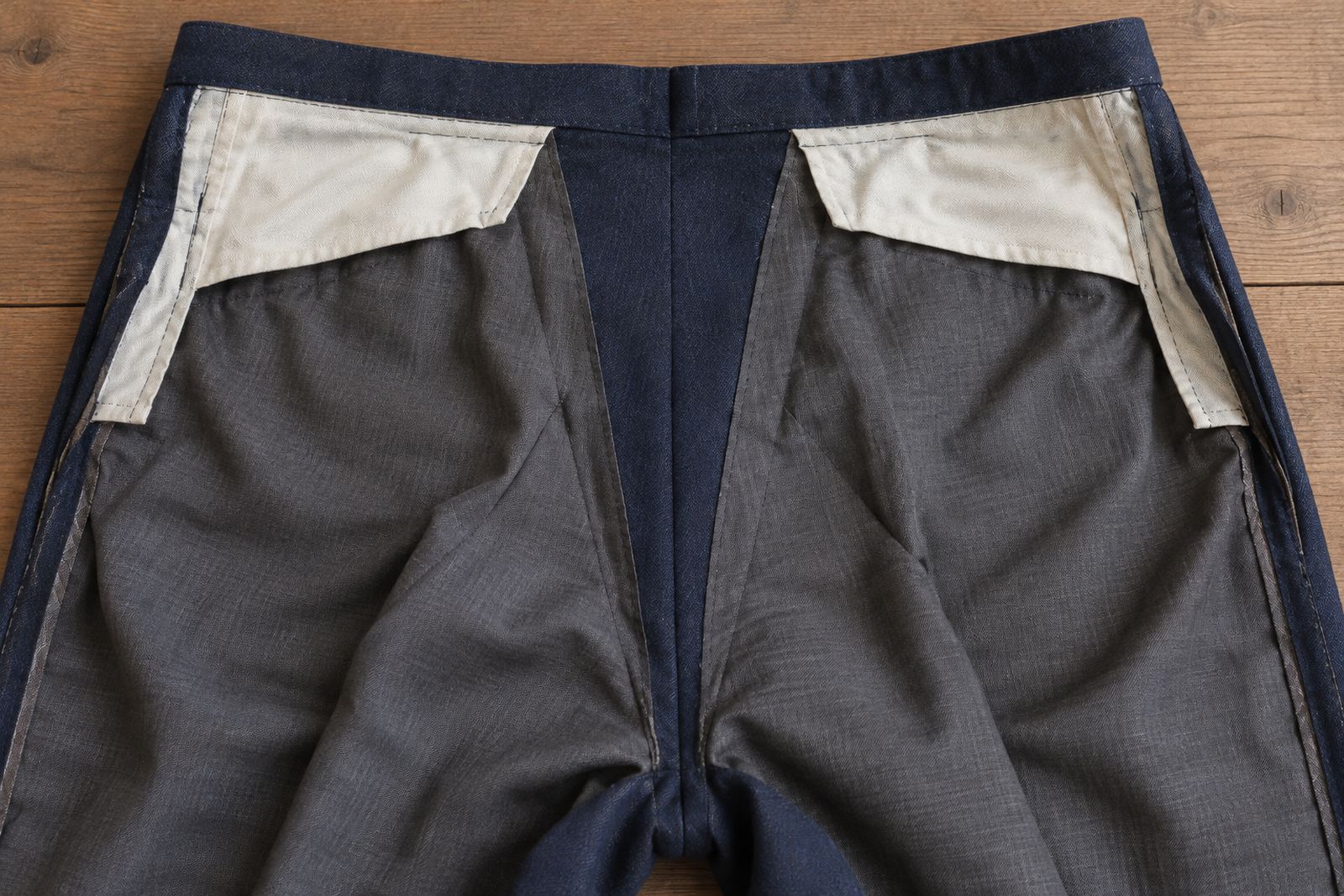
Bespoke and well-made ready-to-wear suits leave generous inlays because they expect to be altered. Cheap suits cut them to the minimum to save fabric. You can check for yourself: turn the trousers inside out and look at the center back seam, where it runs up through the waistband. A wide, folded allowance there means the waist and seat can be let out; a narrow overlocked edge means they cannot.
Easy alterations on suit trousers
Suit trousers are the easiest part of a suit to alter, and almost every ready-made pair needs at least a hem. Get the seat and thighs right in the shop; the rest can usually be adjusted. Our guide to how suit trousers should fit covers what to aim for.
- Hemming. Shortening is simple and can be done to any length. Pin the hem with the shoes you will wear and decide on the break first. Our guide to hemming suit trousers shows how to pin and brief the tailor.
- Waist and seat. Most suit trousers are built with a seam running up the center back through the waistband, so the tailor can take in or let out the waist and seat together. Taking in about 1 to 2 inches (2.5 to 5 cm) is routine; much more pulls the back pockets toward each other and distorts the seat.
- Tapering. Narrowing the leg from the knee to the hem is quick and makes a large visual difference. Tapering from the thigh down is also possible but takes more work and needs care so the creases stay straight.
- Turn-ups (cuffs). Removing them is easy. Adding them needs spare length: roughly twice the turn-up depth plus a hem allowance, about 4 inches (10 cm) for a 1½ inch (4 cm) turn-up.
Easy alterations on a suit jacket
Two jacket alterations are routine and between them fix most ready-made fits: taking in the body and adjusting sleeves with non-working buttons.
- Taking in the waist and sides. A tailor can remove fabric through the side seams, the center back seam and the front darts to give the jacket a cleaner waist. Up to about 2 inches (5 cm) around the waist is routine. Going further starts to pull the pockets out of line and change the jacket's balance.
- Shortening sleeves with non-working buttons. The tailor unpicks the cuff, shortens from the bottom and moves the buttons up. Because sleeves taper toward the wrist, a large reduction leaves a wider opening, so the tailor may slim the sleeve slightly at the same time.
- Slimming the sleeves. Taking in the sleeve seams below the elbow is straightforward and helps a jacket look less boxy.
- Buttons. Replacing plastic buttons with horn or corozo is cheap and noticeably improves a jacket.
Alterations that are possible but harder
These alterations can be done well by a skilled tailor, but they cost more, take longer and have firm limits. Ask for an honest opinion before you agree to them.
Sleeves with working buttonholes
Once buttonholes are cut through a cuff, the sleeve cannot simply be shortened from the bottom, because the buttonholes would end up too close to the edge or disappear. The usual solution is to shorten the sleeve from the top: the sleeve is removed, shortened at the sleeve head and set back in, which is skilled work. A very small reduction is sometimes possible at the cuff, depending on how close the lowest buttonhole sits to the edge. Lengthening past working buttonholes is not possible.
Letting out
Letting out a waist, seat or jacket is limited to the inlay. On worn fabric, the old seam line may show as a faint line or a slightly different shade where the fabric was protected from light and wear. A tailor can sometimes press it out, but not always.
Collar gaps
A collar that stands away from the back of the neck can often be fixed by removing the collar and reshaping it, or by adjusting the back neck seam. The result depends on the cause: a gap that comes from posture, such as a forward head position, is harder to fix than one from a collar that is simply too long.
Can a tailor fix suit shoulders?
A tailor can narrow suit shoulders slightly, but it is the hardest common alteration, it is expensive, and the result is never quite as good as a jacket that fitted to begin with. To narrow the shoulders, the tailor removes the sleeves and often the collar, recuts the shoulder at the armhole, reshapes the padding and canvas, and sets the sleeves back in. About ½ inch (1.3 cm) per side is a practical limit, and the change affects the sleeve angle, the chest and the way the jacket hangs.
Shoulders cannot be made wider, because there is no fabric to add. A small dent just below the shoulder seam can sometimes be improved by adjusting the padding or the sleeve head, but a jacket whose shoulders are clearly too wide or too narrow is the wrong size. Our guide to how a suit jacket should fit shows what a correct shoulder looks like.
Can a tailor shorten a suit jacket?
A tailor can shorten a suit jacket by a small amount, about 1 inch (2.5 cm) at most, but it is rarely a good idea. The pockets, the button positions and the vents are all placed in proportion to the original length. Shorten the jacket much and the pockets sit too low, the bottom button crowds the hem and the vents look stubby. Lengthening is rarely possible: the hem holds only a small allowance, and letting it down usually leaves the old fold line showing. If a jacket's length is wrong for you, look for a short or long size in the same model; see how long a suit jacket should be.
Can you tailor a suit two sizes down?
You can usually tailor a suit jacket down by one size, but rarely by two. Taking in a jacket by one size, roughly 2 inches (5 cm) around the chest and waist, is within reach through the side and back seams. Two sizes means the shoulders, the chest and the armholes are all too big, and those are the parts that are hard or impossible to change. The result costs a great deal and still looks like a large jacket made smaller.
Trousers are more forgiving: taking in the waist by 2 inches (5 cm) is routine, though much more than that pulls the back pockets together and leaves the thighs and seat too full. The reverse question, whether a tailor can make a suit bigger, depends entirely on the inlay: often about an inch (2.5 cm) at the trouser waist and less in the jacket, and on cheap suits sometimes nothing at all.
Which suit alterations are not worth it?
An alteration is not worth it when it costs a large share of the suit's price, changes the jacket's structure, or is unlikely to look right afterward. As a rule of thumb, if the alterations a suit needs add up to more than about half of what you paid for it, or include any of the jobs below, choose a different suit.
Easiest and cheapest
Hem the trousers
Quick and invisible
Take in the trouser waist
Through the center back seam
Shorten sleeves with non-working buttons
From the cuff
Taper the trouser legs
From the knee down
Take in the jacket waist
Side seams, back seam and darts
Let out the waist or seat
Only within the inlay
Fix a collar gap
Collar removed and reshaped
Shorten sleeves with working buttonholes
Usually from the shoulder
Shorten the jacket
About 1 inch (2.5 cm) at most
Narrow the shoulders
Expensive, limited and risky
Hardest and riskiest
- Narrowing shoulders on an inexpensive suit.
- Shortening a jacket by more than about an inch.
- Taking a jacket down two sizes.
- Narrowing lapels to follow a trend.
- Removing pleats from trousers.
- Anything on a fused jacket that has started to bubble.
For typical prices, so you can do the arithmetic before you buy, see our suit alteration cost guide.
The tailor's view: how to buy a suit you can alter
A good alterations tailor will tell you that most bad alterations start in the shop, when someone buys the wrong size and hopes it can be fixed. Use this checklist in the fitting room and you will only ever need the easy jobs.
In the fitting room
- Shoulders: the seam ends at your shoulder bone, with no overhang and no dent below.
- Chest: the jacket buttons without pulling into an X, with room for a flat hand inside.
- Collar: sits against your shirt collar at the back of the neck.
- Length: the jacket covers your seat; if not, try a long size.
- Sleeve buttons: non-working if you will need the sleeves shortened.
- Trousers: the seat and thighs fit; the waist and length can be adjusted.
- Turn the trousers inside out and check for a generous seam allowance at the center back.
Pin the alterations with the shirt and shoes you will wear with the suit, and ask the tailor to explain anything they advise against. If you are tired of altering ready-made suits altogether, read bespoke vs made to measure to see when a suit made for you starts to make sense.
Questions people ask
Can a tailor make a suit smaller?
Yes, within limits. Taking in a jacket by about 2 inches (5 cm) around the waist and trousers by 1 to 2 inches (2.5 to 5 cm) at the waist is routine. Making the shoulders smaller is possible only by a little, at high cost, and is rarely worth it.
Can you tailor a suit two sizes down?
Usually not. One size down in the jacket is often achievable through the side and back seams, but two sizes means the shoulders, chest and armholes are too big, and those are the hardest parts to change. Trousers are more forgiving, but more than about 2 inches at the waist distorts the seat and pockets.
Which suit alterations are not worth it?
Narrowing shoulders on an inexpensive suit, shortening a jacket by more than about an inch, taking a jacket down two sizes, narrowing lapels and removing pleats rarely repay the cost. As a rule of thumb, if alterations add up to more than about half the suit's price, choose a different suit.
Can a tailor fix suit shoulders?
Only slightly. Narrowing the shoulders means removing the sleeves and often the collar, and about ½ inch (1.3 cm) per side is a practical limit. Shoulders cannot be made wider, so a jacket with the wrong shoulders is the wrong size.
Can a tailor make a suit bigger?
Only as far as the spare fabric inside the seams allows. Well-made trousers often allow about 1 to 1½ inches (2.5 to 4 cm) at the waist, jackets usually less, and cheap suits sometimes nothing at all. Ask the tailor to check the seam allowances first.
Can a tailor shorten suit sleeves with working buttonholes?
Yes, but it is a harder job. The sleeve is usually shortened from the shoulder, which means removing and resetting it, and it costs two to three times as much as shortening a sleeve with non-working buttons. Lengthening past working buttonholes is not possible.
Can a tailor shorten a suit jacket?
By about an inch (2.5 cm) at most, and it is rarely a good idea, because the pockets, buttons and vents are placed for the original length. A jacket that is clearly too long or too short is the wrong size; look for a short or long fitting instead.
TailorGuide is independent. Our guides are written and checked by our team and carry no paid endorsements. How we work.