The short answer
Tailoring a new suit typically costs about $80 to $200 in the US and the UK, for the usual trouser hem, sleeve adjustment and jacket waist, as of 2026. A trouser hem alone runs about $15 to $40. Shoulder work and jacket shortening cost far more. Prices vary widely by city and tailor, so always ask for a quote.
- A typical package of hem, sleeves and jacket waist: about $80 to $200.
- Plain trouser hem: about $15 to $40; with turn-ups (cuffs) a little more.
- Sleeves with working buttonholes cost two to three times as much as sleeves without.
- Shoulder narrowing is the most expensive common job and often not worth it.
- If alterations exceed about half the suit's price, choose a different suit.
- All prices are typical as of 2026 and vary by city and tailor.
In this guide
- How much does it cost to tailor a suit?
- Suit alteration prices by alteration
- How much does it cost to hem suit pants?
- How much does it cost to take in a suit jacket?
- Sleeves: why working buttonholes change the price
- What makes alterations cost more?
- Is it worth tailoring a cheap suit?
- What do alterations cost on a bespoke or high-end suit?
- How to spend less on alterations
- Do stores include free alterations?
- Should you tip a tailor?
- The tailor's view: how to get a fair quote
- Questions people ask
The price of a suit is only part of what it costs to wear one well. Almost every ready-made suit needs at least a hem, and most benefit from a sleeve adjustment and a slightly slimmer jacket waist. The alterations that make the biggest difference are also the cheapest. Below are typical prices for each common job in the US and the UK, in US dollars, as of 2026, so you know how much it costs to tailor a suit before you buy one.
Typical costs at a glance (2026)
- Usual package
- Hem, sleeves and jacket waist: about $80 to $200
- Trouser hem
- About $15 to $40
- Take in a jacket
- About $35 to $90
- Sleeves, working buttonholes
- About $75 to $175
- Narrow the shoulders
- About $100 to $250 or more
- Turnaround
- Usually one to two weeks
How much does it cost to tailor a suit?
Tailoring a new ready-made suit usually costs about $80 to $200 in the US and the UK, as of 2026. That covers the alterations most suits need: hemming the trousers, adjusting the sleeve length and taking in the jacket at the waist. You pay toward the lower end at a neighborhood alterations tailor and toward the upper end, or beyond, at a specialist in a major city center.
Treat every figure in this guide as a typical range, not a quote. Prices vary by city, by neighborhood and by tailor, and a skilled specialist who works on high-end and bespoke suits can charge well above these ranges. What the ranges do reliably show is the relative cost of each job, which is what you need to decide whether a suit is worth buying.
| Package | What it covers | US | UK |
|---|---|---|---|
| Light | Trouser hem only | $15 to $40 | $16 to $45 |
| Standard | Hem, sleeves with non-working buttons, jacket waist | $80 to $200 | $80 to $200 |
| Extensive | Standard package plus tapered legs, a collar adjustment or letting out | $150 to $350 | $150 to $340 |
| Structural | Any of the above plus shoulders or jacket length | $250 and up | $240 and up |
Typical as of 2026. Prices vary by city and tailor.
Suit alteration prices by alteration
The table lists typical prices for each common alteration at an independent alterations tailor. Our companion guide to what a tailor can alter explains which of these jobs are easy and which have hard limits.
| Alteration | US | UK | Notes |
|---|---|---|---|
| Trouser hem, plain | $15 to $40 | $16 to $45 | Hand-finished or slanted hems cost a little more |
| Trouser hem with turn-ups (cuffs) | $25 to $55 | $25 to $60 | Needs about 4 inches (10 cm) of spare length |
| Take in or let out waist and seat | $20 to $50 | $20 to $60 | Through the center back seam; more if the waistband must be rebuilt |
| Taper trouser legs | $25 to $60 | $35 to $80 | From the knee down costs less than the whole leg |
| Shorten sleeves, non-working buttons | $25 to $60 | $25 to $65 | From the cuff; buttons moved |
| Shorten sleeves, working buttonholes | $75 to $175 | $65 to $160 | Usually done from the shoulder |
| Take in jacket waist and sides | $35 to $90 | $35 to $100 | Through the side seams, back seam and darts |
| Fix a collar gap | $40 to $100 | $45 to $110 | Collar removed and reshaped |
| Shorten the jacket | $60 to $150 | $60 to $160 | Limited to about 1 inch (2.5 cm); rarely advised |
| Narrow the shoulders | $100 to $250 or more | $80 to $240 or more | Hard, limited and often not worth it |
| Reline a jacket | $120 to $300 | $120 to $260 | Depends on whether the sleeves are included |
| Replace buttons | $2 to $5 per button, plus buttons | $3 to $7 per button, plus buttons | Horn and corozo buttons cost more than plastic |
Typical ranges at independent alterations tailors as of 2026. Prices vary by city and tailor; high-end specialists charge more.
Trouser hem, plain
$15–40
Waist and seat
$20–50
Sleeves, non-working buttons
$25–60
Take in jacket
$35–90
Sleeves, working buttonholes
$75–175
Shorten jacket
$60–150
Narrow shoulders
Often more
$100–250
Reline jacket
$120–300
How much does it cost to hem suit pants?
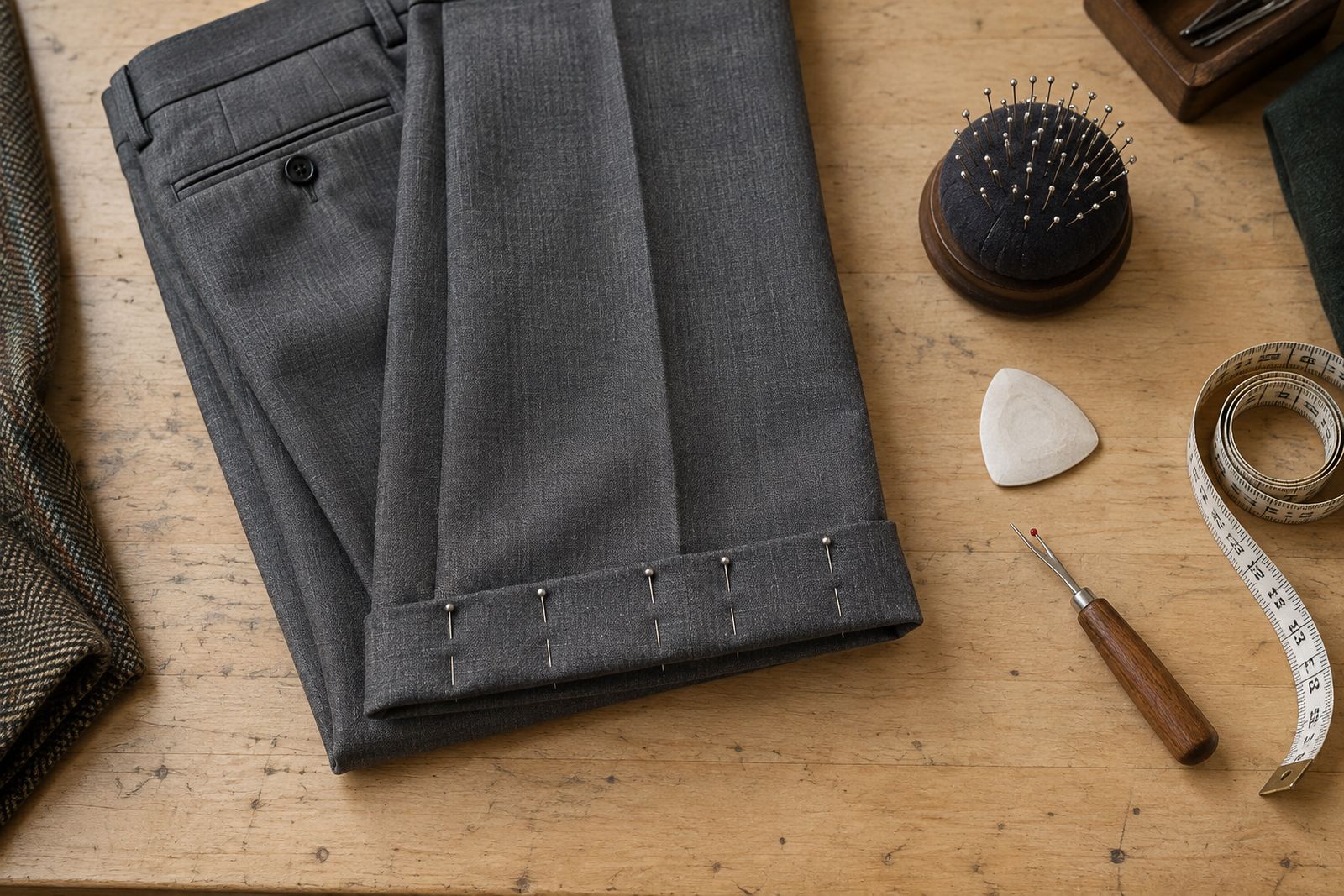
Hemming suit pants typically costs about $15 to $40 in the US and $16 to $45 in the UK as of 2026 for a plain hem. Turn-ups (cuffs) cost more, about $25 to $55, because there is more folding, pressing and stitching. A slanted hem, which drops slightly lower at the back, and a hem finished by hand both sit toward the top of the range. Adding a heel guard, a strip of tape inside the back of the hem that takes the wear from your shoes, usually costs little or nothing extra.
The cheapest part of the job is the stitching; the valuable part is pinning the length correctly. Wear the shoes you will wear with the suit, stand naturally and decide on the break before the tailor pins. Our guide to hemming suit trousers shows how to brief the tailor.
How much does it cost to take in a suit jacket?
Taking in a suit jacket at the waist and sides typically costs about $35 to $90 in the US and $35 to $100 in the UK as of 2026. The tailor removes fabric through the side seams, the center back seam and sometimes the front darts. The price rises when the lining must be opened at several points, when the fabric is patterned and must be kept aligned, or when the jacket is a double-breasted or heavily structured design. Up to about 2 inches (5 cm) around the waist is routine; more than that changes the jacket's balance and is worth discussing first.
Sleeves: why working buttonholes change the price
Shortening sleeves with non-working buttons costs about $25 to $60, because the tailor simply opens the cuff, shortens it and moves the buttons up. Working buttonholes, cut through the cuff so the buttons actually undo, change the job completely. The sleeve cannot be shortened from the bottom without moving the buttonholes, so the tailor usually removes the sleeve, shortens it at the top and sets it back in. That costs about $75 to $175, and lengthening past working buttonholes is not possible at any price.
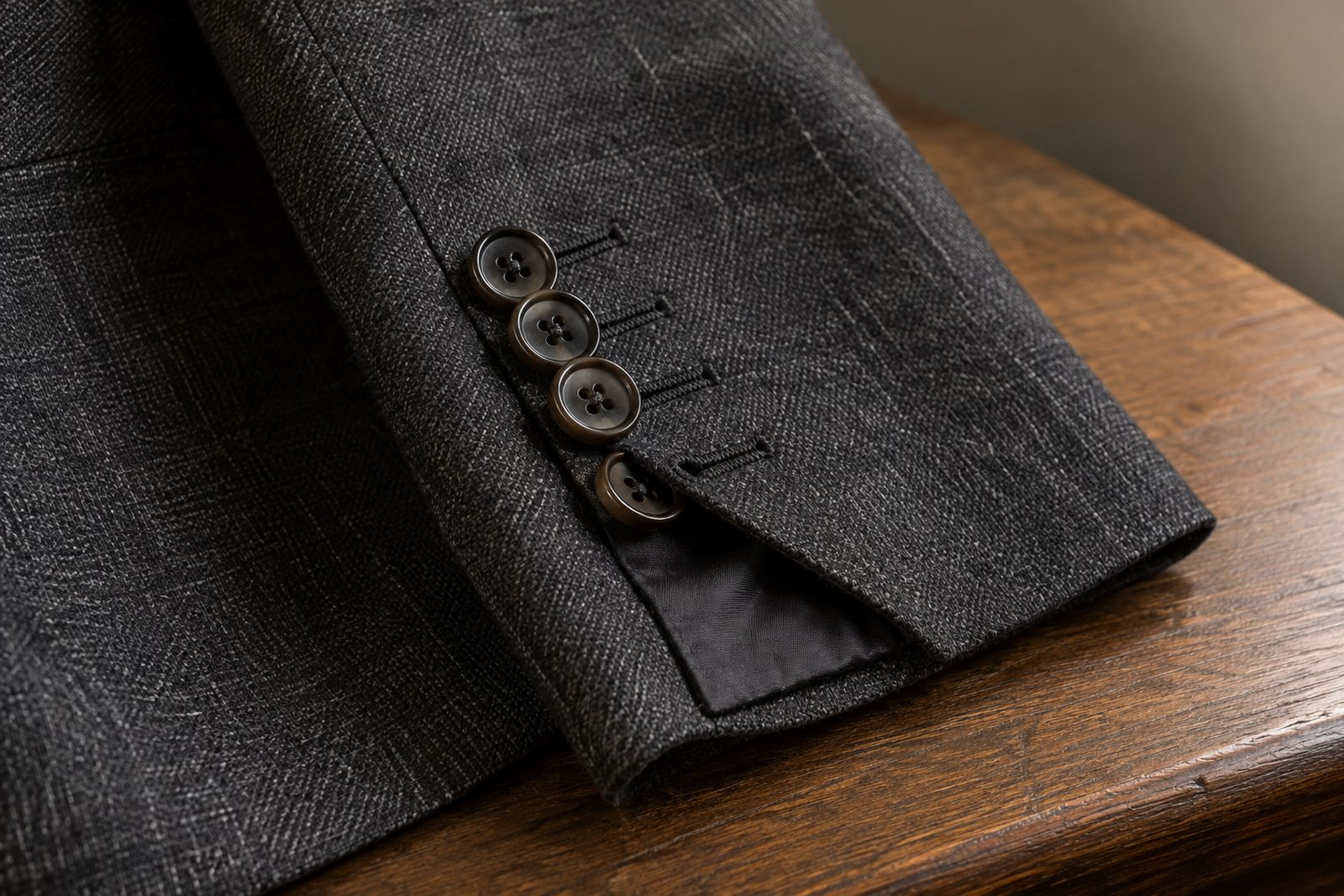
If you buy a ready-made suit that needs shorter sleeves, choose one with non-working buttons, or one sold with unfinished cuffs so the buttonholes are cut after the length is set. Some better shops offer this, and it is worth asking. Our guide to suit sleeve length shows where the sleeve should finish before you pin it.
What makes alterations cost more?
Five things push an alteration toward the top of its range or beyond it. Knowing them helps you read a quote.
- City and neighborhood. Tailors in central London, Manhattan and other expensive districts charge more than those in smaller towns or outer neighborhoods.
- The tailor's level. A counter at a dry cleaner, an independent alterations tailor and a specialist who alters bespoke suits work to different standards and charge accordingly.
- Construction. Working buttonholes, canvassed fronts, full linings and hand finishing all add time.
- Fabric. Stripes and checks must be kept aligned, and delicate fabrics such as linen, silk blends and velvet take more care.
- Speed. Same-day or next-day service usually carries a surcharge, and wedding season makes every queue longer.
Is it worth tailoring a cheap suit?
It is worth tailoring a cheap suit when the shoulders and chest already fit, the fabric is decent and the alterations needed are the easy ones. A fitted inexpensive suit looks far better than an unaltered expensive one. It is not worth it when the suit needs shoulder work, a shorter jacket or more than about half its price in alterations.
| Suit and its problems | Likely alterations | Rough cost | Verdict |
|---|---|---|---|
| $250 suit; good shoulders, long trousers and sleeves, loose waist | Hem, sleeves (non-working), take in jacket | $80 to $190 | Worth it |
| $300 suit; shoulders fit, trousers baggy in the leg | Hem and taper | $40 to $100 | Worth it |
| $200 suit; shoulders too wide, sleeves with working buttonholes | Shoulders, sleeves from the shoulder | $175 to $425 or more | Not worth it |
| $150 suit; fused front already bubbling | None will fix the bubbling | Not applicable | Not worth it |
Costs use the typical ranges in the table above. Get a real quote before deciding.
Before you spend on alterations, check that the suit is worth the investment. Our guide to spotting a high-quality suit covers the construction and fabric checks that take a minute in the shop.
What do alterations cost on a bespoke or high-end suit?
Alterations on a bespoke or high-end suit cost more, and they should. A canvassed jacket with hand-felled linings, hand-sewn buttonholes and generous inlays takes longer to open and close properly, and the tailor is working on a garment worth thousands. Expect a specialist who handles this kind of work to charge well above the ranges in this guide, especially in central London or Manhattan.
If your suit was made bespoke, go back to the house that made it first. The cutter has your pattern and knows how the suit was built, and many houses will adjust their own suits for weight changes or wear. Ask about their policy on later adjustments when you order. Relining a well-made jacket is also normal after years of wear; see suit linings explained for what to ask for, and how a bespoke suit is made for why these suits are built to be altered.
How to spend less on alterations
The cheapest alteration is the one you do not need. A few choices in the shop keep the bill at the bottom of the ranges above.
Ways to keep alteration costs down
- Buy for the shoulders and chest, so only the easy jobs remain. Our guide to how a suit should fit shows what to check.
- Try short and long fittings of the same model to get the jacket and sleeve length closer.
- Choose sleeves with non-working buttons, or unfinished cuffs, if you have shorter or longer arms than average.
- Look for trousers sold with an unfinished hem, which you pay to hem anyway.
- Have all alterations pinned and done at once rather than in separate visits.
- Ask whether the store includes basic alterations before you compare prices.
Do stores include free alterations?
Some suit retailers and department stores include basic alterations, usually hemming and sometimes sleeves or waist adjustments, in the price of a suit, or offer them at a discount. Policies change and differ between stores, so ask before you buy and find out exactly which alterations are included. The quality of in-store alterations also varies; a free hem is a good deal, but for a jacket that needs careful work you may prefer to pay an independent tailor you trust.
Should you tip a tailor?
Tipping a tailor is not customary in the US or the UK, and no tailor will expect it for normal alterations. If a tailor has done a rush job for you or gone well beyond the brief, a tip or a small gift is a kind gesture, but it is entirely optional. The thanks most tailors value more is repeat business and a good word to friends.
The tailor's view: how to get a fair quote
A good alterations tailor will pin the suit on you, explain what each change will do and give you a clear price before any work starts. Your part is to arrive ready and to ask the right questions.
Before and during the fitting
- Wear the shirt and shoes you will wear with the suit.
- Ask for every alteration to be pinned at one fitting and quoted as a whole.
- Ask which changes the tailor would not recommend, and why.
- Ask whether there is enough seam allowance before agreeing to any letting out.
- Confirm the collection date, especially before an event.
- Try the suit on at collection and check the hem, sleeves and waist before you pay.
- Keep the ticket; a good tailor will correct a small error free of charge.
Once you know what alterations cost, you can shop with a clear budget: price the suit plus its alterations, and compare that total with the next suit up. If you find yourself altering every suit heavily, read bespoke vs made to measure; a made-to-measure suit can cost little more than a ready-made one plus extensive alterations.
Questions people ask
How much does it cost to hem suit pants?
Typically about $15 to $40 in the US and $16 to $45 in the UK for a plain hem, as of 2026. Turn-ups (cuffs) cost about $25 to $55. Prices vary by city and tailor.
How much does it cost to take in a suit jacket?
Typically about $35 to $90 in the US and $35 to $100 in the UK as of 2026. Patterned fabrics, double-breasted jackets and heavily structured jackets sit toward the top of the range or above it.
How much does it cost to shorten suit jacket sleeves?
Typically about $25 to $60 in the US and $25 to $65 in the UK as of 2026 if the sleeve buttons are non-working, because the tailor shortens from the cuff. With working buttonholes the sleeve is usually shortened from the shoulder, which costs about $75 to $175. Lengthening is limited to the fabric folded into the cuff.
How much does it cost to tailor a whole suit?
The usual package of trouser hem, sleeve adjustment and jacket waist typically costs about $80 to $200 in the US and the UK as of 2026. Add significantly more if the sleeves have working buttonholes or the jacket needs structural work.
Is it worth tailoring a cheap suit?
Yes, if the shoulders and chest fit and the suit needs only easy alterations such as a hem, sleeves and waist. No, if it needs shoulder work, a shorter jacket or more than about half its price in alterations.
Should you tip a tailor?
Tipping is not customary in the US or the UK and is not expected for normal alterations. A tip for a rush job or exceptional work is a kind gesture but entirely optional.
Why are sleeves with working buttonholes more expensive to shorten?
Because the sleeve cannot be shortened from the cuff without moving the buttonholes. The tailor usually removes the sleeve, shortens it at the top and sets it back in, which takes several times as long as shortening a sleeve with non-working buttons.
How long do suit alterations take?
Usually one to two weeks. Many tailors offer faster service for a surcharge, and wedding season and the weeks before holidays make queues longer.
TailorGuide is independent. Our guides are written and checked by our team and carry no paid endorsements. How we work.