The short answer
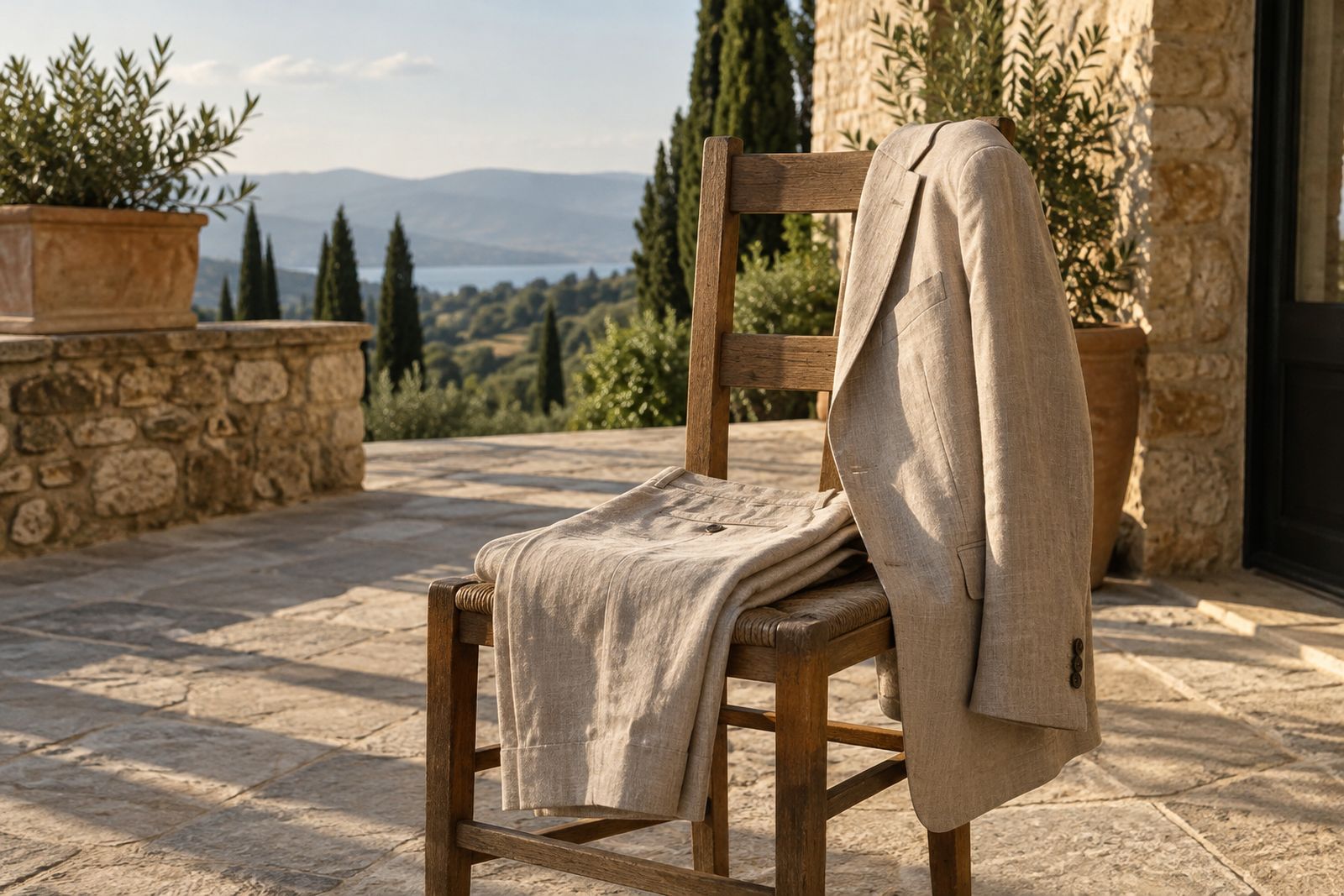
A linen suit is the coolest, most breathable suit for dry heat, but it creases within minutes of wear. Heavier linen, from about 10 oz (310 g) up, creases less and drapes better than light linen of 7 to 9 oz (220 to 280 g). Blends with wool or silk reduce wrinkles further. Choose a half-lined or unlined jacket and expect soft creases.
- Linen is the most breathable suit fabric and the coolest in dry heat.
- It creases; heavier linen, about 10 oz (310 g) and up, creases less than light linen.
- Linen-wool and wool-silk-linen blends keep most of the coolness with fewer wrinkles.
- Ask for a half-lined or unlined jacket, soft shoulders and a little extra ease.
- Hang it after every wear and steam it; never machine wash a tailored linen suit.
In this guide
- What is linen?
- Do linen suits wrinkle too much?
- What weight linen for a suit?
- Is linen better than cotton for a suit?
- Linen blends: fewer wrinkles, most of the coolness
- How a linen suit should be made
- Can you wear a linen suit to a wedding?
- Can you wear a linen suit to the office?
- Which colors work best in linen?
- Linen suit buying checklist
- How to care for a linen suit
- The tailor's view
- Questions people ask
A linen suit is the coolest thing you can wear with a tie, and the quickest to look slept in. Both facts come from the same fiber. People who love linen accept a certain rumple as part of its character; people who dislike it have usually bought a light, loosely woven linen and expected it to behave like wool. The right weight, blend and construction make the difference between a linen suit that looks relaxed and one that looks neglected.
Linen suits at a glance
- Fiber
- Flax
- Best for
- Dry heat, daytime events, summer weddings, holidays
- Weights
- Light 7 to 9 oz (220 to 280 g); heavier 10 to 13 oz (310 to 400 g)
- Creasing
- High; heavier weights and blends crease less
- Formality
- Smart casual to daytime semi-formal
- Construction
- Half-lined or unlined, soft shoulders
- Care
- Hang, steam, dry clean rarely
What is linen?
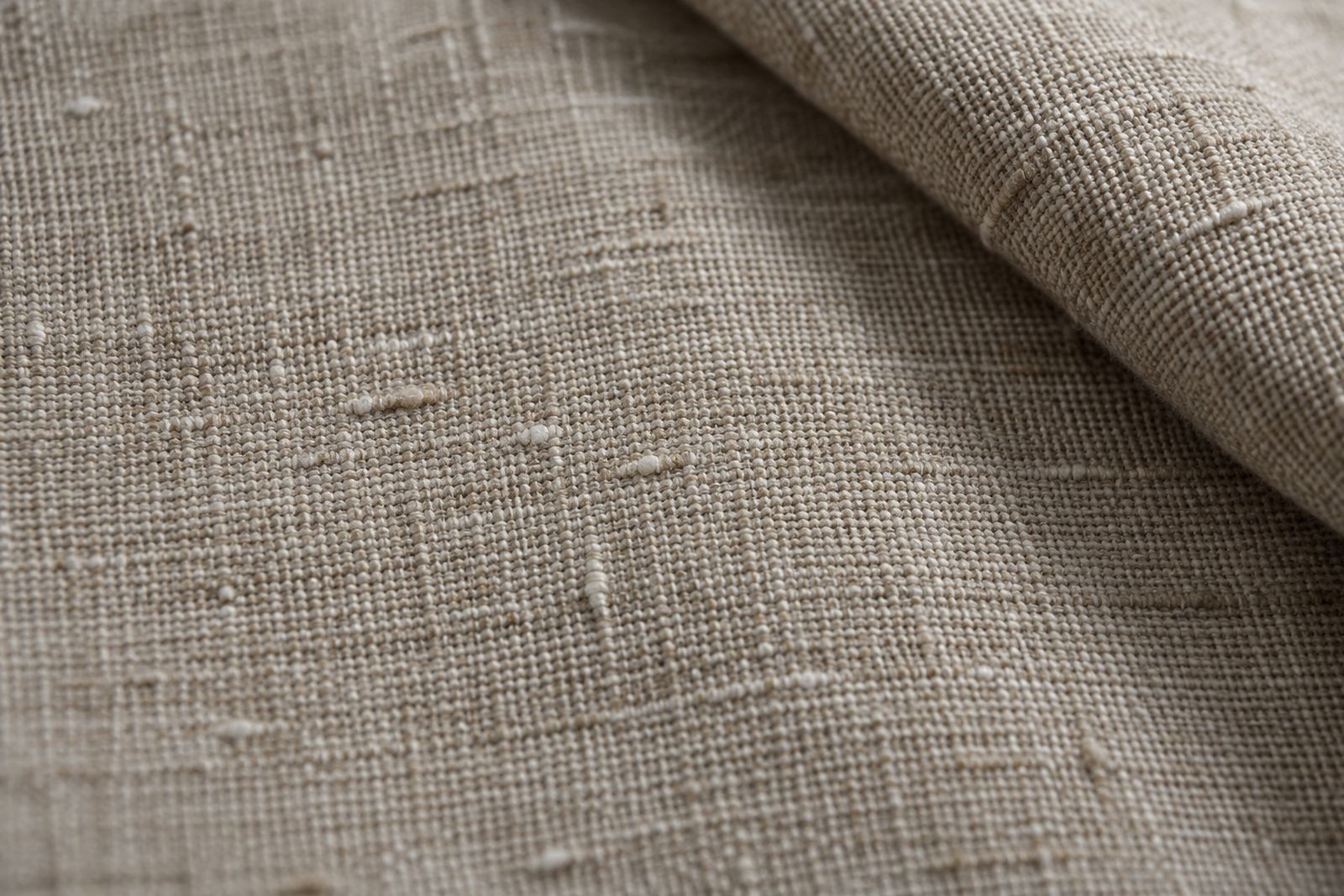
Linen is a fabric woven from the fibers of the flax plant. The fibers come from the plant's stalk, which makes linen a bast fiber, and they are long, smooth and strong; linen is even stronger wet than dry. The fabric absorbs moisture readily, dries quickly and feels cool against the skin, which is why it has been a warm-weather fabric for thousands of years.
Linen's weakness is elasticity. The fibers stretch very little and do not spring back, so every bend at the elbow, knee and lap leaves a crease. Linen yarn also has natural slubs, small thick places along its length, which give the fabric its familiar irregular texture.
Linen
Linen is a fabric made from flax fibers. It is the most breathable suit fabric, cool and quick-drying, but it creases easily because its fibers have very little elasticity.
Do linen suits wrinkle too much?
Linen suits wrinkle more than any other suit fabric, but how much depends on the weight, the weave and whether the linen is blended. Expect creases at the elbows, across the lap and behind the knees within an hour of sitting. A light, open linen will look thoroughly lived-in by lunch; a heavier, closely woven linen creases in softer folds and hangs out better overnight.
| Fabric | Creasing | After a day of wear |
|---|---|---|
| Light linen, 7 to 8 oz (220 to 250 g) | Very high | Sharp creases wherever you bend; looks rumpled |
| Mid-weight linen, 9 to 10 oz (280 to 310 g) | High | Clear creases at the elbows and lap; partly drops out on a hanger |
| Heavy linen, 11 to 13 oz (340 to 400 g) | Moderate | Softer, rounded creases; hangs out well overnight |
| Linen and wool | Moderate | Softer creases that recover better |
| Wool, silk and linen | Low to moderate | Light creasing; keeps a smarter line |
| Linen and cotton | High | Creases much like pure linen |
| High-twist wool, for comparison | Low | Looks much as it did in the morning |
What weight linen for a suit?
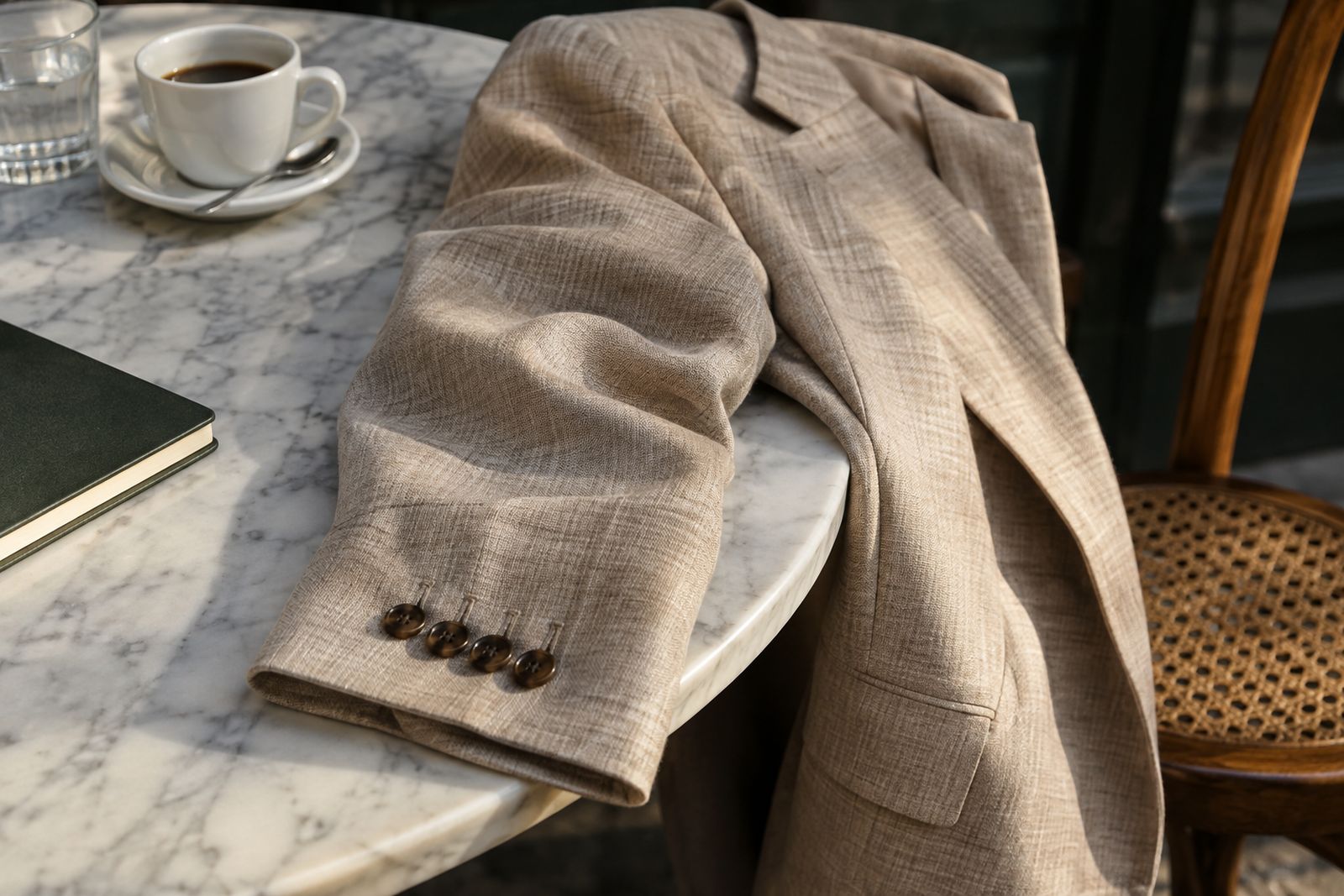
For a suit, choose linen of at least 9 oz (280 g), and ideally 10 to 12 oz (310 to 370 g) if creasing bothers you. Light linens of 7 to 8 oz (220 to 250 g) are the coolest but crease the most and can look flimsy, especially in trousers. Heavier linens, a traditional strength of Irish mills, have more body: they drape cleanly, crease in softer folds and keep their shape longer, while still feeling cooler than most wools of the same weight.
Scale from 200 g to 500 g, with oz below. Light linen: coolest, creases most: 220 to 280 g. Mid-weight: a good balance: 280 to 340 g. Heavy linen: crisp, creases least: 340 to 430 g. Heavier, Irish-style linens start here: at 340 g.
If you live somewhere very hot and wear the suit for a few hours at a time, a lighter linen is fine. For travel, all-day wear or a suit that has to look smart, go heavier or choose a blend.
Irish and Italian linen
As a broad tendency, linens from Irish mills are heavier, firmer and crisper, with a slightly dry hand, while Italian linens are often lighter and softer and come in a wider range of colors. Neither is better. A firm, heavy linen suits a structured jacket and anyone who minds creases; a soft, light linen suits an unstructured jacket worn in serious heat. Ask your tailor which kind each swatch book holds.
Is linen better than cotton for a suit?
For heat, yes. Linen is more breathable than cotton, dries faster and feels cooler. Cotton creases less sharply and keeps a slightly neater shape, but it holds sweat longer and can feel damp in humidity. Linen also has more texture and depth; cotton looks plainer and more casual, closer to chinos.
Linen
Flax fiber
- Most breathable suit fabric
- Dries quickly
- Cool to the touch
- Creases sharply
- Textured, slubby surface
Cotton
Cotton plant fiber
- Breathable
- Dries slowly
- Soft to the touch
- Creases more softly
- Plain, casual surface
Linen blends: fewer wrinkles, most of the coolness
Blending linen with another fiber is the most effective way to reduce creasing while keeping much of linen's coolness. Each blend behaves differently.
| Blend | How it feels | Creasing | Best for |
|---|---|---|---|
| Linen and wool | Cool, with more spring and a smoother drape | Moderate | Summer business suits and travel |
| Wool, silk and linen | Cool, slightly lustrous, textured | Low to moderate | Summer sport coats, weddings |
| Linen and silk | Cool and lustrous, with a soft hand | Moderate to high | Summer jackets, warm-weather evening events |
| Linen and cotton | Cool and soft, at a lower price | High | Casual suits and trousers |
If you need to look composed for a full working day, a linen-wool blend is the safest linen suit. For a summer wedding, wool, silk and linen gives the best balance of comfort and polish.
How a linen suit should be made
Construction does as much for a linen suit as the fabric. Ask for these:
- A half-lined or unlined jacket. Linen's coolness is wasted under a full lining. See suit linings explained.
- Canvas rather than fusing. A fused front tends to stiffen linen and can bubble over time. A soft half canvas or full canvas suits it better; see fused vs canvas.
- Soft shoulders. Light or no padding suits linen's relaxed character and keeps the jacket cool.
- Patch pockets. Traditional on summer jackets, and one less internal layer.
- A little extra ease. Linen has almost no stretch, so a close fit strains at the seams and creases harder. A touch more room through the chest, seat and thighs looks better by evening.
- Fuller trousers. A slightly wider leg, with pleats if you like them, lets the trousers move without hugging the knees. See pleated vs flat-front trousers.
Can you wear a linen suit to a wedding?
Yes, to most summer daytime weddings: garden, beach, countryside and destination weddings in warm weather. Linen is not right for black tie or a formal evening wedding, and it is best avoided when the invitation asks for formal attire. Choose a mid or heavy linen, or a blend, so you still look sharp in the photographs taken late in the reception.
Pick a color that flatters without competing: navy, mid-blue, light gray, tan and sage all work. As a guest, avoid pure white or cream unless the couple has asked for it. Our guides to wedding guest attire and beach wedding attire cover the rest of the outfit.
Can you wear a linen suit to the office?
In a relaxed or warm-climate office, yes. In a formal office, a linen suit can look too casual, especially in light colors and with visible creases. A navy or mid-gray linen-wool blend is the most office-friendly linen suit; with a crisp shirt and a tie, it reads as a summer business suit.
Which colors work best in linen?
Linen takes dye well and looks most natural in light, warm shades. These combinations work.
Classic
Navy linen, white shirt, brown suede
Navy linen
Suit
White
Shirt
Dark brown suede
Shoes
Classic
Stone linen, light blue shirt, navy knit tie
Stone linen
Suit
Light blue
Shirt
Navy knit
Tie
Dark brown
Shoes
Works
Light gray linen, white shirt, navy tie
Light gray linen
Suit
White
Shirt
Navy
Tie
Dark brown
Shoes
Bold
Olive linen, white shirt, tan loafers
Olive linen
Suit
White
Shirt
Tan
Shoes
Avoid
Cream linen as a wedding guest
Pale tones can compete with the couple.
Cream linen
Suit
White
Shirt
Tan
Shoes
Keep the rest of the outfit in the same relaxed register. Linen or light cotton shirts (poplin or oxford) suit it better than shiny formal shirting. Knitted silk, linen or wool-silk ties look right; a glossy satin tie does not. Suede loafers or derbies in brown or tan are the natural shoes, with black leather kept for darker linen in the evening.
Wear the pieces separately
A linen suit earns its price as separates. The jacket works over chinos, light wool trousers or dark jeans; the trousers work with a knitted polo or an open-collar shirt. Navy, olive and stone jackets are the most versatile alone. Because linen fades slightly with sun and cleaning, wear and clean the two pieces together, or the jacket and trousers can drift apart in color over the years.
Linen suit buying checklist
Before you buy or commission
- Weight of at least 9 oz (280 g), ideally 10 to 12 oz (310 to 370 g)
- Crush test: are the creases soft and rounded, or sharp?
- Half-lined or unlined jacket, with cupro wherever there is lining
- Canvas or soft construction, not a stiff fused front
- A little extra ease through the chest, seat and thighs
- Neatly bound or finished inside seams on an unlined jacket
- Clear care instructions from the tailor or on the label
- A color that suits the occasions you will wear it to
How to care for a linen suit
Linen suit care
- 1
Hang it straight away
After wearing, hang the jacket on a shaped wooden hanger and the trousers by the hem. Most light creases relax overnight, and faster in a steamy bathroom.
- 2
Steam rather than crush
Run a handheld steamer over the creases. Steam relaxes linen without flattening its texture.
Tip: If you iron, press dark linen on the reverse or through a pressing sheet, because a hot iron can leave a shine.
- 3
Spot clean small marks
Blot small marks with a damp sponge or clean towel rather than rubbing, which can lighten the color.
- 4
Dry clean rarely
Dry clean only when the suit is dirty or stained. Tell the cleaner it is linen and ask for a light press.
- 5
Never machine wash the jacket
Washing can shrink the linen at a different rate from the canvas and interfacing inside, which distorts the jacket for good.
- 6
Give it room
Crushed between other clothes, linen creases further. Leave space in the wardrobe and store it in a breathable cotton garment bag, never plastic.
For more on getting creases out, see how to remove wrinkles from a suit; for general habits, see how to care for a suit.
The tailor's view
Linen suits: the honest trade-off
For
- +Coolest, most breathable suit fabric
- +Absorbs sweat and dries quickly
- +Strong and long-lasting with care
- +Takes dye well
- +Softens with age
Against
- –Creases within minutes of wear
- –Less formal than wool
- –Light linens can look flimsy
- –Fibers can wear along repeated sharp folds
- –Shows sweat marks in mid tones
Good tailors cut linen with a little more ease and less structure, and many will suggest a blend if you say you need to look crisp all day. If the suit is for work in a hot climate, ask your tailor to put a heavy linen, a linen-wool blend and a high-twist wool side by side. Handling the three together makes the choice obvious.
Choose a linen suit for what it is: the coolest suit you can own, with creases that come with it. If you need to look pressed from morning to night, the best suit fabric for hot weather covers the wool alternatives, and our guide to staying cool in a suit covers everything else.
Questions people ask
Do linen suits wrinkle too much?
Linen suits wrinkle more than any other suit fabric, but the creases can look relaxed rather than messy. Heavier linen of about 10 oz (310 g) and up, and blends with wool or silk, wrinkle noticeably less. Hanging the suit after each wear lets most creases drop out.
Is linen better than cotton for a suit?
For hot weather, yes. Linen breathes better, dries faster and feels cooler than cotton. Cotton creases a little less sharply but holds sweat longer, so it can feel damp in humidity.
What weight linen for a suit?
Choose at least 9 oz (280 g), and ideally 10 to 12 oz (310 to 370 g), for a linen suit. Heavier linen drapes better and creases less. Light linens of 7 to 8 oz (220 to 250 g) are coolest but crease the most.
Can you wear a linen suit to a wedding?
Yes, a linen suit suits most summer daytime weddings, especially outdoor, beach and garden ones. It is not appropriate for black tie or a formal evening wedding. As a guest, avoid pure white or cream.
Can you wear a linen suit to the office?
In a relaxed or warm-climate office, yes, especially in navy or gray with a shirt and tie. In a formal office, a linen suit can look too casual. A linen-wool blend is the most office-friendly option.
Can you machine wash a linen suit?
No, do not machine wash a tailored linen suit. Washing can shrink the linen at a different rate from the canvas and interfacing inside, which ruins the jacket's shape. Dry clean it occasionally and steam it between wears.
Does linen shrink?
Linen can shrink when washed in water, especially hot water, and in a tumble dryer. That is one more reason a tailored linen jacket should only be dry cleaned. Steaming does not shrink it.
Is a linen suit good for humid weather?
Linen is at its best in dry heat. In strong humidity it still breathes well, but light linen can go limp and crease heavily. For humid days, a heavier linen, a linen-wool blend or a high-twist wool performs better.
TailorGuide is independent. Our guides are written and checked by our team and carry no paid endorsements. How we work.