The short answer
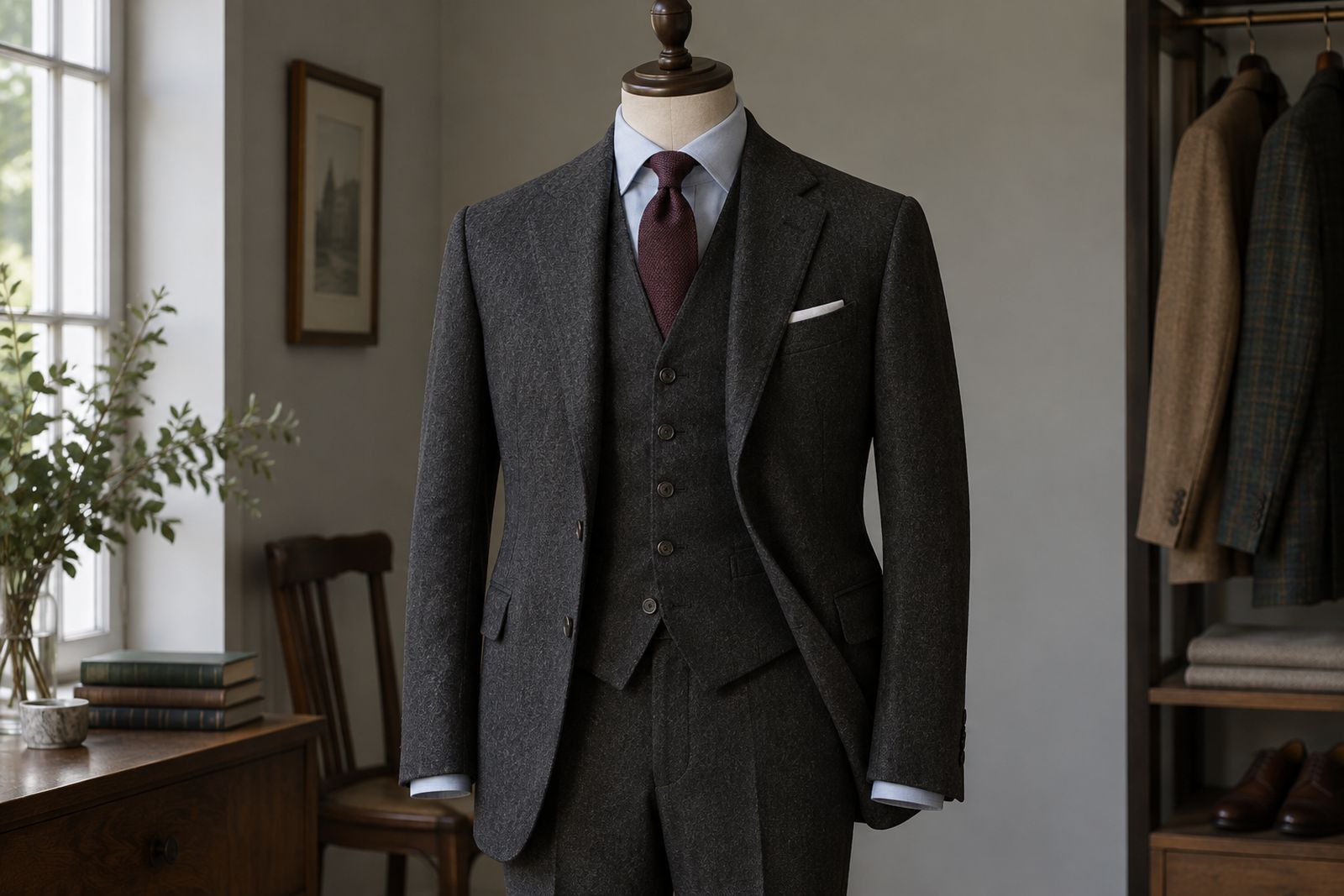
A three-piece suit is a jacket, trousers and a matching waistcoat (vest). Wear it for weddings, formal business and cold weather. Leave the waistcoat's bottom button undone unless it is cut straight to fasten fully, make sure the waistcoat covers the trouser waistband, and wear braces rather than a belt. Without the jacket, the waistcoat reads casual.
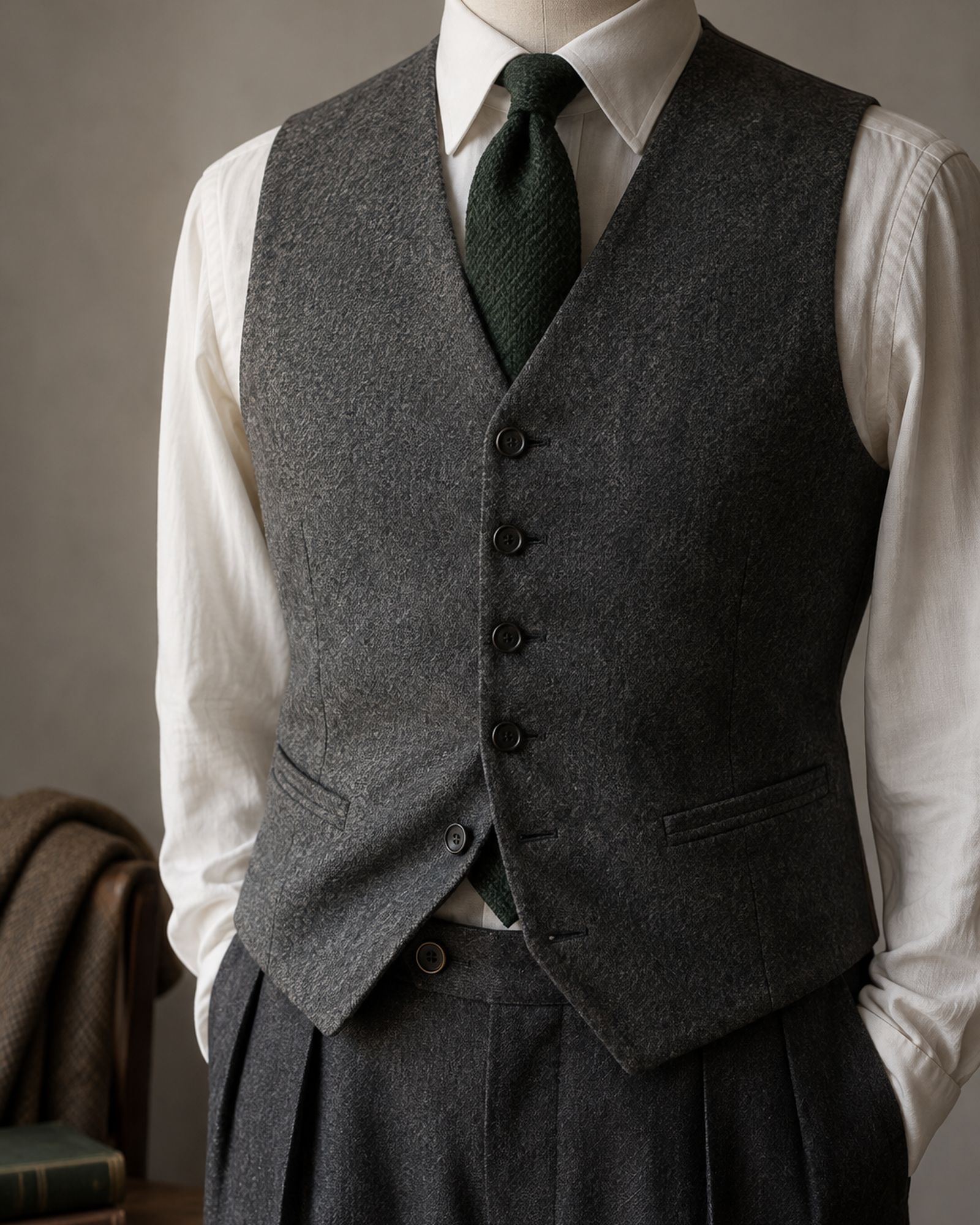
- Leave the bottom waistcoat button undone, unless the waistcoat is cut straight to button fully.
- The waistcoat must cover the trouser waistband, with no shirt showing between them.
- Wear braces (suspenders), not a belt, under a waistcoat.
- The waistcoat's top buttons should show in the V of the buttoned jacket.
- A waistcoat without its jacket reads casual: fine at a reception, not for arriving.
In this guide
- What does the waistcoat add to a suit?
- When should you wear a three-piece suit?
- Is a three-piece suit too formal?
- How do you wear a three-piece suit? The rules
- How should the waistcoat of a three-piece suit fit?
- Can you wear a three-piece suit with the jacket open?
- Can you wear a three-piece suit without a tie?
- Can you wear the vest without the jacket?
- Two-piece vs three-piece suit: which should you buy?
- Which fabrics and colors suit a three-piece suit?
- Common three-piece suit mistakes
- The tailor's view: ordering a three-piece suit
- Questions people ask
A three-piece suit adds one garment to the suit and changes how the whole thing behaves. The waistcoat keeps you warm, holds the line of your shirt and tie, and lets you open or remove the jacket without looking undressed. It also raises the formality a step and comes with rules about buttons, belts and length that a two-piece suit never asks of you.
Three-piece suit
A three-piece suit is a suit of jacket, trousers and waistcoat (vest) cut from the same fabric. The waistcoat is sleeveless, worn over the shirt and tie and under the jacket, and usually has a lining-fabric back with an adjustable strap.
At a glance
- Formality
- One step above a two-piece in the same fabric
- Best seasons
- Autumn and winter; spring in lighter fabrics
- Bottom waistcoat button
- Undone on most waistcoats
- Belt or braces
- Braces (suspenders)
- Waistcoat length
- Covers the trouser waistband
- Jacket open?
- Yes; the waistcoat keeps the line neat
What does the waistcoat add to a suit?
The waistcoat adds warmth, formality and a clean line from collar to waistband. It covers the point where the shirt meets the trousers, hides a tie that would otherwise swing, and frames the chest in a neat V. Most usefully, it lets you unbutton or take off your jacket and still look dressed.
- Warmth: an extra layer of wool over the torso, useful in cold offices, churches and winter.
- A finished look with the jacket open: the waistcoat keeps the shirt flat and the tie in place.
- A longer line: with the waistband covered, the legs look longer and the torso tidier.
- Formality: the same fabric reads one step more formal as a three-piece.
- Variety: the jacket and trousers still work as a two-piece, and the waistcoat can join other outfits.
When should you wear a three-piece suit?
Wear a three-piece suit when you want to look a step more formal than a plain suit, and when the weather is cool. It is at home at weddings, formal business meetings, winter events and evening dinners that call for a lounge suit. In heat, or in an office where most people do not wear ties, it can feel like too much.
| Occasion | Verdict | Notes |
|---|---|---|
| Wedding, as the groom | Excellent | Sets the groom apart and looks finished when the jacket comes off |
| Wedding, as a guest | Good, if not outdressing the groom | Keep it in navy, gray or a quiet pattern |
| Formal business, boardroom | Good | Navy or charcoal worsted, plain or pinstripe |
| Job interview | Depends on the industry | Can look overdressed where suits are rare; a two-piece is safer |
| Autumn and winter events | Excellent | Flannel or tweed adds warmth and texture |
| Funeral | Good | Charcoal or navy, plain fabric, dark tie |
| Summer heat | Usually avoid | If you must, choose a light, open fabric and a half-lined jacket |
| Black tie | No | A tuxedo uses its own low-cut evening waistcoat or a cummerbund |
Is a three-piece suit too formal?
A three-piece suit is not too formal for most suit-wearing occasions, but it is one step more formal than a two-piece in the same fabric. The fabric changes the effect more than the waistcoat does. A navy pinstripe worsted three-piece reads as formal city business; a brown tweed or soft gray flannel three-piece reads as relaxed country tailoring. If you worry about looking overdressed, choose a textured fabric and a softer tie.
How do you wear a three-piece suit? The rules
Four rules cover almost everything: leave the bottom waistcoat button undone, make sure the waistcoat covers your trouser waistband, wear braces instead of a belt, and remember that the waistcoat alone reads casual. The jacket follows the normal buttoning rules.
| Rule | Why |
|---|---|
| Leave the bottom waistcoat button undone | Most waistcoats are cut with a curved front and points that flare over the hips; fastening the last button pulls and creases them. Some waistcoats, including many double-breasted ones, are cut straight across and are meant to be fully buttoned. |
| The waistcoat covers the trouser waistband | No shirt should show between waistcoat and trousers, standing or sitting. That needs trousers with a mid or high rise. |
| Wear braces, not a belt | A belt adds a ridge and a buckle bump under the waistcoat, and trousers on a belt sit lower and slip. Braces keep the trousers at the waist and the waistcoat flat. |
| The waistcoat alone reads casual | Without the jacket, a waistcoat is shirtsleeve dress. It looks fine once jackets are off; it is not an outfit to arrive in at a formal event. |
| Button the jacket normally | Top button of a two-button jacket, middle of a three-button; never the bottom. Unbutton it to sit. |
For the full buttoning rules of every jacket style, see which buttons to fasten. For the waistcoat itself, including odd waistcoats worn with other trousers, see how to wear a waistcoat.
How should the waistcoat of a three-piece suit fit?
The waistcoat should lie flat and close against the shirt without pulling into creases at the buttons, and it should be just long enough to cover the trouser waistband. Its points sit a little below the waistband, the armholes are high enough that no shirt balloons out at the side, and the back adjuster takes up only a small amount of slack.
Waistcoat fit check
- No horizontal pulls across the buttons when standing; a little ease when you sit.
- The front lies flat against the chest with no gap at the neckline.
- No shirt visible between the waistcoat and trousers, even when you reach forward.
- The points end just below the waistband, not halfway down the fly.
- The armholes sit close without cutting into the armpit.
- The back strap is not cinched tight to make a loose waistcoat fit.
The trousers matter as much as the waistcoat. They need to sit at or near your natural waist, which is higher than many modern ready-to-wear trousers. Choose side adjusters or brace buttons rather than belt loops. For the details, see how suit trousers should fit.
Can you wear a three-piece suit with the jacket open?
Yes, and it is one of the best reasons to own one. With a two-piece suit, an open jacket shows the shirt billowing at the waist and the tie swinging free. With a three-piece, the waistcoat holds everything in place, so the jacket can hang open at a desk, a dinner or a long reception and you still look finished.
Can you wear a three-piece suit without a tie?
Yes, if the fabric and shirt suit it. A three-piece without a tie works best in textured fabrics such as flannel, tweed, linen or a wool-linen blend, with a shirt whose collar stands up firmly under the waistcoat and jacket. Keep the waistcoat fully buttoned, apart from the bottom button, and open only the top shirt button.
It works less well with a smooth, sharp business worsted, especially a pinstripe, where the missing tie can look like an oversight. A spread or button-down collar holds its shape better than a soft point collar without a tie.
Can you wear the vest without the jacket?
You can, but it reads casual. A waistcoat worn without its jacket is shirtsleeve dress: fine at your desk, at a wedding reception once the jackets come off, or in a warm room at home. Do not arrive at a formal event in it, and do not treat a suit waistcoat and trousers as a complete outfit for a formal occasion.
Two-piece vs three-piece suit: which should you buy?
Buy a two-piece if you want one suit that works almost everywhere, all year. Buy a three-piece if you already own a two-piece, wear suits in cool weather, or need a suit for a wedding or a formal role. The three-piece is more versatile than it looks, because it can always be worn as a two-piece.
| Feature | Two-piece | Three-piece |
|---|---|---|
| Formality | Standard business and social | One step higher |
| Warmth | Lighter | Warmer; best in autumn and winter |
| Jacket open or off | Shirt and tie on show | Looks finished |
| Trousers | Belt or side adjusters | Braces or side adjusters; higher rise |
| Versatility | Works almost everywhere | Wear as a three-piece, a two-piece, or with the waistcoat separately |
| Price | Lower | Higher; the waistcoat adds fabric and work |
Which fabrics and colors suit a three-piece suit?
Three-piece suits suit medium and heavier fabrics best, because the extra layer adds warmth. Choose a worsted wool of 10 to 12 oz (310 to 370 g) for a business three-piece, a flannel of 11 to 14 oz (340 to 430 g) for autumn and winter, or a tweed for the country. Navy, charcoal and mid-gray are the most useful colors; brown, glen check and a discreet chalk stripe all look right as a second or third.
| Fabric | Weight | Effect |
|---|---|---|
| Worsted wool | 10 to 12 oz (310 to 370 g) | Clean, sharp, business and weddings |
| Flannel | 11 to 14 oz (340 to 430 g) | Soft, warm, works with or without a tie |
| Tweed | Often 12 to 16 oz (370 to 500 g) | Country and relaxed; very warm |
| Linen or wool-linen | 9 to 11 oz (280 to 340 g) | Summer weddings; relaxed, creases |
For the differences between these fabrics, see worsted vs woolen and suit fabrics explained.
Common three-piece suit mistakes
The tailor's view: ordering a three-piece suit
Order the waistcoat at the same time as the suit and from the same length of fabric. Dye lots vary between batches, and mills discontinue fabrics, so adding a matching waistcoat later is often impossible. A good tailor will also cut the trousers with a higher rise and fit the waistcoat over the shirt you plan to wear.
What to specify
- Trousers with a rise that sits at your natural waist, with brace buttons or side adjusters.
- The number of waistcoat buttons: five or six is usual on a single-breasted suit waistcoat.
- Whether you want a lapelled or double-breasted waistcoat, which reads more formal.
- A fabric back if you plan to wear the waistcoat without the jacket.
- Small welt pockets on the waistcoat front; two or four are usual.
- A fitting with the waistcoat worn under the jacket, buttoned, to check the V.
A tailor can usually let a waistcoat out a little at the back seams or take it in, and the back strap adds some adjustment. Length is hard to add once it is cut, so get it right at the fitting. If you are having a three-piece made, our ranking of the best tailors in London is a good place to start, and for a wedding three-piece see our groom's guide to wedding suits.
Questions people ask
Is a three-piece suit too formal?
Not for most occasions where a suit is worn, but it is one step more formal than a two-piece in the same fabric. A textured fabric such as flannel or tweed makes it feel more relaxed. In an office where few people wear ties, it can look overdressed.
Can you wear a three-piece suit without a tie?
Yes, especially in textured fabrics like flannel, tweed or linen. Wear a shirt with a firm collar, keep the waistcoat buttoned and open only the top shirt button. It looks less natural with a sharp business worsted.
Can you wear the vest without the jacket?
Yes, but it reads casual. A waistcoat without its jacket is fine at a desk or at a reception once jackets come off, but not as an outfit to arrive in at a formal event. Ask for a fabric back if you plan to do it often.
Should you button the bottom button of a waistcoat?
No, leave the bottom button undone on most waistcoats. They are cut with a curved front that pulls and creases when the last button is fastened. Waistcoats cut straight across, including many double-breasted ones, are the exception and are fully buttoned.
Can you wear a belt with a three-piece suit?
It is better not to. A belt adds bulk and a visible buckle bump under the waistcoat, and belted trousers tend to sit lower and expose the shirt. Wear braces or trousers with side adjusters instead.
Two-piece vs three-piece suit: which is better?
A two-piece is the better first suit because it works almost everywhere, all year. A three-piece is better for weddings, formal business and cold weather. Because a three-piece can be worn without the waistcoat, it is the more flexible purchase if you can afford it.
Can you wear a three-piece suit to a wedding as a guest?
Yes, as long as it does not outdress the groom. Keep it in navy, charcoal or a quiet pattern and follow the dress code. It is especially good at autumn and winter weddings.
TailorGuide is independent. Our guides are written and checked by our team and carry no paid endorsements. How we work.