The short answer
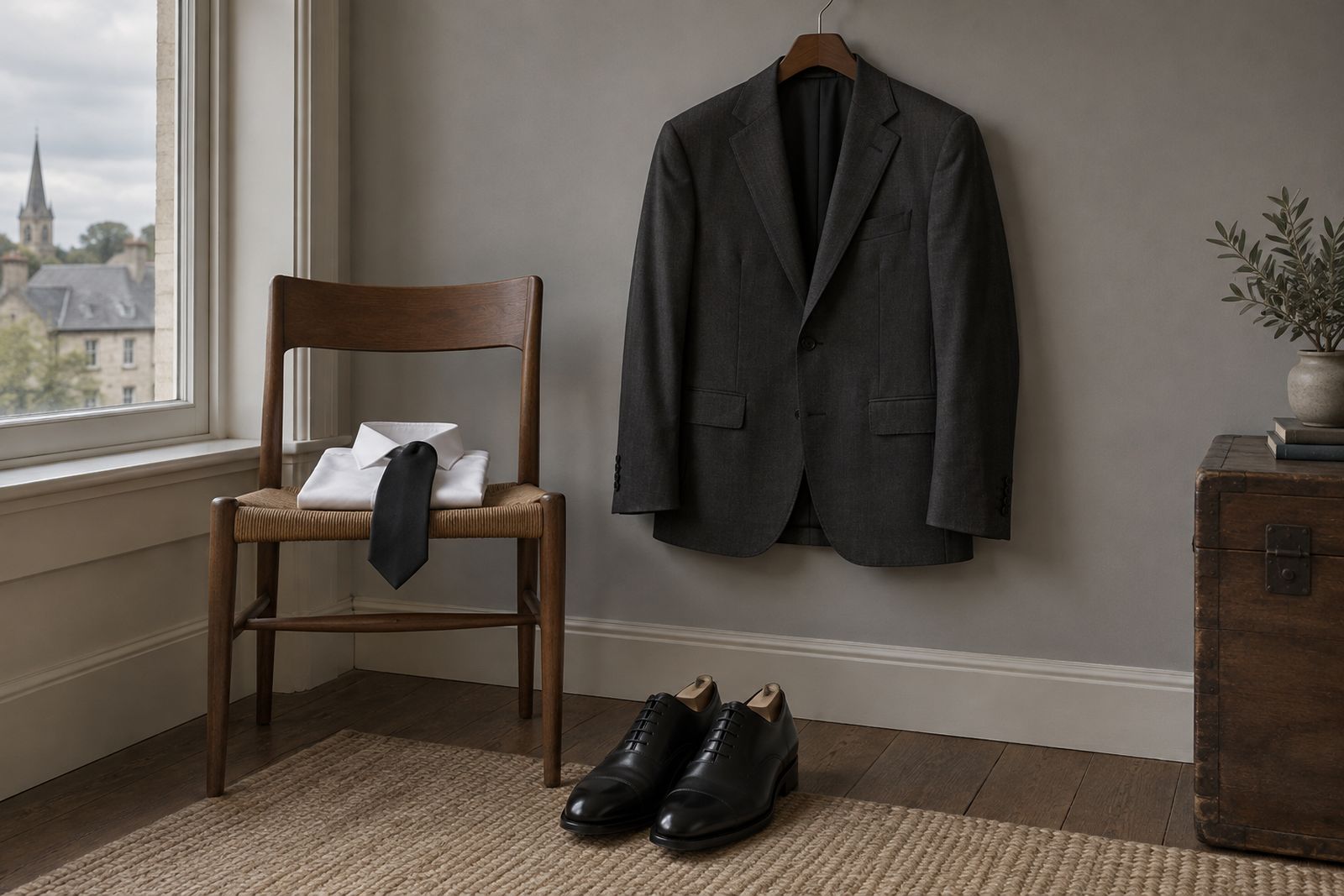
For a funeral, men should wear a dark suit in black, charcoal or navy, a white shirt, a dark tie (black is most traditional) and polished black shoes with dark socks. If you don't own a suit, wear a dark jacket with dark trousers, or dark trousers with a collared shirt and dark sweater. Customs vary by culture and religion, so follow the family's wishes.
- Dark suit: black, charcoal or navy are all correct.
- White shirt, dark tie, black shoes, dark socks.
- No suit? A dark jacket and trousers, or a collared shirt and dark knit, is respectful.
- Customs vary: white is the mourning color in some traditions; follow the family's request.
- Avoid bright colors, bold patterns, logos and anything casual or showy.
In this guide
- What should men wear to a funeral?
- Can you wear a navy suit to a funeral?
- Do you have to wear black to a funeral?
- What color tie should you wear to a funeral?
- Shirt, shoes and accessories
- What to wear to a funeral if you don't own a suit
- Cultural and religious customs
- Wakes, visitations and the graveside
- Funeral attire in hot and cold weather
- If you are a pallbearer or giving a eulogy
- The tailor's view: the suit that covers it
- Questions people ask
Knowing what to wear to a funeral matters most at the moment you have least time to think about it. Funerals often come at short notice, and nobody wants to spend the days before one worrying about clothes. The rule is simple. Wear dark, plain, tidy clothes that show respect and draw no attention to you. For most men in most Western traditions, that means a dark suit, a white shirt, a dark tie and black shoes. Where the family or a religious tradition asks for something different, follow that instead.
Funeral attire for men at a glance
- Suit
- Black, charcoal or navy, plain
- Shirt
- White, plain, ironed
- Tie
- Black is most traditional; dark navy, charcoal or dark gray also correct
- Shoes
- Black oxfords or derbies, polished; black belt; dark socks
- No suit
- Dark jacket and trousers, or dark trousers, collared shirt and dark knit
- Exceptions
- Family requests and cultural customs come first
What should men wear to a funeral?
Men should wear a dark suit to a funeral, in black, charcoal or navy, with a white shirt, a dark tie and black shoes. The aim is quiet respect: nothing bright, nothing showy, nothing that suggests you dressed for yourself rather than for the occasion. The suit should be plain or have a pattern so faint it is not seen at a distance. Everything should be clean and pressed.
That is the default for Christian and secular funerals in most Western countries. Other traditions have their own customs, covered below, and families sometimes ask for something different, such as a favorite color or casual clothes for a celebration of life. When the family has asked, do what they ask.
Most traditional
Black
The traditional mourning color; standard in some cultures
Charcoal
Equally correct, and more useful afterward
Dark navy
Fully acceptable
Dark gray
Acceptable with a white shirt and black tie
Mid-gray or lighter
Only if it is all you own; keep everything else dark
Light, bright or bold patterns
Avoid: tan, light blue, checks, stripes
Least suitable
Can you wear a navy suit to a funeral?
Yes. A dark navy suit is fully appropriate at a funeral, worn with a white shirt, a black or dark tie and black shoes. Black, charcoal and navy are the three correct funeral suit colors, and in most Western settings nobody will notice which of the three you chose. Charcoal is the most useful to own, because it serves equally at funerals, interviews and weddings; a black suit is more traditional but more limited. See suit colors and our guide to black suits.
Do you have to wear black to a funeral?
No. In most Western funerals today, dark and subdued is the rule rather than black specifically. Charcoal, navy and dark gray are all correct, and a black tie with a dark suit carries the note of mourning. Some cultures do expect black, and some expect white, so the answer depends on the tradition of the family; see the cultural notes below. And some families ask for color. If the invitation or notice asks for bright colors or casual clothes, honor that request.
Classic
Black suit, black tie
Black
Suit
White
Shirt
Black silk
Tie
Black oxford
Shoes
Classic
Charcoal suit, black tie
Charcoal
Suit
White
Shirt
Black silk
Tie
Black oxford
Shoes
Classic
Navy suit, dark navy tie
Dark navy
Suit
White
Shirt
Dark navy silk
Tie
Black oxford
Shoes
Works
Dark jacket, gray trousers
A respectful choice without a suit.
Navy
Jacket
Charcoal
Trousers
White
Shirt
Black knit
Tie
Black derby
Shoes
Avoid
Light suit, bright tie, tan shoes
Light gray
Suit
Pale pink
Shirt
Bright pattern
Tie
Tan
Shoes
What color tie should you wear to a funeral?
Black is the most traditional funeral tie and is never wrong. A dark navy, charcoal or dark gray tie is also appropriate, plain or with a very subtle texture or pattern. Avoid bright colors, large patterns and anything playful. Choose silk or a fine wool with a matte finish rather than a shiny satin, and tie a neat four-in-hand or half Windsor. A plain black tie is worth keeping in your wardrobe for exactly this reason: it is the one tie you may need with a day's notice.
Shirt, shoes and accessories
- Shirt: white, plain, with a point or spread collar, freshly ironed. Long sleeves.
- Shoes: black leather oxfords or derbies, polished. If the burial is outdoors on grass, a plain black derby with a sturdier sole is more practical than a fine oxford.
- Socks: black or dark, long enough that no skin shows when you sit or kneel.
- Belt: black leather with a plain buckle.
- Pocket square: none, or plain white linen folded flat.
- Watch and jewelry: simple and minimal.
- Coat and umbrella: a plain dark overcoat or raincoat, and a black or dark umbrella for a graveside service. See overcoat styles.
What to wear to a funeral if you don't own a suit
If you don't own a suit, wear the darkest, plainest, smartest clothes you have. Nobody at a funeral judges a mourner for lacking a suit; they notice only if the clothes look careless. Any of these is respectful:
| Option | What to wear | Notes |
|---|---|---|
| Dark jacket and trousers | Navy or charcoal blazer, charcoal or dark gray trousers, white shirt, dark tie, black shoes | The closest to a suit; the most formal option |
| Shirt and knit | Dark trousers, white or pale collared shirt, dark crew neck or V-neck sweater, black shoes | Add a dark tie under the sweater for more formality |
| Shirt and trousers | Dark trousers, white or dark collared shirt, dark tie if you have one, dark shoes | Fine in warm weather; tuck the shirt in |
| Young people | Dark chinos or trousers, a collared shirt, dark shoes | A tie is welcome but not expected |
Avoid jeans if you can, along with sneakers, T-shirts, shorts and anything with logos. If dark jeans and a dark shirt are genuinely all you have, they are better than staying away; make them as tidy as possible, with dark leather shoes.
Cultural and religious customs
Funeral customs vary widely across cultures and religions, and the guidance above reflects Western Christian and secular practice. When you attend a funeral in a tradition you don't know, ask the family or a friend of the family what is expected. It is a respectful question. These are general notes only; families and communities differ.
| Tradition | What to wear | Also note |
|---|---|---|
| Hindu | White is the traditional mourning color; guests are often asked to wear white or plain, light colors rather than black | Dress modestly; shoes may be removed at the home or temple |
| Sikh | White or plain, muted colors are common | Cover your head in a gurdwara; a plain scarf or handkerchief works, and coverings are often provided |
| Buddhist (Thailand and Southeast Asia) | Black is the usual color for guests, and white is also worn | Dress modestly; remove your shoes before entering temple halls |
| Chinese traditions | Black, white or very dark, subdued clothing | Avoid red, which is associated with celebration |
| Japanese and Korean | A black suit, white shirt, black tie and black shoes | Black is expected; navy and charcoal are less usual |
| Jewish | Dark, modest clothing; a dark suit is standard | Men cover their heads with a kippah (skullcap) in a synagogue and often at the graveside; kippot are usually provided |
| Muslim | Modest, dark or muted clothing; long trousers and long sleeves | You may be asked to remove your shoes in a mosque, so wear clean, dark socks |
Practice varies within every tradition. If in doubt, ask the family.
Wakes, visitations and the graveside
A visitation or viewing before the funeral calls for the same dark, respectful clothes as the service, though a tie matters a little less if you are coming straight from work. A memorial service held weeks or months later usually follows the same dark, respectful dress unless the family suggests otherwise. For a graveside or outdoor burial, think about the ground and the weather: shoes that will not sink into grass, a dark overcoat and a dark umbrella. A wake or reception afterward follows the funeral's dress; you can loosen the tie later if others do, but arrive as you were at the service.
Funeral attire in hot and cold weather
In summer heat, wear a dark suit in a lightweight worsted around 7 to 9 oz (220 to 280 g), half-lined if possible; a dark navy or charcoal tropical wool looks as somber as a heavier suit and is far cooler. Keep the jacket on during the service. At an outdoor burial in strong heat, follow the lead of the family before removing it. In winter, a plain dark overcoat in navy, charcoal or black goes over the suit, with a dark scarf and dark leather gloves.
If you are a pallbearer or giving a eulogy
Pallbearers and speakers are seen by everyone, so dress at the formal end: a dark suit, white shirt, black tie and polished black shoes. Pallbearers should wear shoes with a reliable grip, keep the jacket buttoned while carrying, and avoid anything that hangs loose, such as a long scarf. If the family asks the pallbearers to match, for example with the same tie or gloves, follow their lead.
The tailor's view: the suit that covers it
Every man should own one suit that is ready for a funeral without thought, because there is rarely time to shop. A plain charcoal suit in a year-round worsted of about 9 to 11 oz (280 to 340 g) is the best choice: correct at a funeral, and equally right for job interviews, offices and weddings. Our guide to how many suits a man needs puts it first on the list for that reason. Keep it pressed, with a white shirt, a black tie and polished black shoes in the same part of the wardrobe.
Before the funeral
- Try the suit on: weight changes, and trousers that fitted two years ago may not now.
- Check sleeve length: about ¼ to ½ inch (6 to 13 mm) of shirt cuff should show.
- Press the suit or have it pressed; brush off lint and dust.
- Iron the white shirt and check the collar for marks.
- Polish the black shoes and check the soles for wear.
- Put a plain black tie, dark socks and a black belt with the suit.
If the suit no longer fits, a tailor can let out or take in the trouser waist and adjust the sleeves quickly; see what a tailor can alter. Then set the clothes aside and give your attention to the day and the people in it.
Questions people ask
Can you wear a navy suit to a funeral?
Yes. A dark navy suit is fully appropriate, worn with a white shirt, a black or dark tie and black shoes. Black, charcoal and navy are all correct funeral suit colors in most Western settings.
What color tie should you wear to a funeral?
Black is the most traditional funeral tie and is never wrong. Dark navy, charcoal and dark gray ties are also appropriate, plain or with a very subtle texture. Avoid bright colors and bold patterns.
Do you have to wear black to a funeral?
No. In most Western funerals, dark and subdued clothing is expected rather than black specifically, so charcoal and navy are correct. Some cultures expect black and others expect white, and some families ask for color, so follow the family's wishes.
What should you wear to a funeral if you don't own a suit?
Wear the darkest, plainest, smartest clothes you have: a dark jacket with dark trousers, or dark trousers with a white collared shirt and a dark sweater. Add a dark tie if you have one, and wear dark leather shoes. Avoid jeans, sneakers and logos where you can.
Can you wear brown shoes to a funeral?
Black shoes are the standard and the safest choice. Very dark brown shoes are not a serious error with a navy suit, but they are less formal. Tan and light brown shoes are best avoided.
Can you wear a black shirt to a funeral?
A white shirt is the standard with a dark suit. A black shirt with a black suit can look more like eveningwear than mourning in Western settings. Without a suit, a dark collared shirt with dark trousers is acceptable.
Should you wear a tie to a funeral?
Yes, if you are wearing a suit or jacket. A black or dark tie is the clearest sign of respect in Western funeral dress. If you are not wearing a jacket, a tie is still welcome but less expected.
TailorGuide is independent. Our guides are written and checked by our team and carry no paid endorsements. How we work.